Mid Taper Fade for Boys: 10 Best Styles (2026)
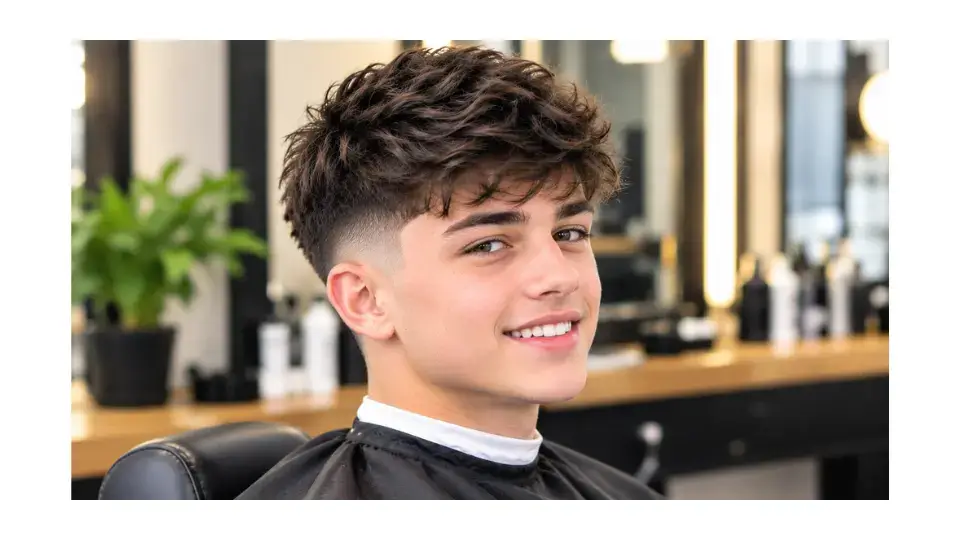
A mid taper fade for boys blends longer hair on top into shorter sides. The fade starts around the middle of the head, not up top and not down low. It works with almost any hair type and still looks neat for school.
Here are 10 styles by age group. You’ll also learn how to ask for this cut the right way.
- A mid taper fade blends longer hair on top into shorter sides, starting around the middle of the head, and it works with almost any hair type.
- This guide covers 10 styles sorted by age, plus 3 more parents ask about: faux hawk, buzz cut and Caesar.
- It lasts longer between barber visits than a high or skin fade, and a standard version fits most school rules.
- Tell the barber where the blend should start (temple), the shortest finish and the top length. A reference photo from more than one angle helps.
- Plan on a touch-up every 3-4 weeks. Light trims around the neckline are fine at home, but leave the blend to the barber.
Source: Mid Taper Fade.
Table of Contents
- Mid Taper Fade for Boys: What Makes This Cut Different
- Mid Taper Fade for Boys in 2026: Why It’s the Default Pick
- Mid Taper Fade for Boys: The Trade-Offs Parents Should Know
- 10 Mid Taper Fade Styles for Boys, Sorted by Age
- 3 More Mid Taper Fade Styles Parents Ask About
- Mid Taper Fade for Boys by Hair Type: What Actually Changes
- Mid Taper Fade for Boys by Face Shape: Quick Matches
- Mid Taper Fade for Boys: What to Actually Tell the Barber
- Mid Taper Fade for Boys: Mistakes Parents Keep Making
- Maintenance Reality Check: Keeping the Fade Sharp
- Mid Taper Fade vs Crew Cut vs Skin Fade for Boys
- Is a Mid Taper Fade School-Appropriate?
- Scalp Comfort and Barbershop Hygiene: What Parents Should Check
- Frequently Asked Questions
- About the Author
- Conclusion
Mid Taper Fade for Boys: What Makes This Cut Different
A mid taper fade for boys blends the sides and back from long to short. The fade starts around the middle of the head, not near the top or down at the neck. The top stays long enough to style, while the sides stay clean.
This middle starting point is what keeps the cut from looking too bold or too plain.
Mid Taper Fade for Boys in 2026: Why It’s the Default Pick
Parents like this cut because it lasts longer between visits than a high or skin fade. It still looks neat and planned. It also works no matter what a boy’s hair is doing that week, curly or straight.
One haircut that works through a growth spurt is worth something on its own.
Mid Taper Fade for Boys: The Trade-Offs Parents Should Know
This cut works for most boys, but it’s good to know where it falls short first. The table below shows the trade-offs.
- Low-maintenance between barber visits
- Works with straight, wavy, curly, and coily hair
- Reads as neat and school-appropriate
- Still needs a touch-up every 3-4 weeks
- Younger boys may need extra patience during the blend
- A rushed blend can look patchy on very short hair
10 Mid Taper Fade Styles for Boys, Sorted by Age
These styles are grouped by age. What works for a five-year-old is not always what a thirteen-year-old wants. Each group has a few easy options and one or two with more styling.
Toddlers and Young Boys (Ages 3 to 7)
Younger boys can’t sit still for long styling routines. These cuts stay simple and forgiving. A shorter length also means less work for parents each morning.
1. Simple Textured Crop
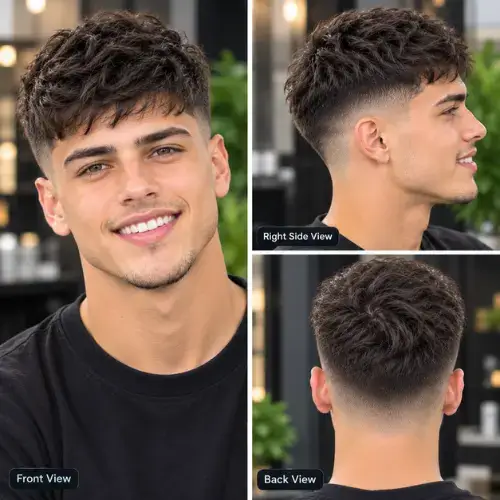
A short, textured top with a mid fade needs only a quick towel-dry to look done. It holds its shape well, even after a nap or a day outside.+
Best For: active toddlers, fine or straight hair
Popular With: an easy, no-fuss everyday look
2. Curly Top Mid Fade
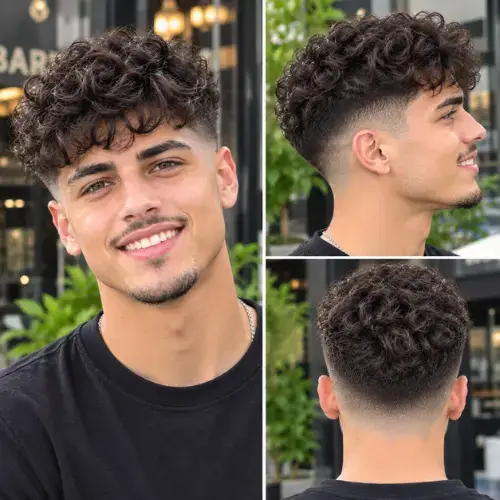
Letting natural curls sit on top works well for boys with curly or coily hair. There’s no product or brushing needed. The curls do the styling on their own.
Best For: curly or coily hair, busy mornings
✂️ Pro Tip: ask the barber to leave a bit more length on top, since young hair often looks shorter than the guard number suggests.
3. Classic Side Part
A neat side part with a mid fade looks sharp for school photos and family events. It needs only a quick comb in the morning.
Best For: straight or wavy hair, dressy occasions
School-Age Boys (Ages 8 to 12)
Boys this age can usually sit through a full haircut. This opens the door to more detailed styles. This is also when a boy’s own choice starts to matter more.
4. Textured Fringe with Mid Fade
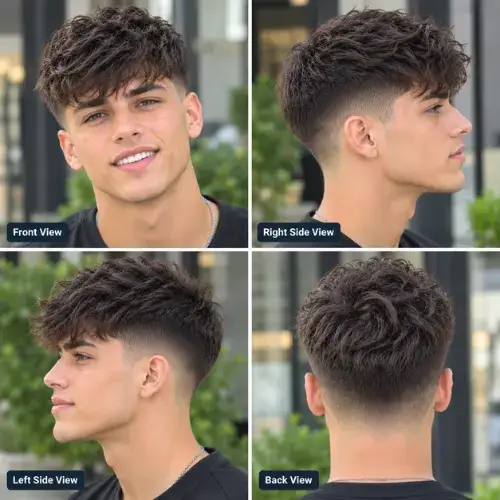
A choppy fringe that falls over the forehead pairs well with a mid fade. It looks current with almost no extra work. It suits straight or wavy hair best. For the full textured-fringe breakdown — 8 styles, products, and the exact barber ask — see our textured fringe styles guide.
Best For: straight or wavy hair, boys who don’t like product
5. Mid Fade with Hard Part
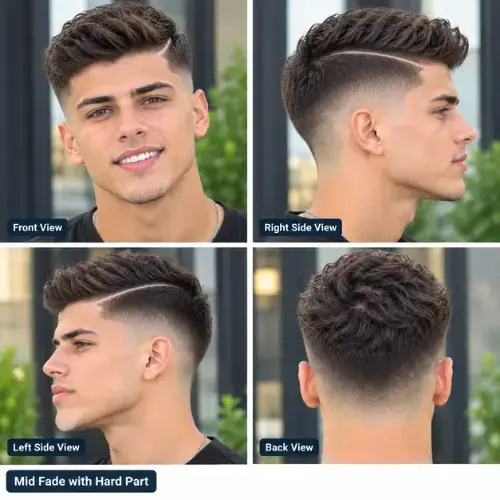
A shaved line between the top and the fade adds a sharper look. It’s a small change that makes a simple cut feel more grown-up.
Best For: boys who want a bolder look without a full design
✂️ Pro Tip: hard parts grow out fast, so plan for more frequent touch-ups.
6. Afro Mid Taper Fade
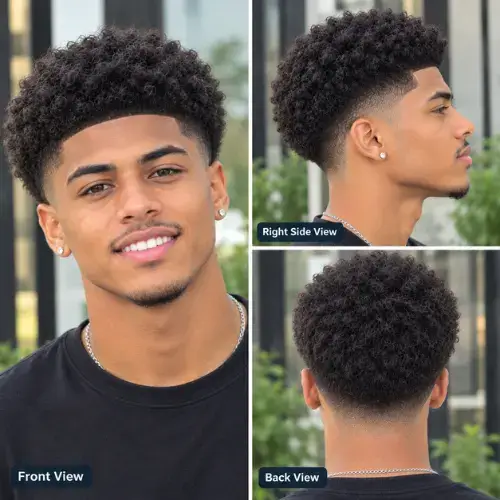
Keeping natural volume on top while the sides fade shows off curly hair texture. This style holds up well between visits, since the top doesn’t rely on one exact length.
Best For: coily or afro-textured hair
7. Spiky Textured Top
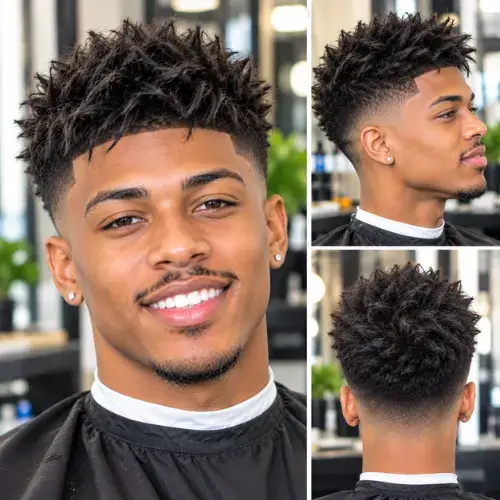
A little matte paste on slightly longer hair creates a spiked, textured look. It pairs well with a clean mid fade. It takes a bit more effort but is still quick for a parent to manage.
Best For: thick or medium hair, boys who like a styled look
Tweens and Teens (Ages 13 to 16)
Teens usually pick their own haircut. Many bring photos to the appointment. Bolder styles and more product use become realistic at this age.
8. Mid Taper Fade with Waves
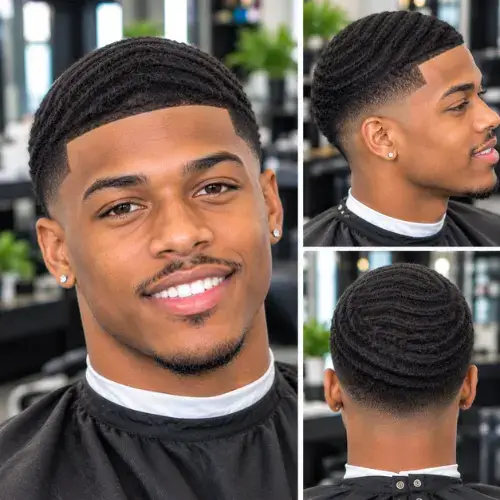
A wave pattern on top paired with a mid fade gives a sharp, detailed look. It takes some daily brushing to keep up. Many teens don’t mind the short routine before school.
Best For: wavy or coily hair, teens who will brush daily
9. Textured Quiff
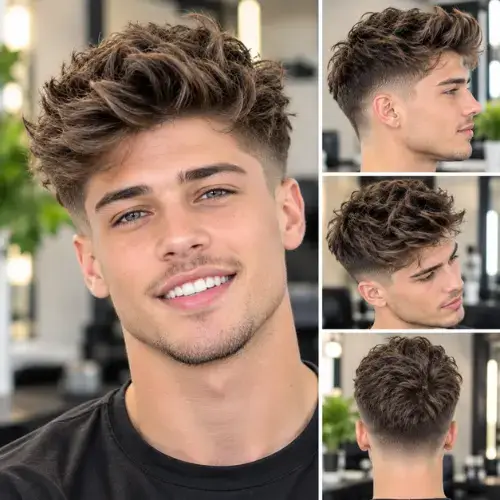
Longer hair on top, styled up and slightly forward, gives a more grown-up look. The mid fade keeps the sides neat. A small amount of styling cream holds the shape all day. For the voluminous blow-dried version, see our blowout guide.
Best For: medium to thick hair, dressier settings
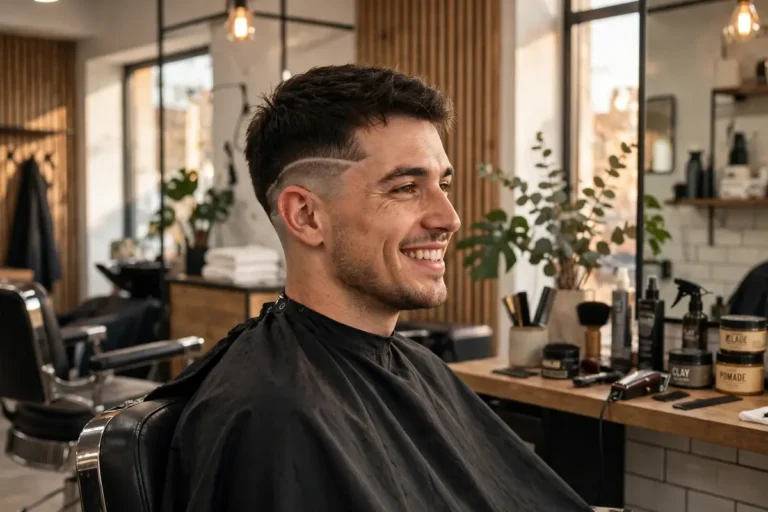
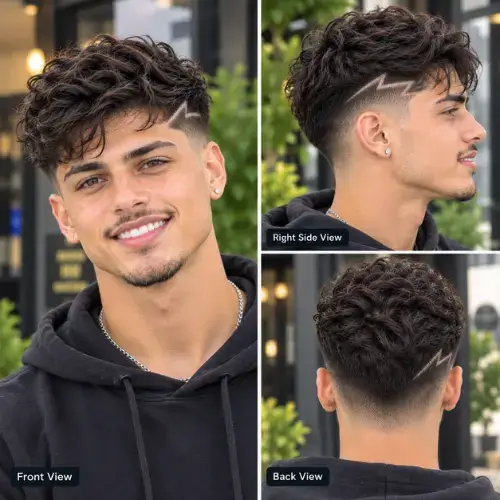
10. Mid Fade with Design
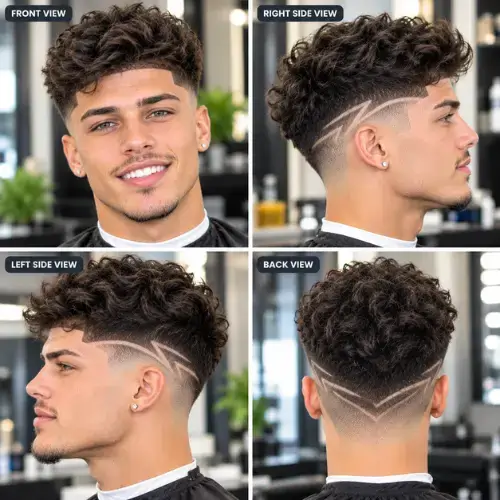
A shaved line or small pattern near the temple adds a personal touch. Most barbers can add this quickly. A small design tends to age better than a big one.
Best For: teens who want to stand out a little
✂️ Pro Tip: a design needs re-cutting almost as often as a hard part, so plan your touch-up schedule around it.
3 More Mid Taper Fade Styles Parents Ask About
Ten styles cover most boys, but three more come up in almost every parent search: a faux hawk, a buzz cut, and a Caesar cut. Each one solves a different problem — a little edge without breaking school rules, the lowest possible maintenance, or a cut that needs no styling at all.
Faux Hawk with Mid Taper Fade

A faux hawk keeps a thicker strip of hair down the middle and fades the sides, so the center looks spiked without shaving anything. Spike it up with a little gel for the weekend, then brush it forward for a plain school-day look. The mid taper keeps the sides tidy either way.
Best For: tweens and teens who want a little edge that still passes school rules.
✂️ Pro Tip: ask for the center strip left thick — a thin strip looks like a mohawk, not a faux hawk.
Buzz Cut with Mid Taper Fade
A buzz cut clips the top to one short, even length — usually a #3 or #4 guard — and the mid taper blends the sides down from there. It is the lowest-maintenance cut on this page: wash, towel-dry, done. The taper is what keeps it from looking like a plain military cut.
Best For: active boys, hot weather, and any boy who hates sitting still for styling.
For guard numbers and the at-home version, see our buzz cut guide.
Caesar Cut with Mid Taper Fade
A Caesar cut wears the top short with a straight fringe across the forehead, and the mid taper cleans up the sides. It hides an uneven hairline and needs no product at all — a quick brush is the whole routine. It reads neat on every age group, from toddlers to teens.
Works well for: fine hair, uneven hairlines, and mornings with zero time to spare.
As an Amazon Associate, MidTaprFade earns from qualifying purchases made through links on this page, at no extra cost to you.
Mid Taper Fade for Boys by Hair Type: What Actually Changes
Hair type changes how much daily work a style needs, more than the fade itself changes. A style that looks easy on Mid Taper Fade Straight Hair might need real product on coily hair, and the other way around.
Straight Hair
Straight hair falls flat and holds a clean line, so it suits defined shapes on top. Fine straight hair usually wants a shorter top, since extra length tends to sit limp. A textured crop or a side part keeps the mornings short — the existing straight-hair link stays in this section.
Wavy Hair
Wavy hair brings its own movement, and a mid taper makes room for it by taking bulk off the sides while the wave pattern stays on top. Shorter waves stay low maintenance; longer ones show the pattern better but need air-drying in the right direction.
For the wavy versions in detail, see our wavy-hair styles.
Curly and Coily Hair
Curly and coily hair shows its pattern best with real length left on top, while the taper keeps a clean perimeter underneath. Keeping length on top preserves defined curls; cutting the sides too close all the way up makes the shape look uneven instead of shaped. A barber used to textured hair can say how short is too short before curls lose their shape — and a cowlick changes how the top falls, so point out where it sits before the cut starts.
For the full curly breakdown, see our curly hair guide.
ACTIIV Recover Thickening Shampoo & Treatment
A pea-sized amount of curl cream, worked through damp hair, keeps the curls defined without flattening them.
Mid Taper Fade for Boys by Face Shape: Quick Matches
Face shape matters less for younger boys. It becomes more useful as a boy gets older and starts to care about photos. A few quick tips cover most cases.
Round Face
More height on top, like a textured quiff or spiky style, helps balance a round face.
Oval Face
Oval faces work with almost any style on this list, since the proportions are already balanced.
Square Face
A softer, textured top works better than a sharp style. It softens a strong jawline.
Mid Taper Fade for Boys: What to Actually Tell the Barber
Tell your barber the guard number range and where the fade should start. Say something like “mid fade, starting at the temple, blend down to a 1 or 2.” This clears up most confusion.
Four decisions cover the parts of this haircut most often misunderstood. Settle them during the consultation, before the clippers start.
- Blend height — point to the temple on your son’s own head. The word “mid” alone does not fix the spot.
- Shortest finish — name a guard, not a feeling. A #1 at the bottom is short; a #2 leaves more hair. Say which one you want.
- Top length — state the minimum length to keep, and whether it must stay long enough to style. The top is easy to over-cut once the sides are short.
- Edge treatment — natural hairline or a line-up. This is a separate choice from the blend, and it does not have to copy the reference photo.
Say this, word for word:
“Mid taper starting at the temple, shortest point a #1 at the bottom rather than skin. Keep at least two inches on top so he can style it, and a natural hairline — no line-up.”
What NOT to say: Do not say only “mid taper fade” and leave the rest to the barber. That phrase alone hands four decisions to someone picturing a different head of hair. Name all four, every time.
Bring a reference photo that matches your son’s actual hair — same texture, similar density, similar top length — from more than one angle, so the barber sees how the blend sits at the back and sides. Show it before the cut starts, not halfway through. Treat it as direction, not a guarantee: results vary with the hair in the chair.
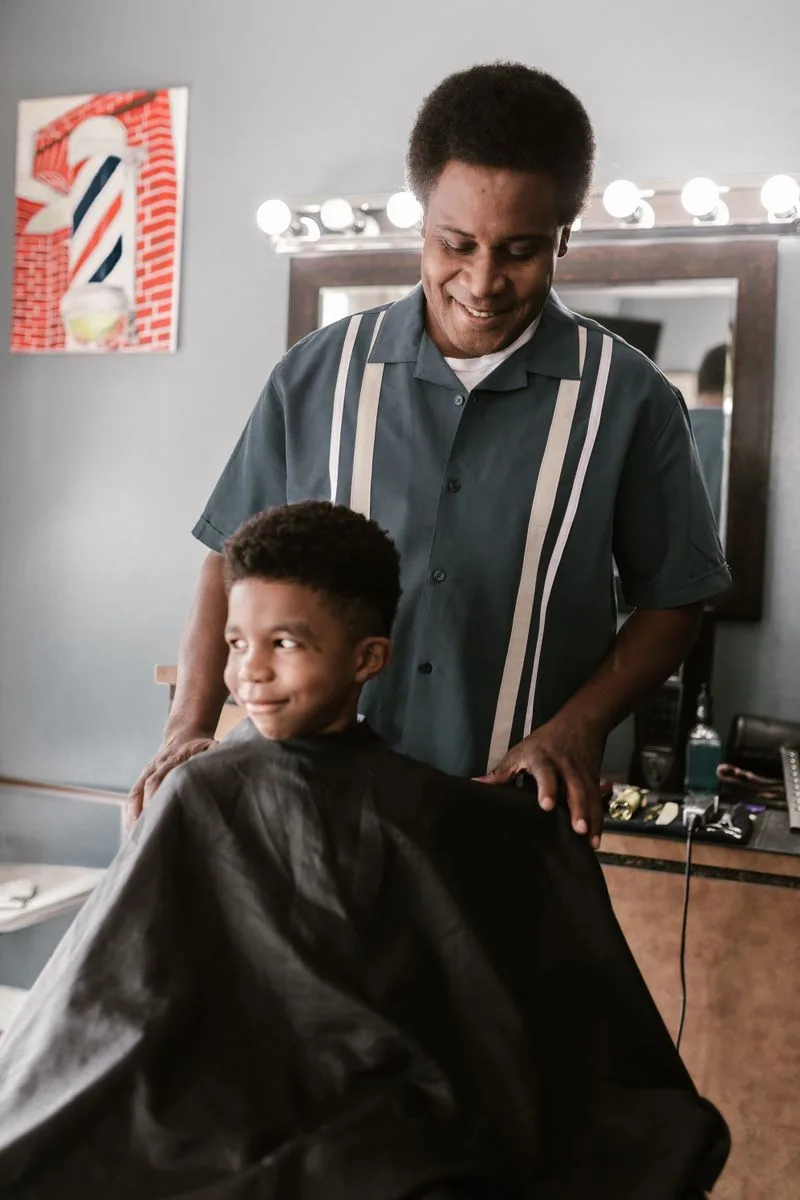
Should You Ask for Skin or a Shadow Taper?
Shadow, for most boys. A shadow taper leaves a light layer of hair at the shortest point instead of bare skin, so it grows out more slowly and looks softer at school. Skin wins only when you want the sharpest possible edge and do not mind booking touch-ups more often.
- Reference photo matching his hair type, from more than one angle
- Where the blend should start (temple)
- Shortest finish: a guarded length or closer to skin
- Top length and how much daily styling is realistic
- Natural hairline or a defined line-up
- Any school grooming restrictions
- Any past skin irritation from close clipper or razor work
Source: Mid Taper Fade.
Mid Taper Fade for Boys: Mistakes Parents Keep Making
Most mistakes with a boy’s mid taper fade happen before the clippers even start — in what gets said, or left unsaid, at the chair. A few small missteps in communication, timing, or style choice can turn a simple haircut into a redo.
Maintenance Reality Check: Keeping the Fade Sharp
A mid taper fade for boys holds its shape for three to four weeks. After that, the blend line grows out and starts to look uneven. Washing every two to three days with a mild shampoo keeps the scalp healthy.
For curly or coily hair, a light leave-in conditioner stops the top from looking dry. A soft brush or wide-tooth comb is enough for daily care at this age.
How to Style It at Home
Daily styling comes from the top hairstyle. The tapered sides need nothing beyond normal washing. Wash frequency depends on the hair itself: the American Academy of Dermatology suggests shampooing based on how oily or dirty hair gets, with straight, oily hair sometimes needing a daily wash and dry, textured, or curly hair washed as needed.
Straight or wavy hair — 3 steps:
- Work a small amount of a light product through damp hair.
- Direct the top with fingers or a comb into the fringe, part, or crop shape.
- Let it air-dry, or briefly blow-dry in the intended direction, and then leave it alone.
Curly or coily hair — 3 steps:
- Apply a curl cream or gel to damp hair rather than dry.
- Scrunch or shape gently in the direction the curls already fall.
- Air-dry or diffuse on a low heat setting, and avoid brushing through once dry.
When Should the Taper Be Refreshed?
Watch the haircut rather than the calendar. The usual triggers are contrast blurring between the top and the blended section, hair filling back in around the sideburns and neckline, or an event coming up where a sharper finish matters. Your son’s own view on whether it still looks fresh is often the most practical signal of all.
Resist re-fading the sides at home with clippers. An uneven line is harder for a barber to correct than a slightly grown-out one is to tidy up.
A small trimmer keeps the neckline and sideburns tidy between visits. Use it on the edges only — never on the blend itself.
Most boys need a taper touch-up every three to four weeks. Active kids or fast hair growth can shorten that.
Source: Mid Taper Fade.
Mid Taper Fade vs Crew Cut vs Skin Fade for Boys
These three cuts all work for boys, but they don’t need the same amount of upkeep. Here’s how they compare, side by side.
| Cut | Blend height | Scalp exposure | School-friendliness | How it grows out |
|---|---|---|---|---|
| Mid taper fade | Temple height | Moderate | High — guarded finish, natural hairline | Shows at 3–4 weeks |
| Crew cut | No fade, short all over | Low | High — plain and short | Shows slowly, stays tidy longest |
| Skin fade | Temple height | High — bare skin at the bottom | Lower — some schools limit skin-close fades | Shows fastest — bare skin regrows visibly |
| Low taper fade | Just above the ear | Minimal | Highest — softest finish | Shows slowest — softest contrast |
A low taper keeps the sides fuller and softer than a mid taper, so it suits a strict dress code or a boy who wants the longest gap between visits.
Mid Taper Fade vs Crew Cut
A crew cut keeps the top short all over with little styling. A mid taper fade allows more length and shape on top. Boys who hate any styling routine often do better with a crew cut.
Mid Taper Fade vs Skin Fade
A skin fade blends all the way to bare skin for a bolder look. A mid taper fade keeps a softer change. Many parents and schools prefer the calmer look of a mid fade.
Is a Mid Taper Fade School-Appropriate?
There is no universal answer. Some schools set no grooming restrictions at all, while others limit skin-close fades, shaved designs, or sharply carved hairlines. The only reliable source is the current handbook at your son’s own school — not a general claim on a haircut website.
If the policy is strict, a low taper fade guide shows the softest version of this cut.
What to Check in the School Grooming Policy
Look for wording on overall hair length, shaved patterns or designs, scalp exposure where it is mentioned, and hairline alterations, which are sometimes covered separately from length. Sports teams occasionally add rules of their own on top of the school policy. If the wording is ambiguous, a short email to the school office is quicker than fixing a haircut the week term starts.
Can a Mid Taper Be Softened for a Strict Dress Code?
Yes. Less scalp exposure, a guarded finish instead of skin, a natural hairline in place of a line-up, and no shaved designs all reduce the chance of a conflict. Confirm the details against the actual handbook rather than assuming what a policy allows.
Scalp Comfort and Barbershop Hygiene: What Parents Should Check
This is a routine haircut, not a medical event. Two practical points are still worth knowing: cutting very close can irritate some skin, and equipment hygiene is something you can check with your own eyes while you wait.
Can a Very Close Taper Irritate the Skin?
Yes, for some boys. When coarse, curly hairs are cut very short, the sharpened tips can curve back into the skin and cause bumps — the NHS explains this under ingrown hairs. A guarded finish instead of a razored neckline avoids the closest cut, so ask for it if your son has had bumps or soreness there before. Persistent bumps on the back of the neck or scalp are worth showing to a doctor rather than treating at home.
What Hygiene Signs Should Parents Look For?
Look for clean tools, a fresh neck strip or towel under the cape, and staff wiping down clippers between clients instead of picking them straight up from the last cut. Requirements differ by jurisdiction, so check what your own regulator requires. If the tools look dirty or reused without cleaning, say so before the cut starts — or book elsewhere.
Frequently Asked Questions
What age is appropriate for a mid taper fade?
There’s no set minimum age. This cut works from toddler years through the teen years, since the fade height and top length can change for any age.
How long does a mid taper fade last on a boy?
Most boys need a touch-up every three to four weeks. Active kids or fast hair growth can shorten that.
Is a mid taper fade good for curly hair?
Yes. It works well with curly and coily hair, since the fade removes bulk from the sides without touching the curl pattern on top.
Will my son’s school allow this haircut?
Yes. A standard mid taper fade fits most school rules, because the blend is guarded and the hairline stays natural. Shaved designs or very high fades are worth checking against the school policy first.
Can I maintain this haircut at home between barber visits?
Yes. Light trims around the neckline are fine at home, and a trimmer keeps the edges tidy between visits. The blend itself is best left to a barber to avoid an uneven line.
Does a mid taper fade have to go down to skin?
No. Blend height and shortest finish are separate choices. A mid taper fade can end at a short guarded length instead of bare skin — ask for a shadow taper if you want the softest finish.
Is a line-up required with a mid taper fade?
No. A line-up, meaning a crisp, defined hairline, is an optional extra. Plenty of mid taper fades use a soft, natural hairline instead, which looks less severe on a young boy and grows out less obviously between appointments.
About the Author
Sonia is the content writer behind MidTaprFade.com. She writes about men’s and boys’ haircut trends, fade techniques, and grooming tips.
She mixes SEO skills with a real interest in barbering. Her goal is simple: give readers clear, useful advice for every hair type and age.
Conclusion
A mid taper fade for boys works across almost every age and hair type. That’s why it stays popular instead of fading out like a trend. Matching the style to your son’s age, hair type, and patience level makes the visit smoother.
Bring a photo and name the fade height clearly. These two things prevent most bad results.
Save this guide before the next appointment, and share it with any parent who’s had a haircut go shorter than planned. If your son wants the fringe worn forward, our fringe guide covers 7 styles with photos.