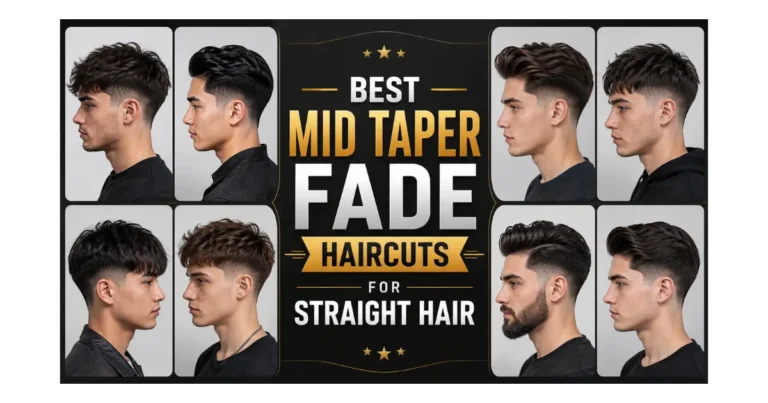
8 Best Mid Taper Fade Textured Fringe Styles for Men (2026)
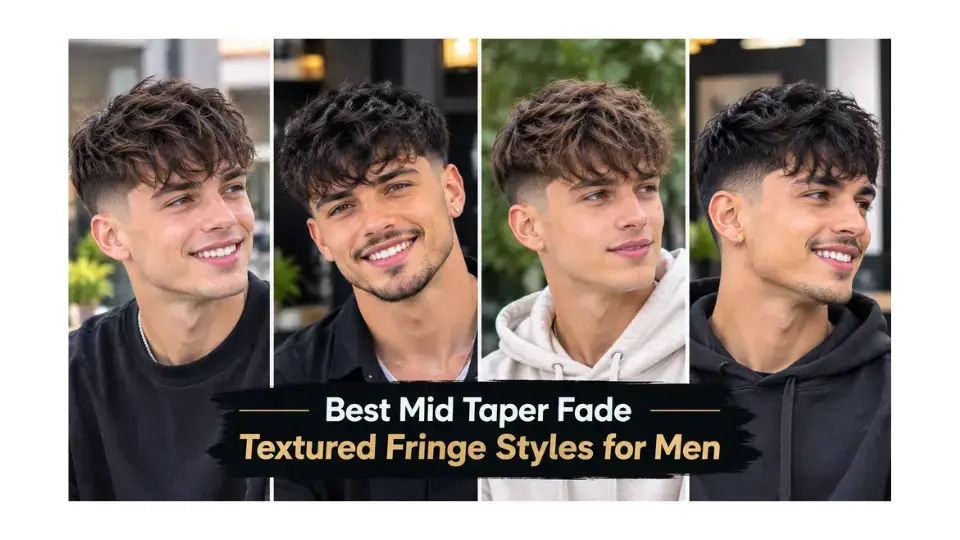
A mid taper fade with textured fringe brings the top forward into a piecey, matte finish while a mid-height taper keeps the sides clean underneath. It works especially well on straight to thick hair, where texture holds shape without extra length. This guide covers 8 ways to wear it, the products that build real texture, and exactly what to ask your barber.
8 Best Mid Taper Fade Textured Fringe Styles
These 8 mid taper fade textured fringe styles range from a light, barely-there texture to bold, heavily piecey versions, covering most hair types and styling preferences. Each one lists what suits it best, since a heavily textured fringe reads very differently on thin hair than on thick hair.
Classic Textured Styles
Classic textured fringe styles keep the piecey finish subtle rather than dramatic. These are the easiest starting points for a first textured fringe.
1. Classic Textured Fringe
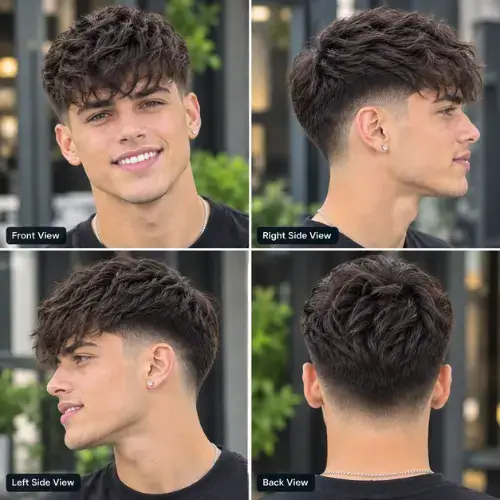
Point-cut ends break the fringe into light, natural-looking pieces without a heavy, chunky finish. The mid taper underneath keeps the sides clean and simple.
Best For: Straight or medium-density hair
2. Choppy Textured Fringe
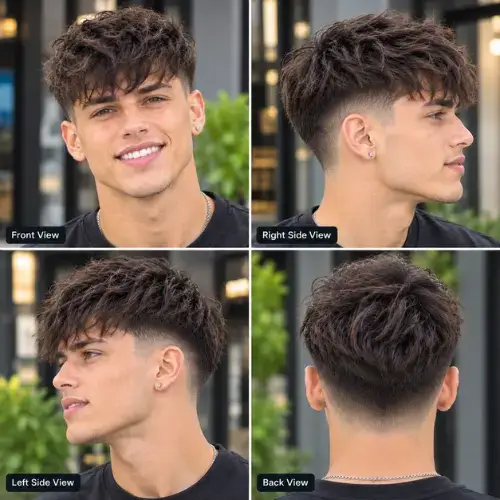
Heavier point-cutting creates a more obviously piecey, uneven finish than the classic version. This reads more deliberate and current than a soft, barely-textured fringe.
Best For: Thick or medium-thick hair
✂ Pro Tip: Ask your barber to vary the cutting angle across the fringe rather than cutting every piece the same length — uniform choppy pieces end up looking more like a pattern than natural texture.
Volume-Focused Variations
Volume-focused textured fringe variations add lift at the root before the texture takes over, giving the fringe more visible height. These need a blow-dryer as part of the daily routine.
3. Textured Fringe with Volume
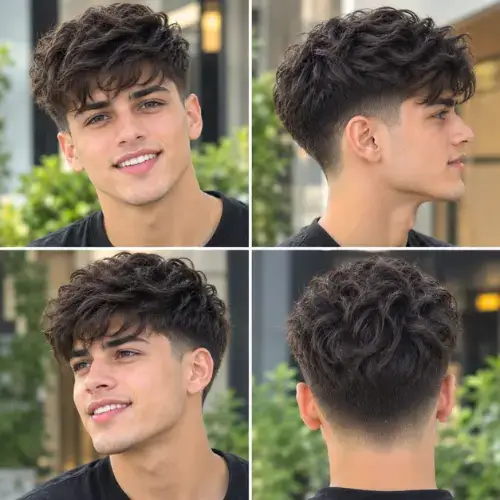
The fringe is blow-dried upward at the root before falling forward, adding height that a flat textured fringe doesn’t have. A lightweight volumizing product helps hold the lift through the day.
Best For: Thick or medium-density hair Popular With: A bolder, more structured everyday look
Popular With: A bolder, more structured everyday look
4. Textured Fringe with Blowout
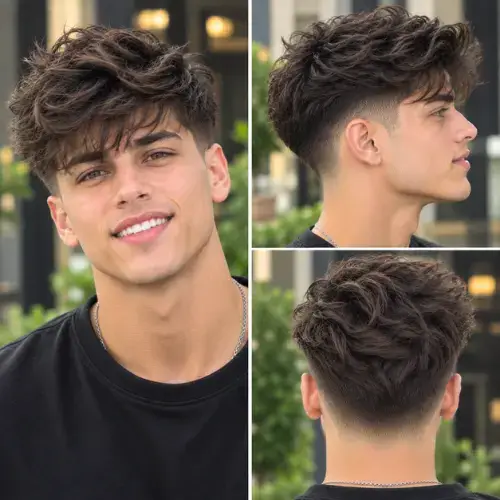
Volume is built across the entire top, not just the fringe, for a fuller silhouette overall. For more on building height and volume specifically, see our mid taper fade blowout guide.
Best For: Thick hair with good length on top
Wavy and Natural Texture Styles
Wavy and natural texture styles let existing hair texture do more of the work, needing less product-driven separation than straight hair does. These suit guys who want texture without heavy styling effort.
5. Wavy Textured Fringe
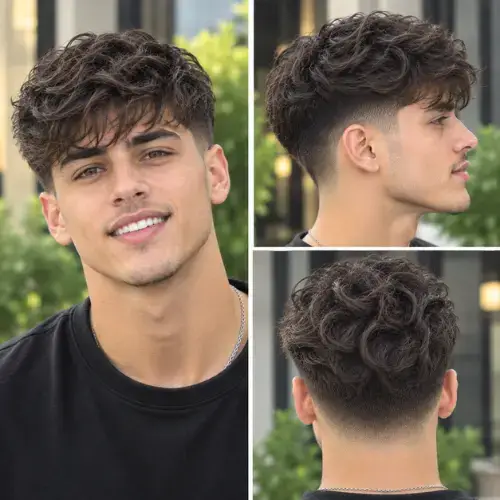
Natural wave adds movement and separation to the fringe without much extra product, softening the look compared to a straight-hair textured fringe. The taper stays the same as the classic version.
Best For: Wavy hair Popular With: A relaxed, low-effort finish
Popular With: A relaxed, low-effort finish
6. Curly Textured Fringe
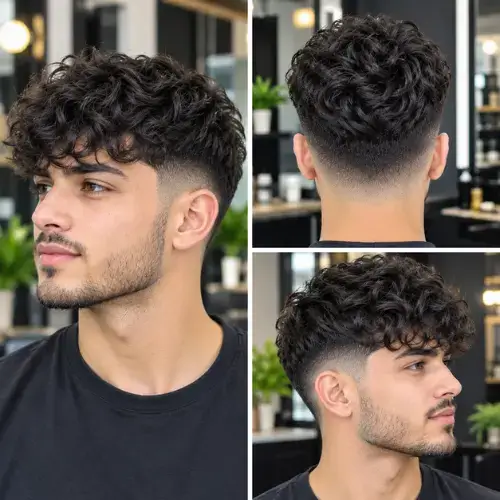
Curls create natural texture and separation on their own, though the fringe usually needs to be kept a bit shorter for the curl pattern to read clearly. For curl-specific styling and product advice, see our mid taper fade curly hair guide.
Best For: Curly hair
Detail and Combination Styles
Detail and combination textured fringe styles pair the piecey top with a design or side-swept direction for a more distinct look. These suit guys already comfortable with a standard textured fringe.
7. Side-Swept Textured Fringe
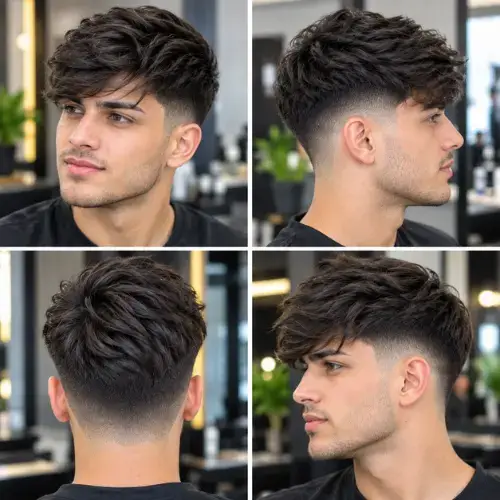
The fringe is directed to one side rather than falling straight forward, adding a bit more structure than a center-forward textured fringe. This works especially well for formal settings.
Best For: Straight or wavy hair, oval or square faces
8. Textured Fringe with Design
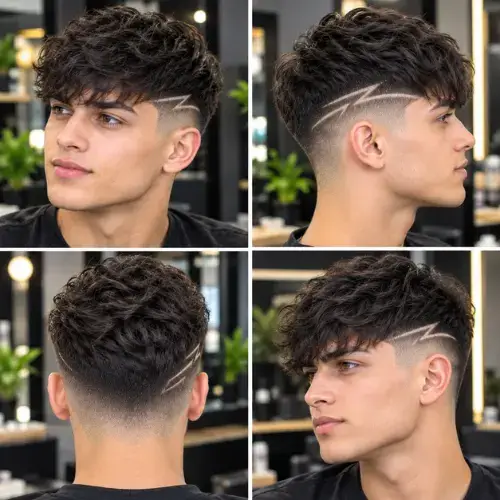
A shaved line or detail cut into the taper adds an extra edge beneath the piecey fringe. For more on design placement and depth, see our mid taper fade with design guide.
Best For: Straight or thick hair
Mid Taper Fade Textured Fringe Explained: What Makes the Texture Work
A mid taper fade with textured fringe combines a mid-height taper on the sides with a fringe that’s cut and styled to look piecey and uneven rather than smooth and blunt. The texture comes from point-cutting at the barber’s chair combined with a matte product at home, which breaks the fringe into separated pieces instead of one solid block. The taper underneath keeps the sides from competing with all that texture on top.
Why Textured Fringe Is Still Everywhere in 2026
Textured fringe has stayed one of the most requested fringe styles in 2026 because it reads as effortless while actually needing a fairly precise cut underneath. It works on straight, wavy, and thick hair without looking too polished or too messy. Pairing it with a mid taper instead of a full fade keeps the whole look softer and more wearable day to day.
Pros and Cons: What You’re Signing Up For
A mid taper fade with textured fringe delivers a casual, lived-in look, but the texture depends on the right cutting technique and daily product. The table below breaks down the real trade-offs.
| Pros | Cons |
|---|---|
| Casual, effortless-looking finish | Needs a barber skilled at point-cutting |
| Works on straight, wavy, and thick hair | Daily product is basically required to hold texture |
| Softer than a blunt, straight-edge fringe | Very fine hair can struggle to hold separation |
| Pairs well with most face shapes | Grows out less predictably than a blunt fringe |
| Low-shine, matte finish reads modern | Overdoing product can look greasy fast |
Choosing by Hair Type: What Actually Holds Texture
Choosing the right textured fringe depends mostly on how your hair naturally holds separation, since straight, wavy, thick, and curly hair all need a different amount of product to look textured rather than flat. The sections below break down what tends to work for each.
Straight Hair
Straight hair needs the most product-driven texture, since there’s no natural separation to build on. For more general styling detail on straight hair with a mid taper, see our mid taper fade straight hair guide.
Wavy Hair
Wavy hair holds natural separation well, which means less product is needed to achieve a textured look. A light sea salt spray can enhance the wave pattern if it needs a bit more definition.
Thick Hair
Thick hair holds texture and volume particularly well, making it one of the easiest textures to work with for a bold, choppy fringe. Point-cutting removes some bulk while keeping the piecey finish.
Curly Hair
Curly hair creates natural texture on its own, though the fringe usually needs to stay a bit shorter for the curl pattern to read clearly rather than getting weighed down. For curl-specific styling and product advice, see our mid taper fade curly hair guide.
Face Shape Matchups
Matching a textured fringe to your face shape mostly comes down to how much length and volume sits across the forehead, since a fringe changes how much of the face is visible. The right balance keeps proportions even instead of exaggerating them.
Oval Face
Oval faces suit nearly any textured fringe variation, since the proportions are naturally balanced. A classic or choppy version both work well here.
Round Face
A side-swept textured fringe adds angles that break up a round face better than a straight-across, center-forward version would.
Square Face
Square faces handle a choppy, more textured fringe well, since the strong jawline balances the added texture up top.
Heart-Shaped Face
Keep the fringe on the lighter side rather than heavy and blunt, since extra weight across the forehead can emphasize a wider upper face.
Long Face
A fuller, slightly longer textured fringe helps visually shorten a long face. Avoid a very short, high fringe that exposes more forehead.
Diamond Face
A softer, wavy textured fringe helps soften prominent cheekbones better than a sharp, heavily choppy version.
Rectangular Face
A moderate textured fringe balances a long jawline better than an extremely short or severe version. A classic or wavy textured fringe is usually the more practical choice.
Age Group Breakdown
Age mostly affects how bold or subtle a version of the textured fringe feels appropriate, though the style itself works broadly across ages. Setting matters as much as age for most decisions here.
Teenagers
A classic or wavy textured fringe works well for school, since it needs less daily precision than a heavily choppy version. It also holds up better through a full day of activity.
Young Men
This is a good stage to try the choppy, volume, or design version, especially with more time available for daily styling. There’s generally more flexibility to experiment with texture level.
Professional Men
A classic or side-swept textured fringe reads polished in most workplace settings. Keeping the texture subtle and the taper conservative avoids looking too casual for daily workplace wear.
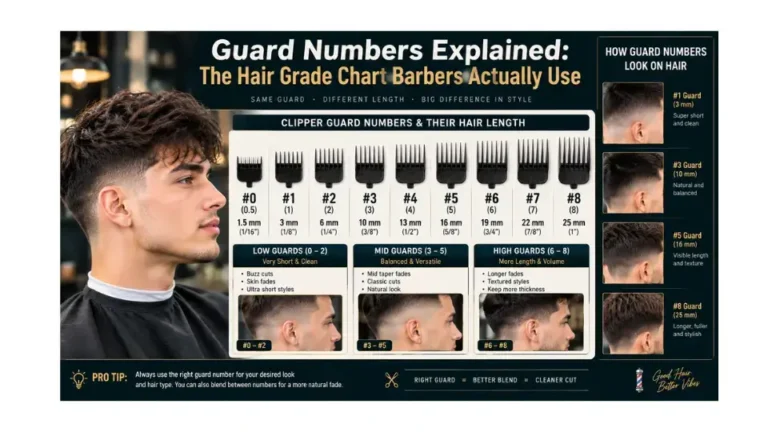
Talking to Your Barber: The Exact Guard Numbers
Getting this cut right comes down to agreeing on fringe length and how much texture to cut in, since “textured” can mean different things to different barbers. Bring a reference photo and mention how much length you want kept at the front.
Taper Fade Guard Sizes
- Guard 1: About 3mm
- Guard 2: About 6mm
- Guard 3: About 10mm
- Guard 4: About 13mm
Most mid taper textured fringe styles use a guard 2 or 3 on the sides, blending down to a 1 or skin near the hairline, while the fringe is point-cut with scissors rather than a guard. Ask your barber to point-cut rather than blunt-cut the fringe specifically, since this is what creates the piecey texture rather than a solid, straight edge.
Video Guide: Watch the Texture Get Cut In
Watching a barber point-cut a textured fringe makes the technique easier to follow than text alone, especially for seeing how much length is removed to create separation. A good tutorial should show the point-cutting process alongside the taper blend.
Common Mistakes That Flatten the Texture
Most mistakes with this cut come down to using the wrong product or skipping the point-cutting technique that actually creates the texture. Catching these before your barber starts, and adjusting your daily routine, keeps the fringe from looking flat.
Maintenance Reality Check
Maintaining a mid taper fade textured fringe comes down to daily product application to rebuild separation, alongside the regular taper schedule on the sides. The fringe needs consistent daily effort to look intentional rather than flat.
Daily Styling
Apply a small amount of matte clay or paste to damp or dry hair, working it through with fingers rather than a comb to preserve separation. Avoid brushing the fringe flat, which undoes the point-cut texture.
Products That Work Best
A matte clay or paste gives the most natural-looking texture without shine, while a lightweight texturizing spray works well for finer hair that needs volume more than hold. Avoid heavy, glossy pomades, which flatten texture rather than defining it.
Washing Routine
Wash according to how oily your scalp gets rather than a fixed schedule. According to the American Academy of Dermatology, shampoo frequency should match how oily or dirty the hair becomes.
Touch-Up Frequency
The fringe typically needs a trim every three to four weeks to maintain the point-cut shape, while the taper on the sides needs attention every two to three weeks. The two sections often run on slightly different schedules.
Textured Fringe vs Other Fringe Styles
A mid taper fade with textured fringe differs from a blunt fringe and an Edgar cut mainly in how the ends are cut and how much separation the style shows. The taper underneath stays similar across all three.
Textured Fringe vs Blunt Fringe
A blunt fringe is cut in one straight, even line, while a textured fringe uses point-cutting to create separated, piecey ends. Choose textured for a more casual, effortless look, or blunt for something cleaner and more graphic.
Textured Fringe vs Edgar Cut
An Edgar cut uses a specifically low, straight, geometric line rather than the piecey separation of a textured fringe. For the full breakdown of that style, see our mid taper fade Edgar cut guide.
Textured Fringe vs Curtain Fringe
A curtain fringe parts down the middle and falls to both sides, while a textured fringe typically falls forward as one piece with separated ends. See our complete mid taper fade fringe guide for the full range of fringe styles and lengths.
Frequently Asked Questions
Frequently Asked Questions
What is a mid taper fade with textured fringe?
A mid taper fade with textured fringe combines a mid-height taper on the sides with a fringe that’s point-cut and styled to look piecey rather than smooth and blunt.
How do I get real texture instead of a flat fringe?
Ask your barber to point-cut the fringe ends specifically, then use a matte clay or paste daily, working it through with fingers rather than a comb.
Does textured fringe work with curly hair?
Yes, though curly hair usually needs the fringe kept a bit shorter so the natural curl pattern reads clearly rather than getting weighed down.
How often does a textured fringe need a trim?
About every three to four weeks keeps the point-cut shape looking intentional, which is often slightly less frequent than the taper touch-up schedule.
What product should I use for texture?
A matte clay or paste gives the most natural, non-shiny texture, while a lightweight spray works well for finer hair that needs volume more than hold.
Can I add volume to a textured fringe?
Yes. Blow-drying the fringe upward at the root before it falls forward adds height without losing the piecey texture.
What’s the difference between textured fringe and an Edgar cut?
An Edgar cut uses a straight, low, geometric line, while a textured fringe uses point-cutting to create separated, piecey ends instead of one solid edge.
About the Author
Sonia writes and maintains MidTaperFade.com, covering men’s taper fade hairstyles, hair types, styling techniques, and barber-focused haircut guides. Each guide combines hairstyle research, practical styling information, and real reference photos to help readers choose a haircut that fits their hair and personal style.
Conclusion
A mid taper fade with textured fringe works because it delivers a casual, effortless-looking top while the taper keeps the sides clean and manageable. The best version depends on your hair texture, how much daily product you’re willing to apply, and how bold you want the texture to read.
If you’re new to the style, start with a classic, lighter texture before committing to a heavily choppy version. Choose the fringe length first, then let your barber build the taper around it.
Save this guide before your next barber appointment, and bring a clear reference photo showing how much texture you want. Already tried one of these? Let us know which product held your texture best in the comments.