Guard Numbers Explained: The Hair Grade Chart Barbers Actually Use (2026)
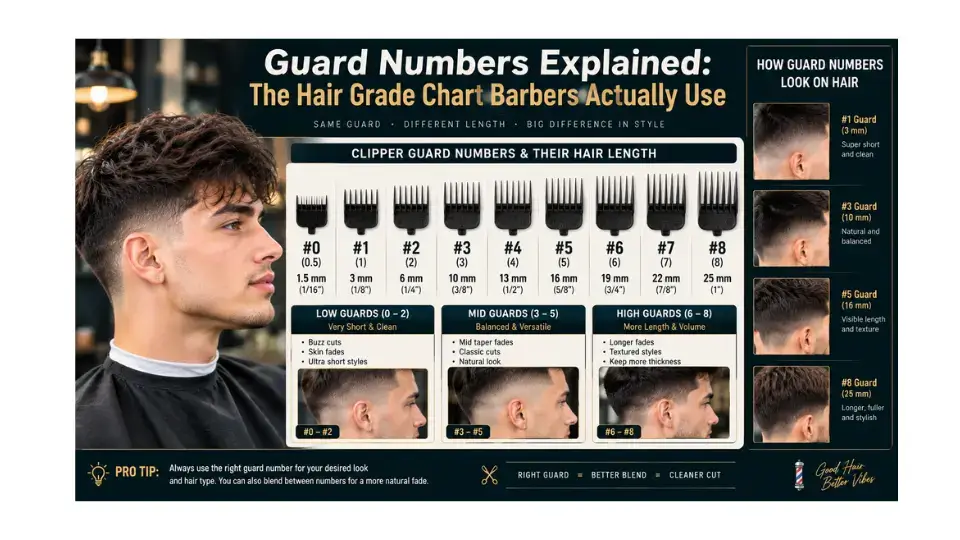
Guard numbers control exactly how much hair gets cut off during a haircut. Each number stands for a set length in millimeters, clipped onto the clipper blades. A 2 and a 4 look very different on the same head, yet most guys never learn why.
This guide explains what each guard number means. You’ll also learn how to use the numbers when you talk to your barber.
Guard Numbers Explained: What They Actually Measure
A guard number is the plastic piece placed over clipper blades. It controls how much hair gets cut. A higher number leaves more hair behind.
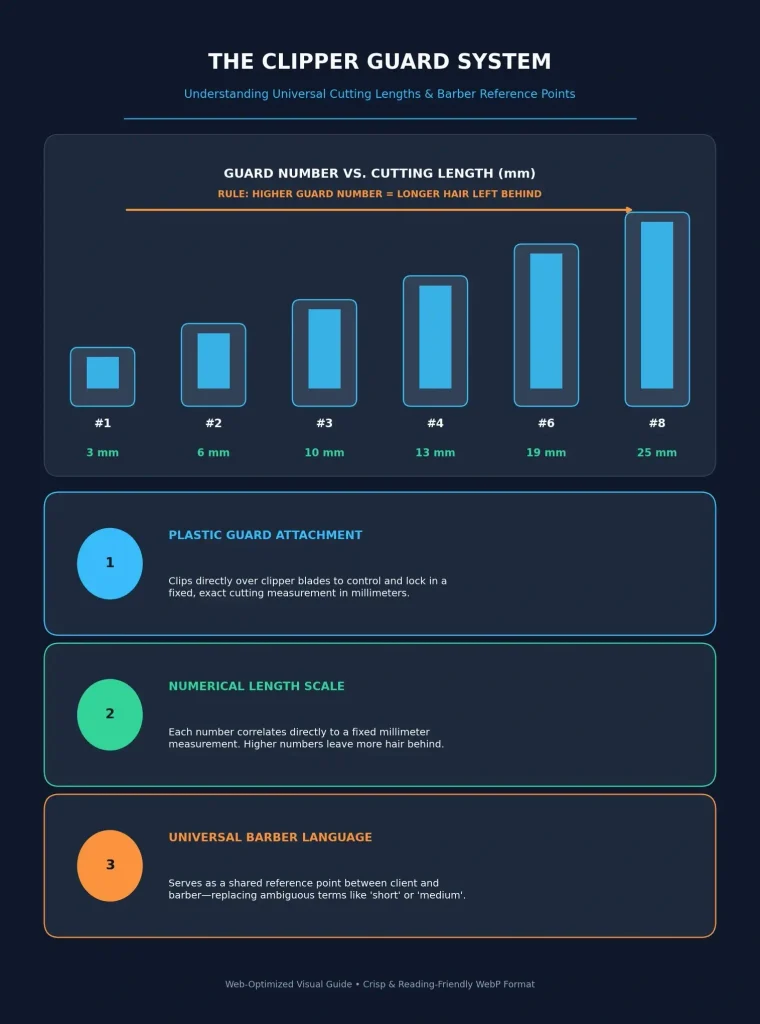
Barbers use these numbers instead of words like “short” or “medium.” This gives everyone the same clear point to work from.
Guard Numbers in 2026: Why Fades Depend on Getting This Right
Fade haircuts have become more precise in the last few years. That precision comes from guard numbers. A mid taper fade often uses two or three guard numbers to build its blend.Getting one number wrong can change the whole shape of the cut.
Guard Numbers: The Upside and the Blind Spot
Guard numbers make it easier to talk to a barber. But they don’t solve every problem on their own. The table below shows where they help and where they fall short.
| ✓ Pros | ✗ Cons |
|---|---|
|
|
Guard Number Chart: Every Range Broken Down
Guard numbers run from 000 up to about 8 on most clipper sets. Barbershops rarely go past a 6 for fades. Each range does a different job.
Skin-to-Skin Range (000 to 0)
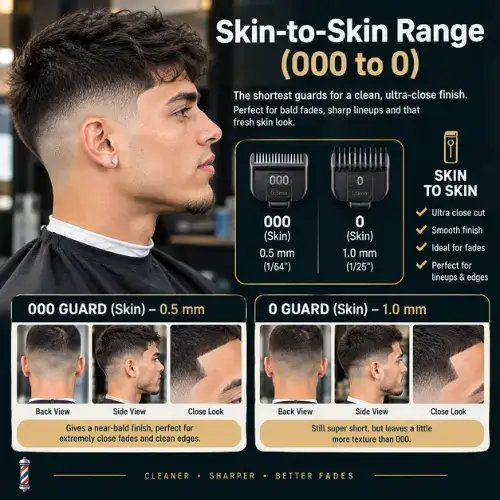
This range cuts hair down to bare skin, or close to it. It measures between 0mm and 1.5mm. It’s the base of most skin fades and the lowest part of a sharp taper.
Best For: skin fades, sharp hairlines, maximum contrast
Short Crop Range (1 to 2)
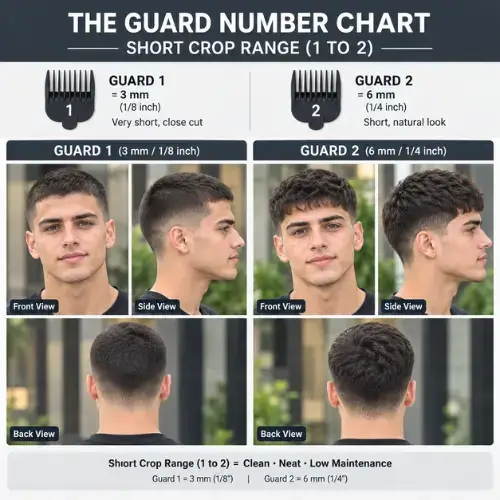
A 1 guard leaves about 3mm of hair. A 2 leaves about 6mm. Both are short enough to look like a buzz cut on their own.
Best For: buzz cuts, the base of a taper fade, easy upkeep
Medium Blend Range (3 to 4)
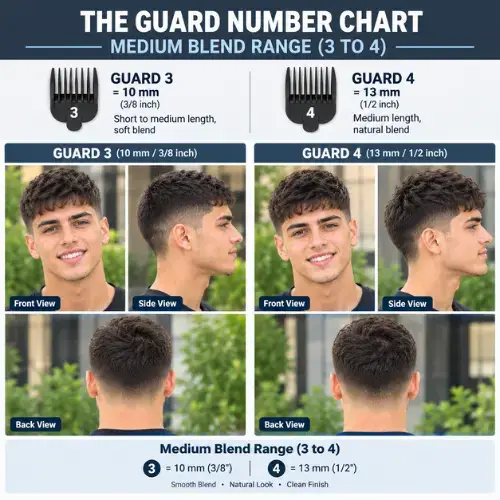
A 3 guard is close to 10mm. A 4 is close to 13mm. Both leave enough length to show texture on straight or wavy hair.
Best For: mid taper fades, textured crops, visible length on top
Longer Texture Range (5 to 8)
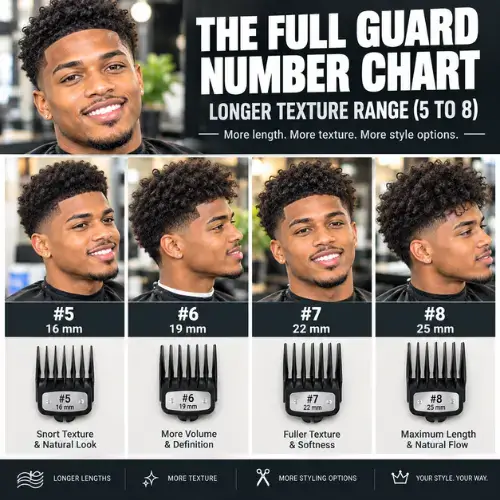
A 5 guard is about 16mm. An 8 guard is about 25mm. This range leaves enough hair for styling products to actually work.
Best For: textured tops, longer curls, low fades with more length
Guard Numbers by Hair Type: What Actually Changes
Hair type changes how a guard number looks once it’s cut. The number stays the same, but the result can look different. Curly hair often looks shorter than the number suggests.
Coily and Curly Hair
Curly hair can shrink up to half its length once it’s cut. A 2 guard might look closer to a 1 after the curls bounce back. Barbers who work with curly hair often size up to fix this.
Straight and Wavy Hair
Straight and wavy hair shows the true length of a guard number. There’s little shrinkage to plan for. This makes it easy to repeat the same cut every time.
Guard Numbers at the Barbershop: What to Actually Say
Naming one guard number is rarely enough for anything past a buzz cut. Tell your barber where the fade should start, which way it should blend, and how long you want the top.
Try saying: “start with a 2 on the sides, blend up to a 4 near the crown.” This gives your barber a clear picture instead of one number.
Guard Numbers Video Guide
Watching a barber blend guard numbers is easier to follow than reading about it. This short video shows the blend from start to finish.
Guard Number Mistakes That Ruin a Fade
Guard Numbers and Regrowth: How Long a Cut Actually Lasts
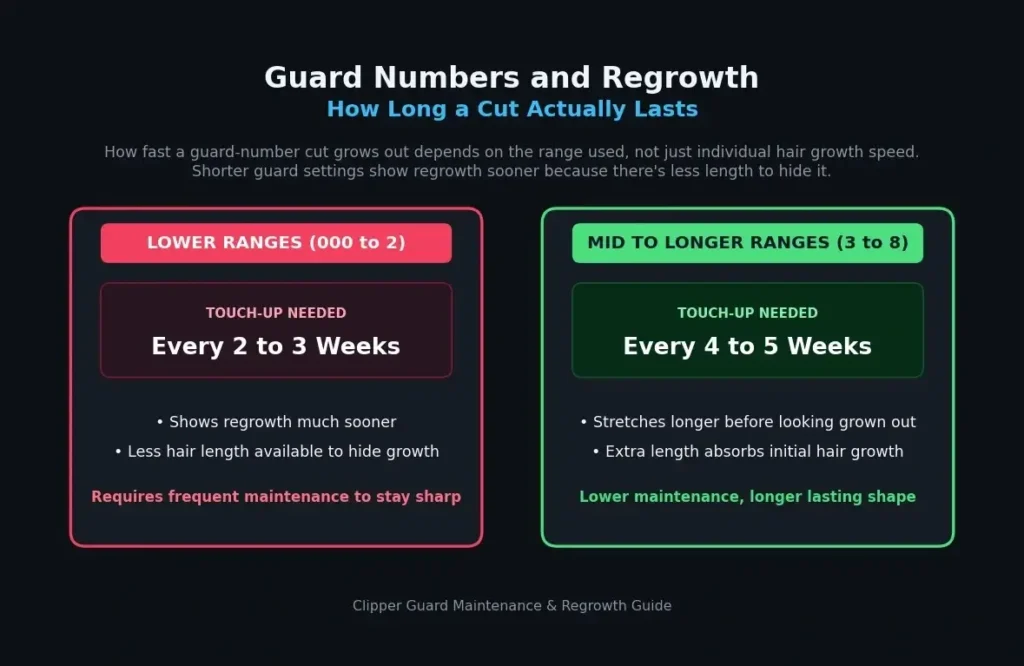
How fast a cut grows out depends on the guard range used. Shorter guards show regrowth sooner because there’s less hair to hide it.
Low ranges (000 to 2) usually need a touch-up every two to three weeks. Longer ranges (3 to 8) can often wait four to five weeks.
Guard Numbers vs Millimeters and Inches: What Matches Up
Not every barbershop uses the same guard system. Some clippers use inches or letters instead of numbers. Knowing how these match up helps if you switch barbers.
Guard Numbers vs Millimeters
Millimeters are the most reliable measure, since guard numbers can shift slightly between brands. Asking for “6mm” instead of “a 2” removes that guesswork.
Guard Numbers vs Inches
Inch-based sizing shows up more on cheap home clipper sets than on pro barber tools. A guard in the 1 to 4 range is usually between one-eighth and one-half inch.
Frequently Asked Questions
What guard number is best for a mid taper fade?
Most mid taper fades start with a 2 or 3 on the sides. They blend down to skin or a lower guard near the neck.
Does a guard number mean the same thing on every clipper?
Not always. Most brands are close, but a few clippers size their guards a little differently.
What guard number should I use for a buzz cut?
A 1 or 2 guard is the normal choice for a classic buzz cut.
Why does my hair look shorter than the guard number I asked for?
This often happens with curly or coily hair. The curls shrink back once they’re cut, so the length looks shorter than the number.
Can I use guard numbers to cut my own hair at home?
Yes. Blending two guard numbers takes practice, so many people start with one guard number all over first.
How often do I need a touch-up with a low guard number?
Every two to three weeks keeps a low guard cut looking sharp.
About the Author
Sonia is the content writer behind midaprade.com. She writes about men’s haircut trends, fade techniques, and grooming tips.
She mixes SEO skills with a real interest in barbering. Her goal is simple: give readers clear, useful advice for every hair type.
Conclusion
Guard numbers turn a vague request like “short on the sides” into something a barber can actually do. Once you know the ranges, picking between a 2 and a 4 stops being a guess.
Match the guard number to your hair type and the look you want. This makes the whole visit faster and easier.
Save this chart for the next barbershop visit, and share it with anyone who’s ever left a haircut shorter than expected.