Mid Taper Fade Fringe — Complete Style & Length Guide (2026)
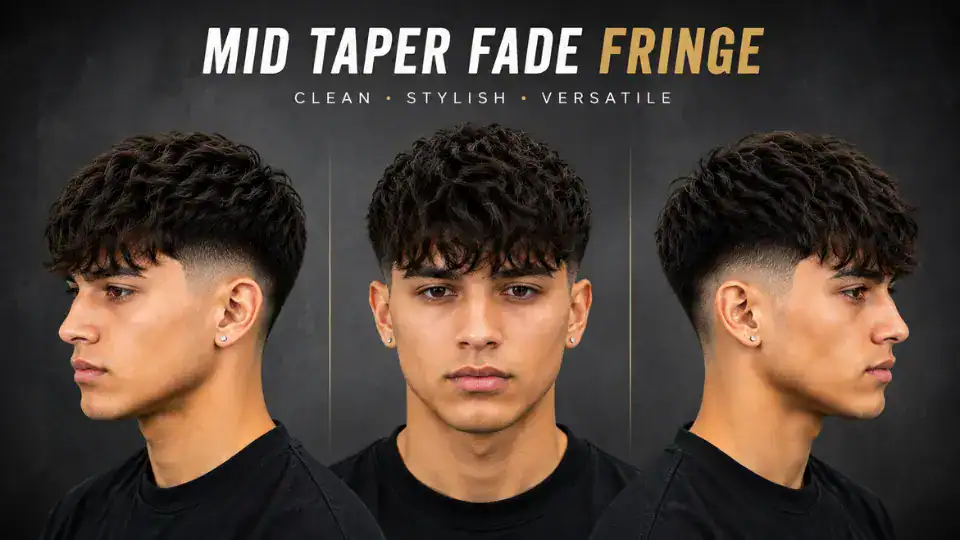
A mid taper fade with fringe brings the fringe forward while the sides stay clean and tapered. It works with straight, wavy, or textured hair, and suits nearly every face shape with the right length. This guide breaks down fringe length options, styling technique, and how to ask your barber for the exact look you want.
Table of Contents
- What Is a Mid Taper Fade Fringe Haircut?
- What’s the Difference Between a Mid Fade and a Mid Taper?
- Mid Taper Fade Fringe vs Other Fringe Cuts: What Actually Changes
- Why Mid Taper Fade Fringe Is So Popular in 2026
- 7 Mid Taper Fade Fringe Styles to Try
- Common Mid Taper Fade Fringe Mistakes to Avoid
- How to Style a Mid Taper Fade Fringe
- Which Face Shape Suits a Tapered Fringe?
- Best Mid Taper Fade Fringe Styles by Age Group
- Does a Tapered Fringe Make You Look Younger or Older?
- How to Ask Your Barber for a Mid Taper Fade Fringe
- Mid Taper Fade Fringe — Video Guide
- Frequently Asked Questions
- About the Author
- Conclusion
What Is a Mid Taper Fade Fringe Haircut?
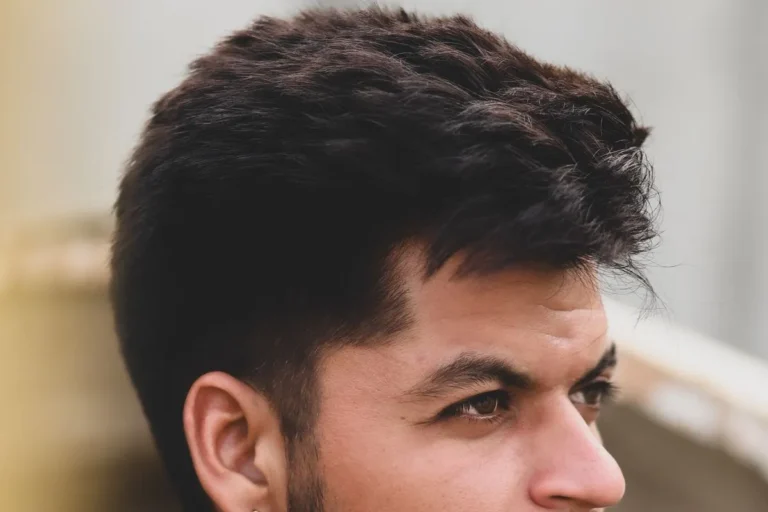
A mid taper fade fringe haircut pairs a mid-height fade on the sides with longer hair styled forward on top. The fade starts near the temple and blends down to skin. The fringe sits above the eyebrows, framing the face.
This combination works because the fade keeps the sides low-maintenance while the fringe adds a styled, intentional finish on top. Barbers usually leave two to four inches of length up front for the fringe to fall correctly.
What’s the Difference Between a Mid Fade and a Mid Taper?
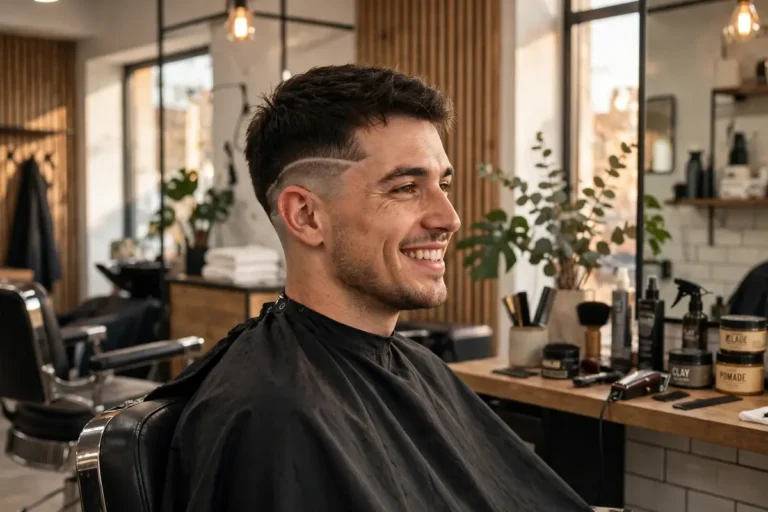
People often use these terms interchangeably, but there’s a key difference. A mid fade blends to the skin at mid-height for a sharper contrast, while a mid taper blends to a shorter length instead of skin, creating a softer, more natural transition.
With fringe styles specifically, most barbers use a mid taper fade — the softer blend pairs better with the longer length up front. A full mid fade can look too sharp against a soft, forward-styled fringe.
Mid Taper Fade Fringe vs Other Fringe Cuts: What Actually Changes
A mid taper fringe, a mid fade fringe, a French crop, and an Edgar all wear the fringe forward, but they differ in two things: how much of the side panel gets cut, and how the front edge is shaped. The table below shows the difference in one look, so you can name the right cut in the chair.
| Cut | Sides and top | Front edge | Choose it if |
|---|---|---|---|
| Mid taper fringe | Blend confined to the temple and neckline, weight kept in the sides | Uneven, piece-y, falls forward | You want a clean edge without losing the shape of the sides |
| Mid fade fringe | Faded across the whole side panel from the temple down | Uneven, piece-y, falls forward | You want sharper contrast between the sides and the top |
| French crop | Short, tapered sides | Short, controlled, blunt | You want the fringe look with less daily work |
| Edgar | Short tapered or faded sides, shorter on top | Straight blunt line across the forehead | You want a defined straight line instead of uneven pieces |
A low taper fringe keeps the sides fuller and softer than a mid taper, so it suits a heavy fringe that needs balance.
Why Mid Taper Fade Fringe Is So Popular in 2026
- Fringes have moved past their once-trendy phase and settled into a genuine styling staple. Paired with a mid taper, they read modern without looking overworked.
- The style adapts to almost any hair type. Straight hair holds the fringe flat and sleek, while textured hair adds natural movement without extra product.
- It also solves a common problem — length on top without the sides looking shaggy. That balance is exactly what keeps this combination in demand through 2026.
7 Mid Taper Fade Fringe Styles to Try
“Fringe length and styling direction change the whole look. Here is a quick comparison of popular mid taper fade fringe styles to help you choose the right variation:”
| Fringe Style | Best Face Shape | Recommended Hair Type |
|---|---|---|
| Short Fringe | Oval, Round | Fine to Medium |
| Curtain Fringe | Oval, Long | Medium to Thick |
| Side-Swept Fringe | Square, Oval | Straight to Wavy |
| Choppy Fringe | Round, Oval | Medium to Thick |
| Blowout Fringe | Oval, Long | Medium to Thick |
| Wavy Fringe | Any Shape | Wavy Hair |
1. Short Fringe with Mid Taper Fade
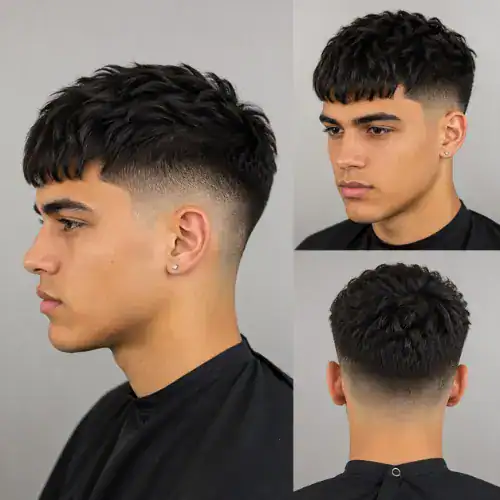
A shorter fringe sits just above the brow for a subtle, low-effort finish. It works well for guys with straight hair who want the look without heavy daily styling.
Best For: Oval or round faces, fine to medium hair
2. Curtain Fringe with Mid Taper Fade
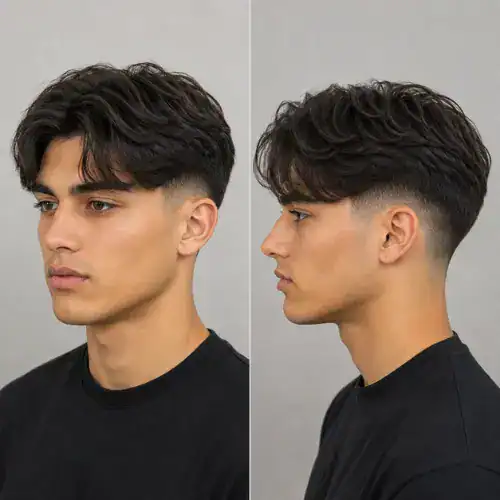
The fringe splits down the middle and falls to either side, framing the face. The fade underneath keeps the rest of the look controlled.
Best For: Oval or long faces, medium to thick hair
Popular with: Timothée Chalamet
3. Side-Swept Fringe with Mid Taper Fade
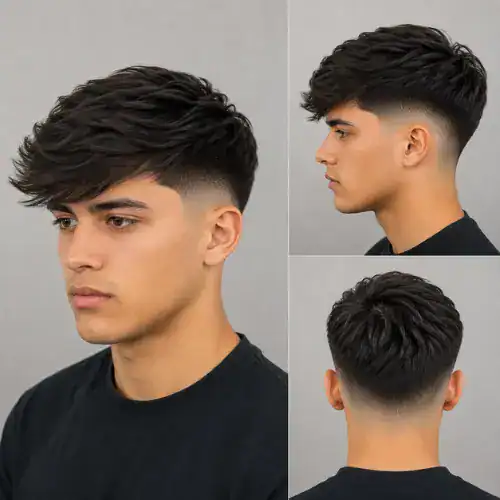
The fringe combs to one side instead of falling straight down. This adds a bit more structure than a classic forward fringe.
Best For: Square or oval faces, straight to wavy hair
✂ Pro Tip: Apply pomade to damp hair and comb in the direction you want before it dries — this trains the fringe to hold its shape longer.
4. Choppy Fringe with Mid Taper Fade
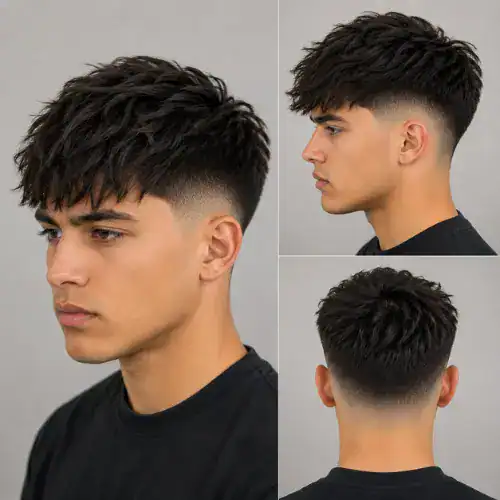
Uneven, textured ends give the fringe a lived-in, less polished feel. It pairs well with a slightly rougher styling approach overall.
Best For: Round or oval faces, medium-thick hair
For the full textured-fringe breakdown — 8 styles, products, and the exact barber ask — see our textured fringe styles guide.
5. Fringe with Mid Taper Fade Blowout
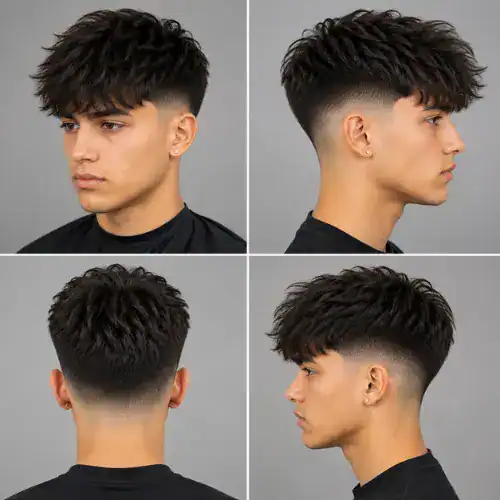
The fringe gets extra volume and lift from a blowout, adding height rather than letting it fall flat. The fade keeps the sides from competing with the added volume.
Best For: Oval or long faces, medium to thick hair
For the full blowout routine — drying technique, round-brush steps, and heat protection — see our blowout guide. A vent brush lifts the roots while you dry, so the fringe holds its height.
6. Wavy Fringe with Mid Taper Fade
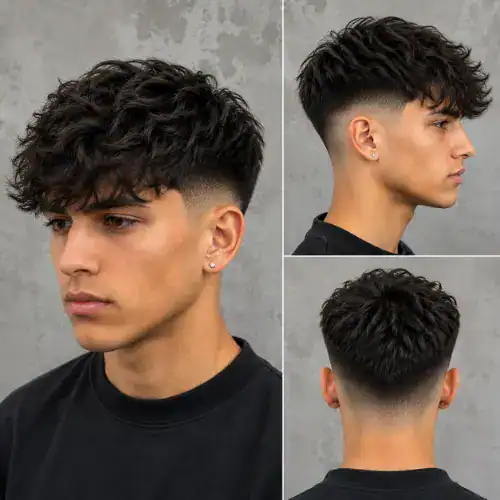
Natural wave adds texture and movement to the fringe without any extra styling effort. The fade below stays clean and simple.
Best For: Any face shape, wavy hair
7. Curly Fringe with Mid Taper Fade

A curly fringe falls forward on its own, so it needs almost no styling. The curls supply the texture that straight hair has to be cut into, and the mid taper keeps the sides clean while the curls stay the star. Keep 3 to 4 inches on top so shrinkage does not pull the fringe short once it dries, and shape it while the hair is damp. See our curly hair guide for the full routine on this cut.
Best For: curly and coily hair, and anyone who wants a fringe with no daily styling.
A pea-sized amount of curl cream keeps the curls defined without flattening them.
Common Mid Taper Fade Fringe Mistakes to Avoid
A mid taper fade fringe is easy to get wrong in small ways — cutting the fringe too short, using a guard instead of scissors, or skipping heat protection are the most common issues that ruin an otherwise clean cut. Catching these before your next appointment saves you weeks of growing it back out.
1. Cutting the Fringe Too Short
This is the most common complaint, and it can’t be fixed until the hair grows back. Flag your preferred length clearly before your barber starts cutting.
2. Letting the Barber Guard-Cut the Fringe
A blunt, guard-cut fringe looks unnatural against the softer taper on the sides. Ask for scissor or point-cutting instead for a natural edge.
3. Skipping Heat Protection When Blow-Drying
High heat can leave straight fringes flat and lifeless by midday. Use a low, cool setting and a heat-protective product if you’re styling with a blow-dryer.
4. Choosing a Full Mid Fade Instead of a Mid Taper
A sharp skin fade can look too harsh against a soft, forward-styled fringe. A softer mid taper blend usually pairs better with fringe styles.
5. Waiting Too Long Between Fringe Trims
The fringe grows into the eyes faster than the rest of the cut. Trim it every two to three weeks, even between full fade touch-ups.
6. Using Heavy Wax on Textured Fringes
Heavy wax weighs down choppy or textured styles fast. A matte paste gives grip and separation without the flat, greasy look.
How to Style a Mid Taper Fade Fringe
Learn how to style a mid taper fade fringe for a clean, textured look that suits your hair type and face shape.
Daily Styling Routine
When styling a mid taper fade fringe, apply a small amount of matte clay or sea salt spray to damp, towel-dried hair for the best control. Comb the fringe forward or to the side before it fully dries.
Blow-dry on a low, cool setting if you want extra volume. High heat can leave straight fringes flat by midday.
As an Amazon Associate, MidTaprFade earns from qualifying purchases made through links on this page, at no extra cost to you.
Products That Work Best
A light pomade or cream works well for sleek, controlled fringes. It holds shape without looking greasy.
For textured or choppy styles, a matte paste adds grip and separation. Avoid heavy waxes — they can weigh a fringe down fast.
How Often Should You Trim the Fringe?
Fringes grow into the eyes faster than the rest of the cut. Most guys trim the front every two to three weeks, even between full fade touch-ups. According to the American Academy of Dermatology scalp hair grows about half an inch a month on average — which is exactly why the fringe needs attention sooner than the sides.
Fringe Grow-Out Timeline: Week by Week
The taper and the fringe run on different clocks. The taper loses its edge first, because its contrast depends on a length difference of a fraction of an inch, while the fringe just gets longer — a styling problem before it is a haircut problem.
Healthy hair grows about half an inch a month, the same spacing as one clipper guard size — so a taper climbs about one guard number every week.
Source: Mid Taper Fade / MedlinePlus.
| Time since the cut | What you will notice | What to do |
|---|---|---|
| Week 1 | Sharpest taper, fringe at its shortest | Style with a little clay only |
| Weeks 2–3 | Taper softens, sides start to fill in | Nothing yet — this is the natural look |
| Week 4 | Sideburns and neckline look fuzzy | Book the taper touch-up |
| Weeks 5–6 | Fringe reaches the eyebrows | Trim the fringe or push it to the side |
Which Face Shape Suits a Tapered Fringe?
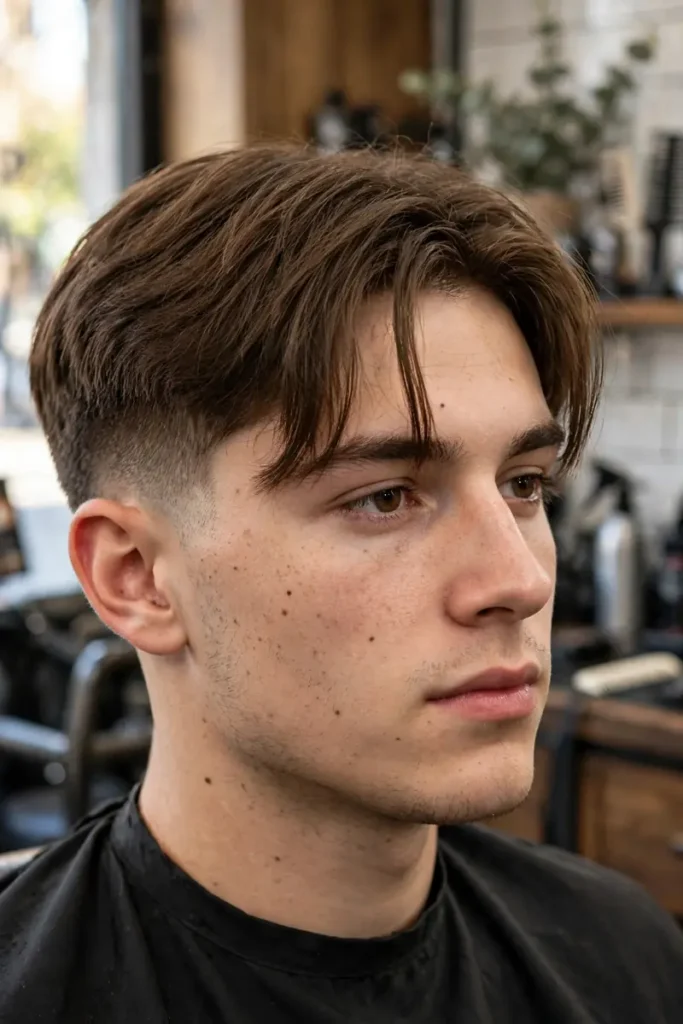
Fringe length and direction can be adjusted to work with most face shapes, since the style flexes more than a straight-across cut would. Oval and long faces have the most flexibility, while round and square faces benefit from an angled or textured fringe instead of a blunt one.
Oval Face
Oval faces suit almost any fringe style. A curtain fringe or side-swept option both work well here.
Round Face
A side-swept or choppy fringe adds angles that break up roundness. Avoid a full, straight-across fringe — it can emphasize width.
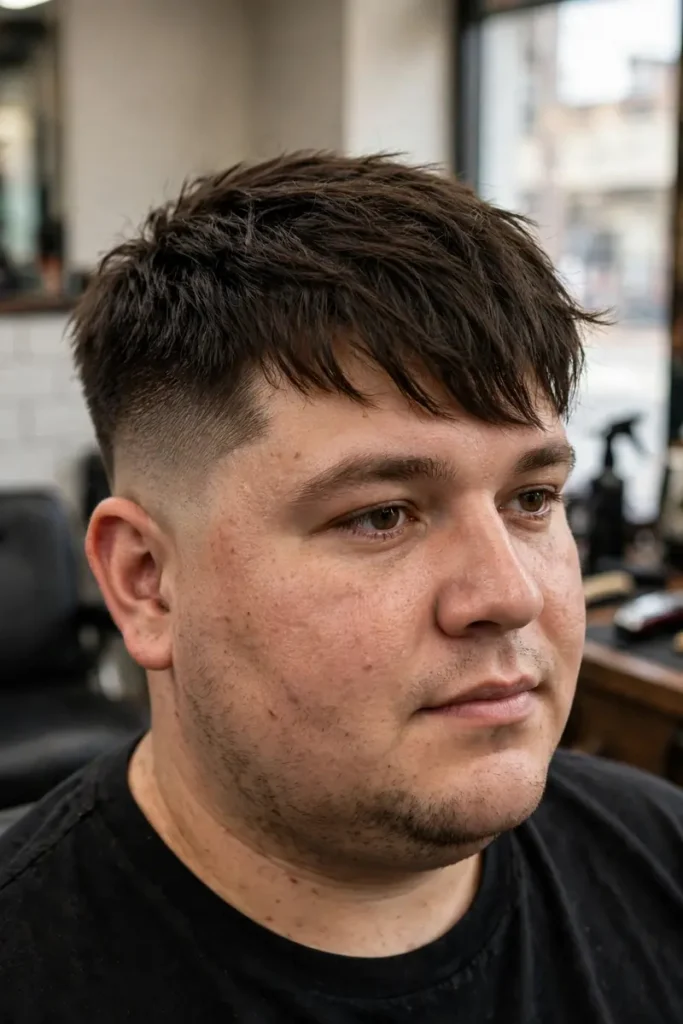
Square Face
Square faces pair well with a softer, textured fringe. It balances out strong jaw angles without adding more sharpness.
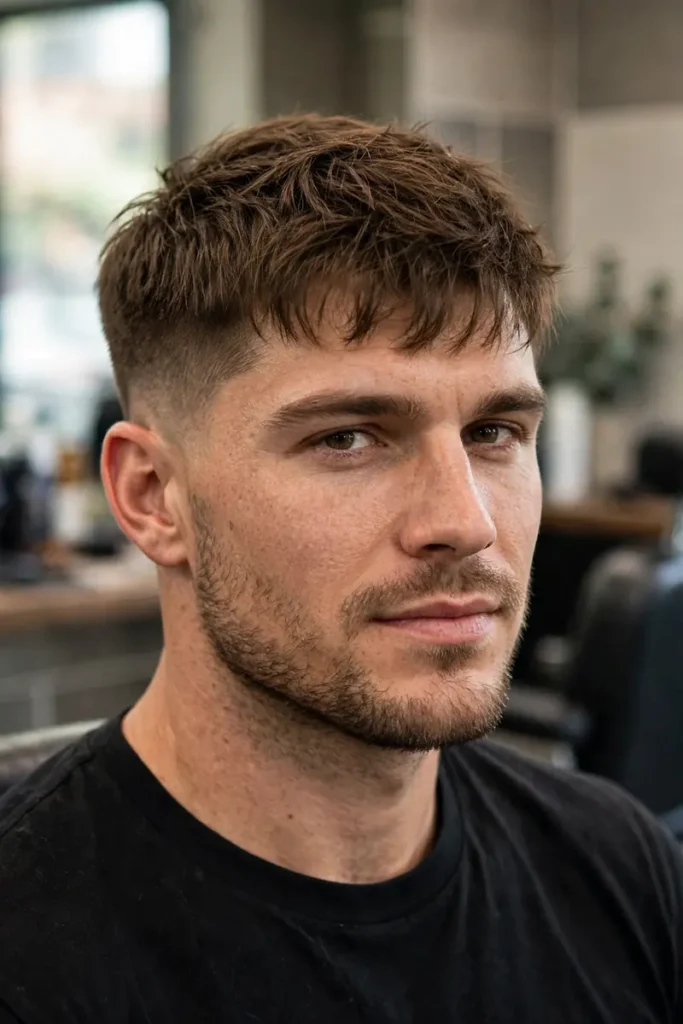
Long Face
A blunt, straight fringe adds visual width and shortens the face. Avoid a swept-back style that adds extra height.
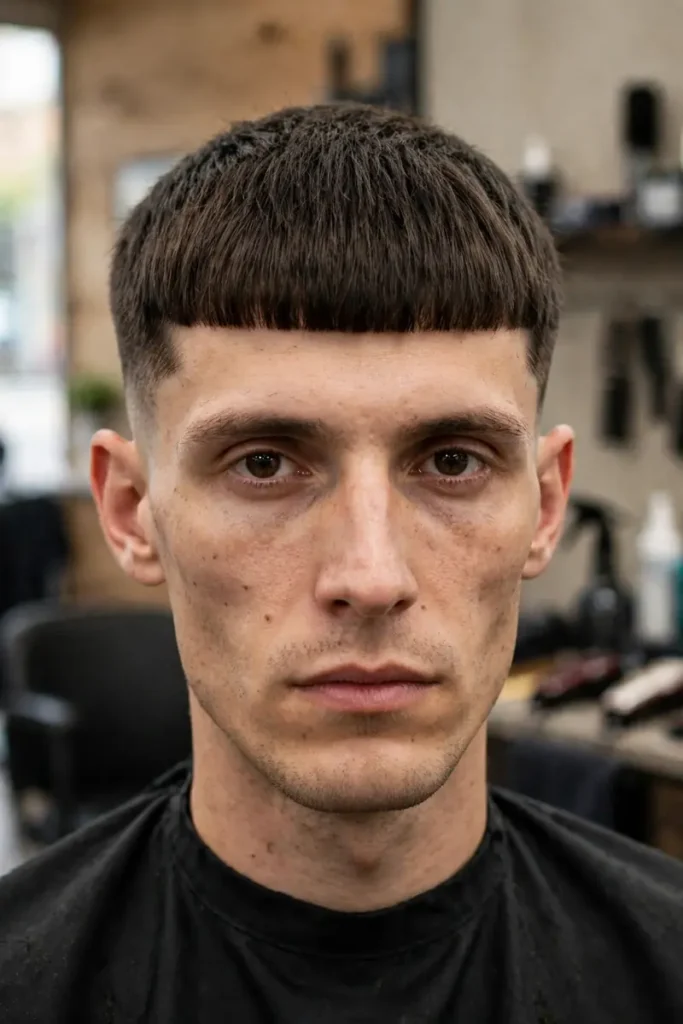
Heart-Shaped Face
A side-swept fringe works best here, drawing attention away from a wider forehead. Keep it slightly longer rather than blunt.
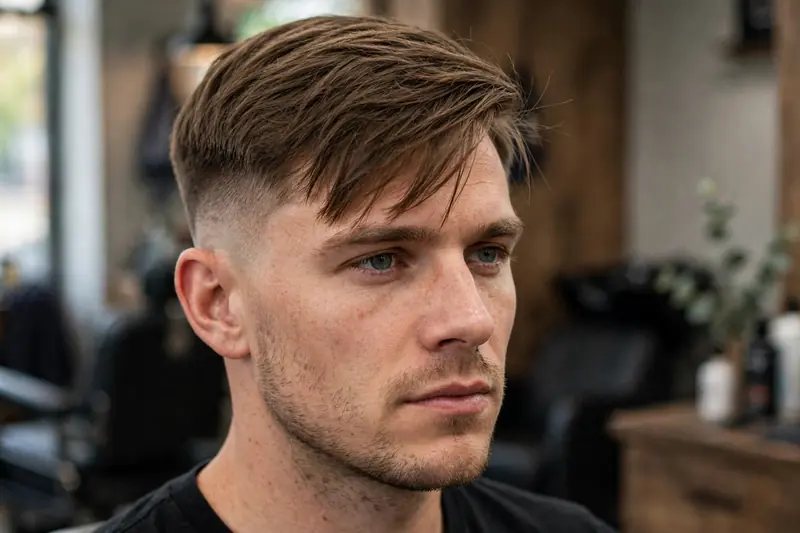
Does a Fringe Help a High Forehead?
Yes — a longer, fuller fringe covers more forehead and changes the proportions of the upper face. Keep the fringe at 3 to 4 inches and let it fall straight forward rather than sweeping it to the side, so the coverage stays even. It does not treat a receding hairline: a cut that depends on forward coverage looks thinner as the hairline moves back, so raise that with a dermatologist, not a barber.
Best Mid Taper Fade Fringe Styles by Age Group
Age and lifestyle usually decide how bold a mid taper fade fringe style can be, with younger guys able to experiment with length and volume more than professional settings typically allow. Maintenance and styling time also shift depending on how much daily effort you want to put in.
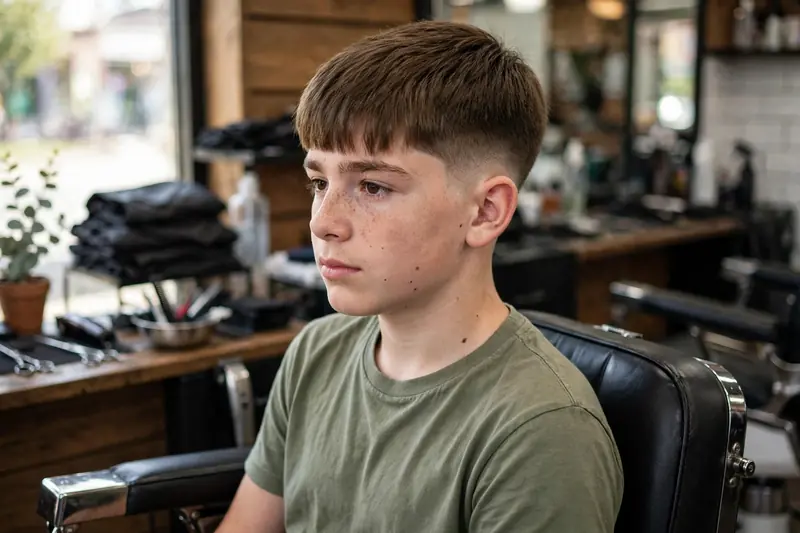
Teenagers
Low-effort fringe styles work best for school and daily activity. The short fringe or wavy fringe styles hold up without much daily styling.
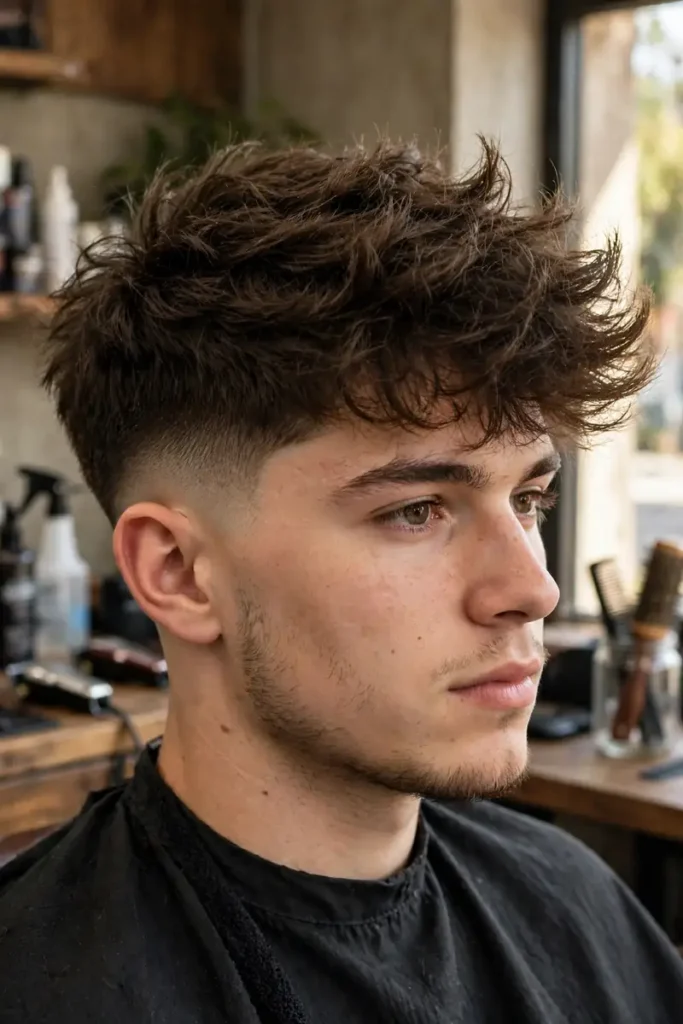
Young Men
This is the easiest stage to try something bolder. A choppy fringe, blowout fringe, or curtain fringe all fit well here.
Professional Men
Cleaner, more controlled styles read best in an office. The side-swept fringe keeps things polished without looking too casual for daily workplace wear.

Does a Tapered Fringe Make You Look Younger or Older?
A well-fitted fringe can soften the forehead and take attention off a receding hairline, which often reads as more youthful. The key is length — too long and it can look messy, too short and it loses the effect.
An overgrown or unstyled fringe tends to have the opposite effect, making a cut look neglected rather than intentional. Regular trims every two to three weeks keep the style working in your favor.
How to Ask Your Barber for a Mid Taper Fade Fringe
Ask your barber for a mid taper fade with a textured fringe, keeping length on top and a soft taper around the sides and back.
Key Phrases to Use With Your Barber
Say “mid taper” and specify you want length kept on top for a fringe. Mention how you plan to style it — forward, side-swept, or with volume.
Be clear about fringe length too. “Just above the brow” or “eyebrow-length” gives your barber a specific target.
Say this, word for word:
“Mid taper starting around my temple, shadow rather than skin. Keep 3 to 4 inches on top, and point-cut the fringe so I can push it forward. I want the fringe to sit just above my eyebrows.”
What NOT to say: Do not say only “mid taper fade fringe” and leave the rest to the barber. That phrase alone hands four decisions to someone picturing a different head of hair: where the taper starts, how close it finishes, how much length stays on top, and how choppy the fringe should be. Name all four, every time.
Choosing the Right Length and Guard Number
Sides usually drop to a guard 2 or 3, blending to a 1 or skin near the hairline. Guard 1 is about 3mm, guard 2 is 6mm, guard 3 is 10mm, and guard 4 is 13mm.
The fringe itself isn’t cut with a guard — ask your barber to point-cut or scissor-cut it for a natural edge instead of a blunt line.
Should You Ask for Skin or Shadow?
Shadow, if your skin bumps easily or you want the cut to last longer. A shadow taper leaves a light layer of hair at the shortest point instead of bare skin, so it grows out about a week more slowly and suits skin that reacts to close cutting. Skin wins only when you want the sharpest possible edge and do not mind a touch-up every 2 to 3 weeks.
Common Barber Mistakes to Mention
Cutting the fringe too short is the most common complaint — it can’t be fixed until it grows back. Flag your preferred length clearly before cutting starts.
A blunt, guard-cut fringe can also look unnatural. Ask for scissor work on the front for a softer finish.
Mid Taper Fade Fringe — Video Guide
Watching this style get cut makes the fringe-blending technique click faster than any written explanation. This tutorial breaks down how a barber balances length up front with a clean fade on the sides.
Now that you’ve seen the technique in motion, here’s how to keep it looking sharp between visits.
Frequently Asked Questions
What Is a Mid Taper Fade Fringe Haircut?
What’s Better, a Mid Fade or a Mid Taper?
What Is a Tapered Fringe Haircut?
Does a Tapered Fringe Make You Look Younger?
What Is a Blowout Mid Taper Fade?
Which Face Shape Suits a Tapered Fringe Best?
What length should the fringe be with a mid taper?
How do I style a fringe with a taper fade?
Does a mid taper fade fringe work on curly hair?
Can you get a mid taper fade fringe without going down to skin?
About the Author
Sonia is the content writer behind MidTaprFade.com, covering men’s haircut trends, fade techniques, and grooming guides with a focus on accurate, research-backed content. She combines SEO expertise with a genuine interest in barbering trends, aiming to give readers practical, barber-ready advice instead of generic fluff.
Conclusion
“A mid taper fade fringe haircut works because it balances two things guys usually have to choose between — clean, low-maintenance sides and a styled, intentional look on top. The fade does the heavy lifting while the fringe adds personality.
From short and subtle to voluminous and swept, this guide covered six ways to wear it — plus the styling technique, face-shape fit, and barber phrasing to get it right.