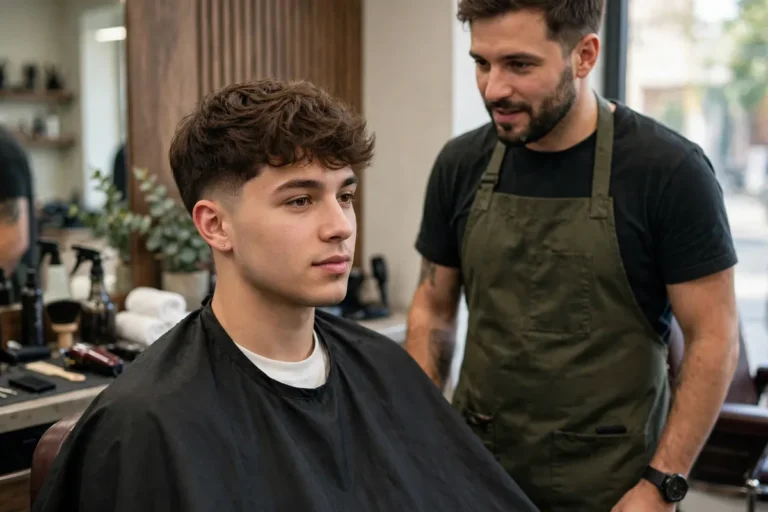
Textured Crop with a Mid Taper Fade: 8 Styles, Guards & Barber Script (2026)
Textured Crop with a Mid Taper Fade: 8 Styles, Guards & Barber Script (2026)
A textured crop with a mid taper fade is a short haircut with a choppy top pushed forward into a fringe, over sides that taper down at the temple. The top runs 1 to 3 inches, the fringe sits from mid-forehead to just above the brows, and the sides blend from a short guard up to the longer top. This guide covers 8 styles, the guard numbers, the faces and hair types it suits, and the exact words for the chair.
What Is a Textured Crop?: The Three-Part Cut
A textured crop is a short cut built from three decisions: how long the top is, where the fringe lands, and how short the sides go. The top usually sits between 1 and 3 inches. The fringe falls forward over the forehead, from mid-forehead to just above the eyebrows. The sides and back are faded or tapered, so the top stands out.
What makes it textured is how the top is cut. The barber cuts into the ends at an angle, called point-cutting, or slides the scissors along the hair to remove weight from inside the shape. That breaks the top into separate pieces instead of one flat, solid edge. The Sha’ar textured crop guide puts it plainly: the texture comes from the cut, not the product. Point-cutting, slide-cutting, or a razor breaks the top into pieces.
The Three Decisions
Top: 1–3 in | Fringe: mid-forehead to brows | Sides: any fade or taper
Ask for the top length in inches first. Then name the fringe: blunt, choppy, or soft. Then name the fade height: low, mid, or high. A mid taper keeps the sides soft, so it is the safest first version. A skin fade gives the sharpest contrast, so save it for the second visit, once you know you like the top.
Source: Mid Taper Fade, lengths after Sha’ar
The mid taper is what ties this cut to our site. It starts the blend at the temple and stops at a short guard instead of bare skin. That keeps the sides clean without the harsh line a skin fade can leave. For the taper family in full, read the complete mid taper fade guide on the main site. For the texture-only version without the crop shape, see our textured mid taper fade guide.
Why the Crop Works in 2026: Short, Honest, Low Effort
The crop works because it asks for almost nothing in the morning. It takes two minutes, one product, and no blow-dry. It suits straight, wavy, and curly hair, and it hides a receding hairline better than any swept-back style. That combination is why barbers keep recommending it to men who want a change without a routine.
It also fits the way men actually wear their hair now. Short sides, a forward fringe, and a matte finish read current without looking styled. The Manhattan Barbershop guide calls it low-effort in the morning, workable on most hair types, and easy to get wrong if you ask for it in vague words. The fix is the three-part order in the card above: length, fringe, fade.
Crop vs French Crop vs Caesar: The Family Table
These three names describe one family of cuts, and barbers use them loosely. The difference sits in the fringe and the amount of texture. The table below separates them by the four things that actually change in the chair.
| Cut | Top length | Fringe | Texture | Sides |
|---|---|---|---|---|
| Textured crop | 1 to 3 in | Choppy, pushed forward, mid-forehead to brow | Heavy: point cut or razor, visible pieces | Any fade or taper |
| French crop | 1 to 2 in | Short, soft or slightly textured, on the forehead | Light: neat with a little movement | Faded or tapered |
| Caesar cut | Under 1 in | Blunt, straight across, uniform | Almost none: one even length | Tapered, short all over |
The TheVou crop guide sums up the family in one line. The Caesar has a blunt straight fringe on a uniform top. The French crop has a short fringe on a slightly longer top, with the sides faded. The textured crop has a choppy, point-cut top that separates. If your barber hears only the word crop, say which row of this table you mean. That one sentence prevents the most common mix-up in this family.
Our site already covers two of the three rows in full. The Caesar has its own guide on this blog: Caesar haircut. The longer fringe styles live on the main site: mid taper fade fringe guide. This article is the third row: the choppy, textured version with a mid taper.
8 Styles That Work: Fringes, Hair Types and Finishes
The crop changes in three places: the fringe, the hair type on top, and the finish on the sides. Pick one from each group and you have your version. The eight styles below cover the full range, from the neat office version to the messy weekend one.
The Fringes: Blunt, Choppy, Micro
The fringe sets the face of the cut. Blunt reads sharp, choppy reads relaxed, and micro reads bold. All three use the same mid taper on the sides.
The Classic Textured Crop
A 2-inch top, point-cut into pieces, pushed forward with a short choppy fringe. The mid taper starts at the temple and blends through a 2 and 3 guard. It suits nearly every face shape, and it needs one fingertip of matte clay. Works well for: straight or wavy hair, first-time crop wearers, offices and weekends alike.
The Blunt Fringe Crop
The fringe is cut straight across in one clean line, just above the brows. The top stays 1 to 2 inches, neat and compact, with light texture only at the ends. It reads sharper than the classic version, so it suits men who like a defined outline.

Ask for the fringe line first, since it decides the whole look. A blunt fringe shows every uneven snip, so it needs a barber with a steady hand. Best for: straight hair, oval or square faces, men who want the sharpest version.
The Micro Fringe Crop
The fringe stops well above the brows, at mid-forehead or higher. The top is short, 1 to 1.5 inches, with heavy texture. It shows the most forehead of the three, so it suits strong brows and a clean hairline. It is the boldest fringe in this family, and the easiest to grow out badly, so book the next visit before you leave.
The Hair Types: Curly, Wavy, Messy
The crop bends to the hair on top. Curls keep their shape, waves add free texture, and straight hair gets the texture cut in. The sides stay the same mid taper in all three.
The Curly Crop
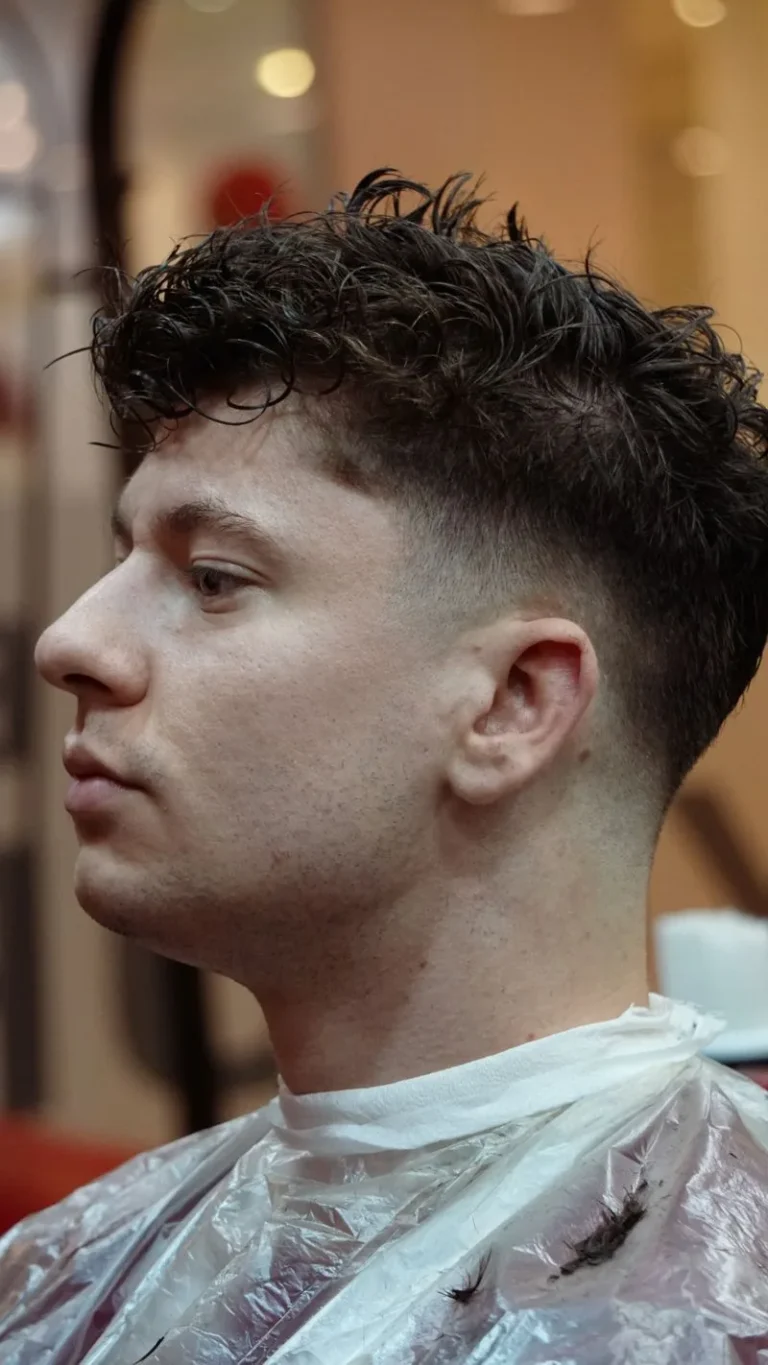
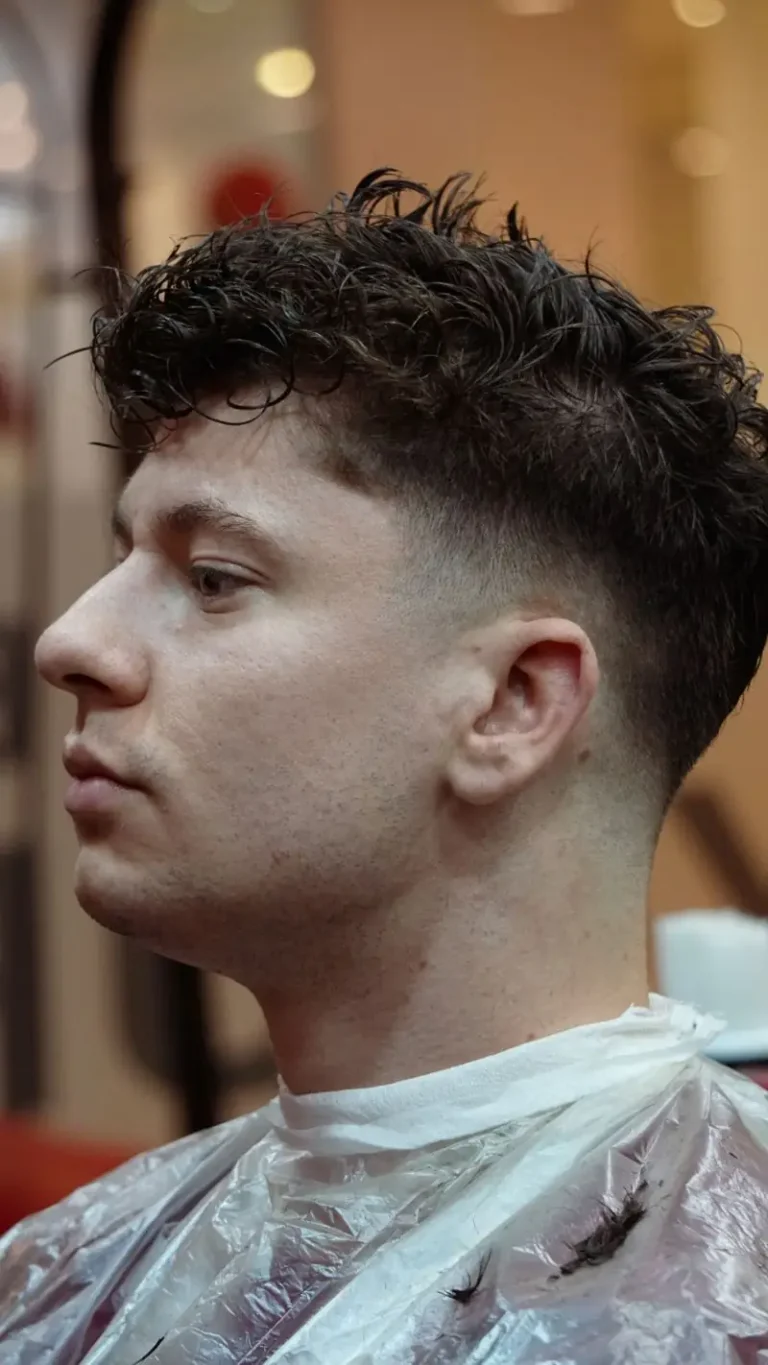
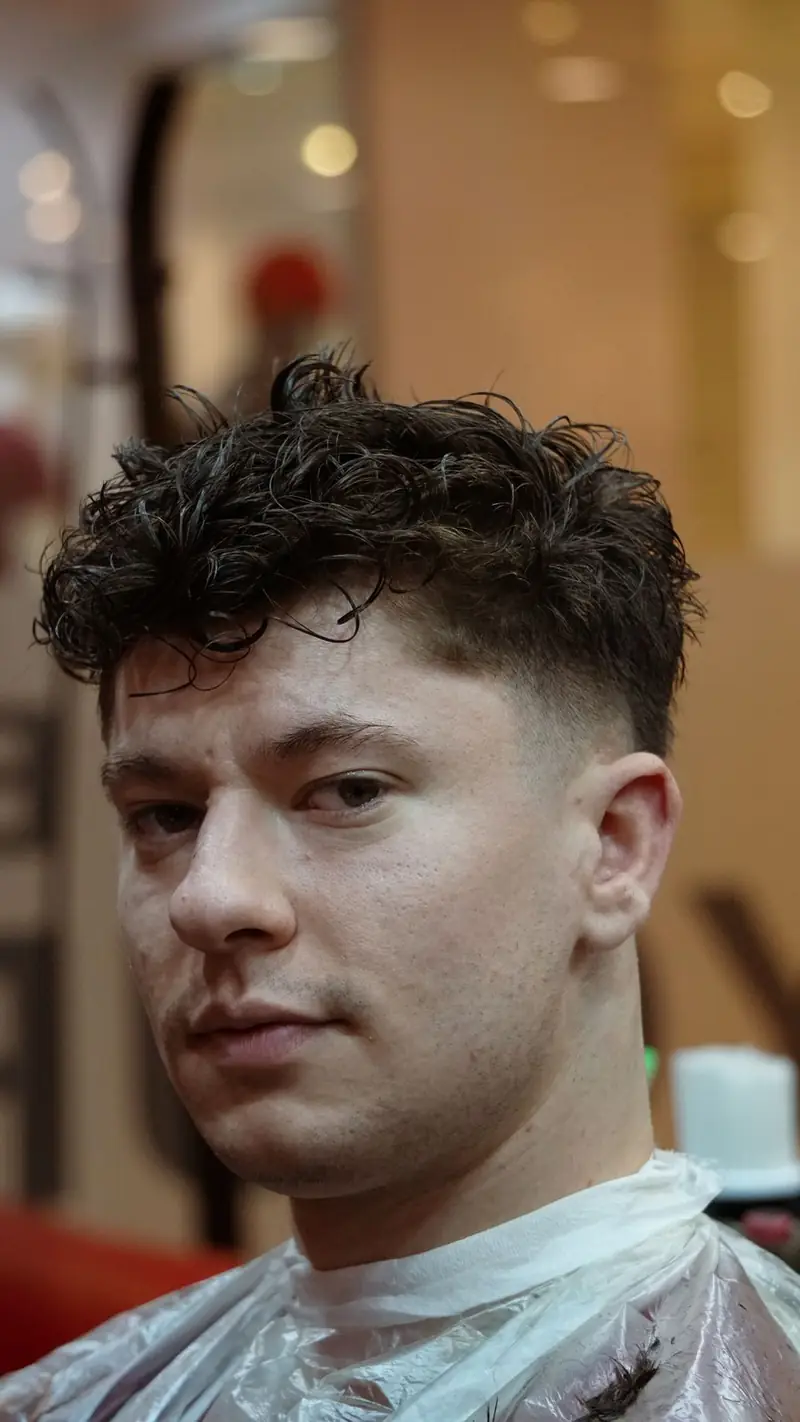
Two to three inches of curls on top, pushed forward over a mid fade. The tight sides frame the curls, and the contrast is one of the most popular looks in barbering. The photo at the top of this guide shows this version: curls on top, a clean blend at the temple. A curl cream on damp hair defines the curls without weighing them down. For the curly versions of this taper in full, see our mid taper fade curly hair guide. Best for: curly and coily hair, natural texture, every face shape.
The Wavy Crop
Waves do the texturing for free, so this version needs the least product of the eight. The top runs 2 to 3 inches, pushed forward with the natural bend left in. The fringe falls soft and uneven, which is the point: the waves break the line for you.

Ask the barber to cut it dry or nearly dry, since wet waves shrink as they dry and the fringe can end up shorter than planned. Best for: wavy hair, low-effort mornings, oval or long faces.
The Messy Crop
The top is point-cut hard, pushed forward in every direction, and left deliberately uneven. It looks undone on purpose, so it suits men who hate neat hair. A fingertip of matte clay, worked in with fingers only, holds the pieces apart.
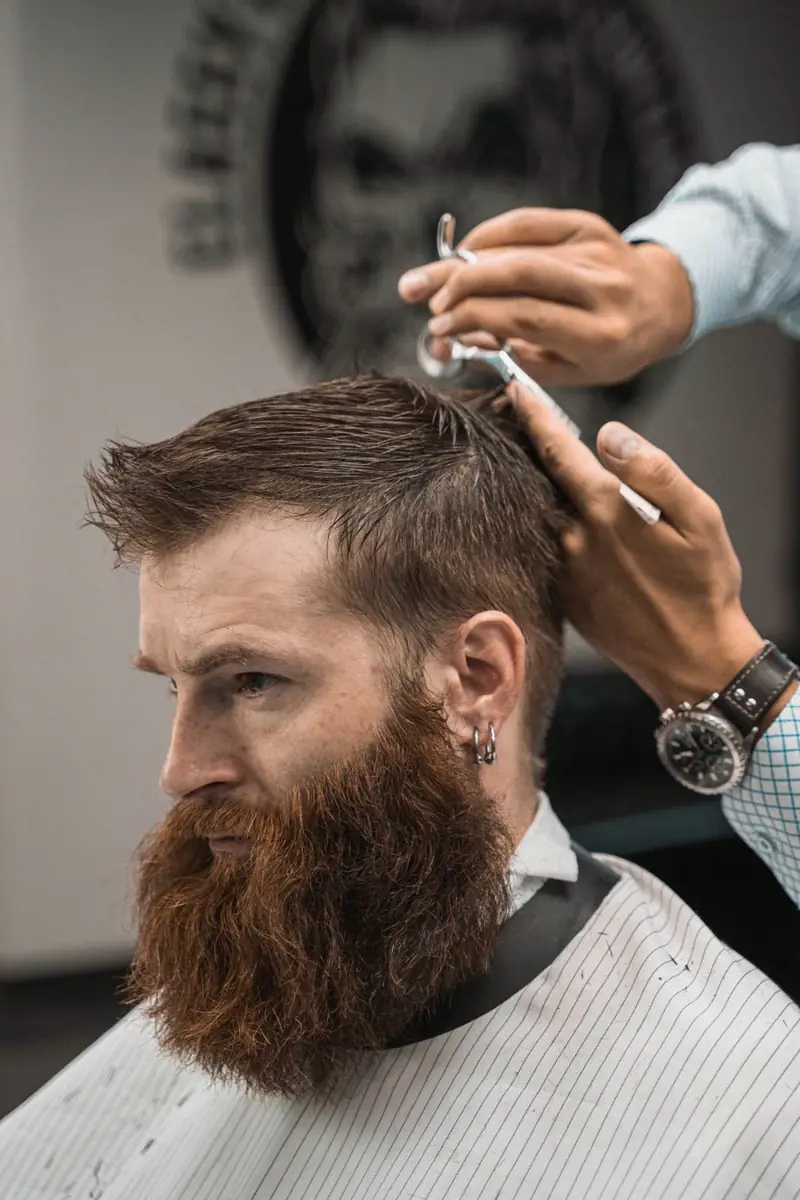
Messy does not mean grown out. The sides still need a clean mid taper, or the whole cut reads untidy instead of styled. Best for: thick straight hair, casual settings, men who style with their hands, not a comb.
The Finishes: Skin Fade, Short Crop, Beard Blend
The finish sets the contrast. A skin fade is the boldest, a short crop is the lowest effort, and a beard blend ties the cut to the face. All three keep the same textured top.
The Crop with a Skin Fade
The sides go to bare skin at the bottom, cleaned with a foil shaver, then blend through a 0.5 and 1 up to a 2. The contrast is the sharpest of the eight, and it needs a visit every 1 to 2 weeks. It suits thick hair best, since the hard line under a thin top can show the scalp. Best for: thick or wavy hair, oval or heart-shaped faces, men who visit the barber often.
The Short Crop
The top is clipped to 1 to 1.5 inches, the shortest version that still counts as a crop. The fringe is short and choppy, and the whole cut takes under two minutes to style. It is the lowest-effort version of the eight, and the best pick for hot weather, the gym, or thinning hair. A clipper with a 4 guard holds the top between visits, but leave the blend to the barber.
The Neat Crop with a Beard
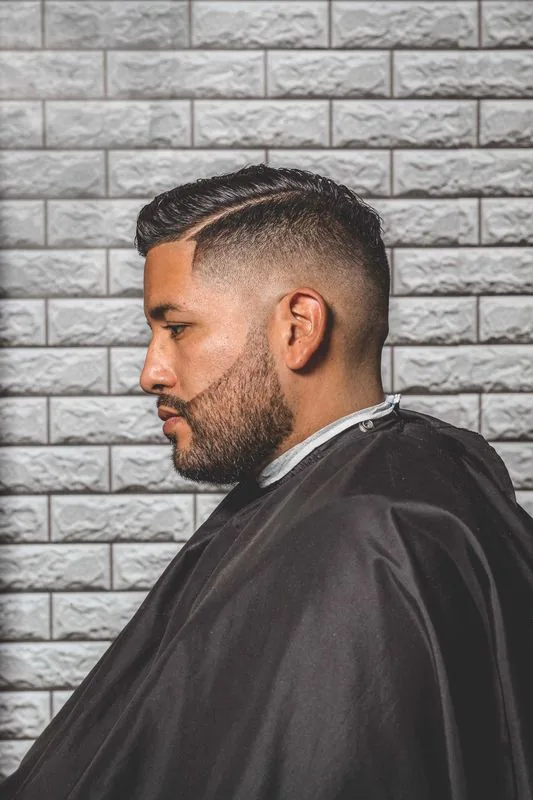
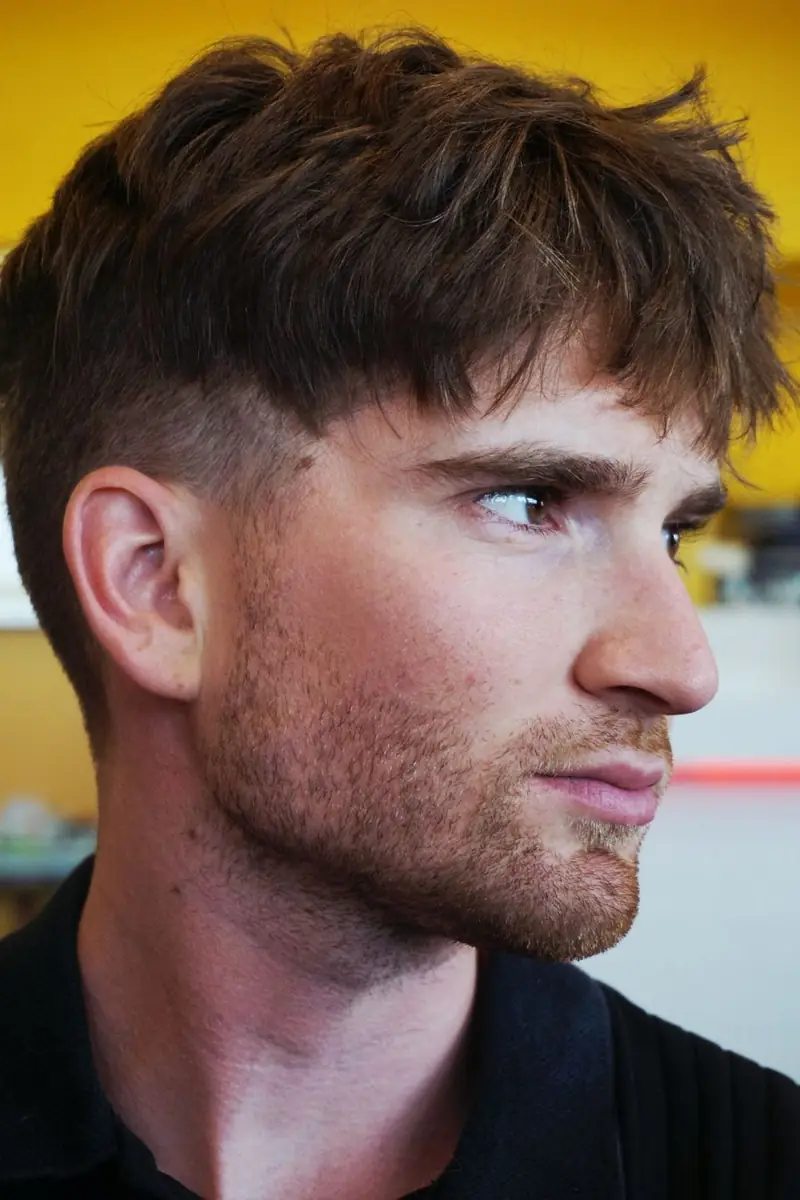
The top is combed forward, neat and smooth, with a short soft fringe. The mid taper blends down into the beard at the sideburns, so the cut and the beard read as one shape. The photo below shows the finish: spray sets the top, and the beard carries the lower half of the face.
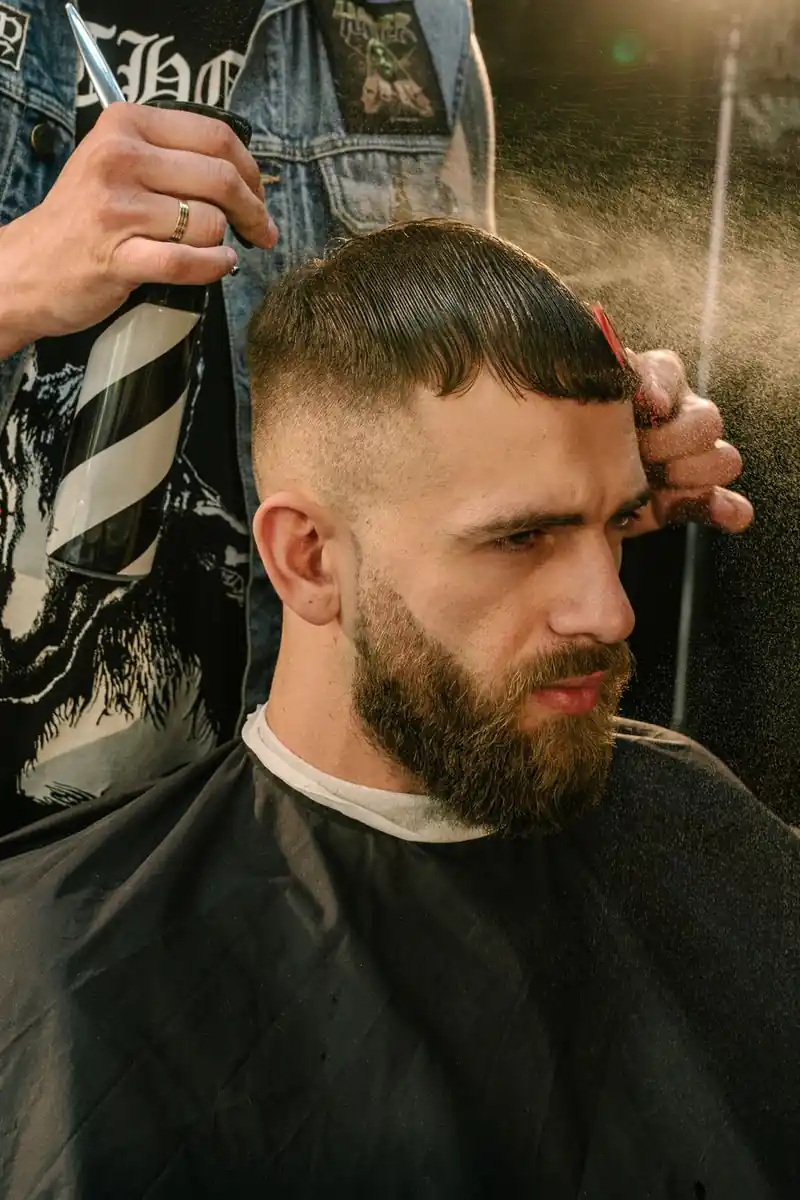
Ask for the taper to connect into the beard with a 1 guard, so no gap shows at the sideburn. A detail trimmer keeps the cheek line tidy between visits. Best for: bearded men, straight hair, offices and formal settings.
Which Face Shape Suits It?: The Fit Check
The crop suits oval, square, and slightly round faces best, and it adapts to the rest with small changes. The fringe shortens a long face, the height on top lengthens a round one, and the taper slims wide cheeks. The picker below maps each face shape to the version that flatters it.
| Face shape | Best version | Why it fits | Avoid |
|---|---|---|---|
| Oval | Any version | Balanced proportions take every fringe | Nothing: the safe shape |
| Round | Messy crop, 2 to 3 in on top | Height on top adds length to the profile | Micro fringe: it shortens the face further |
| Square | Blunt fringe crop | The straight fringe echoes the jawline | Skin fade + blunt fringe together: too many hard lines |
| Long | Blunt fringe crop | The fringe covers forehead and shortens the face | Tall messy top: it adds height you do not need |
| Heart | Classic crop, soft fringe | Soft texture balances a wide forehead and narrow chin | Heavy blunt fringe: it widens the forehead further |
Is a textured crop good for a round face?
Yes. It suits a round face when the top keeps height. A messy crop with 2 to 3 inches on top adds length to the profile, and the mid taper takes weight off the cheeks. Skip the micro fringe, since it shortens the face further. Ask for texture on top, not a flat fringe.
By Hair Type: Straight, Wavy, Curly, Thin & Thick
The crop is one of the few cuts that works across all five hair types, but the version changes each time. Straight hair needs the texture cut in, wavy hair needs the least help, curly hair needs length, thin hair needs a soft finish, and thick hair needs weight taken out.
Does a textured crop work on thin hair?
Yes. It works on thin hair, and it is one of the best cuts for it. The point-cutting breaks the top into pieces, so the hair reads as density instead of one flat sheet. Keep the top 1.5 to 2 inches, ask for a low or mid taper, and skip the skin fade. Bare skin under thin hair shows the scalp line through the blend. For the thin-hair versions of this taper in full, see our mid taper fade thin hair guide.
Does a textured crop hide a receding hairline?
Yes. It hides a receding hairline better than any swept-back style. The forward fringe covers the temples, and the short top leaves no long-on-top contrast pointing at the front of the head. Golden Scissors, a London barber shop, calls the fringe the whole point of the cut. It covers a receding hairline, and it grows out into a longer version of itself rather than into a mess. Keep the fringe heavy if you are covering a hairline, since thinning it out defeats the purpose. For more cuts that work with a receding hairline, see our best haircuts for a receding hairline guide.
Thick hair needs the opposite treatment. Ask the barber to thin the top with texturising shears, or the crop will sit heavy and round. Wavy hair is the easiest of the five: the bend does the work, so ask for a light point-cut only. Curly hair needs the most length, 2 to 3 inches, so the curls hold their shape. Straight hair needs the most cutting: heavy point-cutting, or the top will lie flat. For the thick-hair versions of this taper, see our mid taper fade thick hair guide. For straight hair in full, see our mid taper fade straight hair guide. For wavy hair, see our mid taper fade wavy hair guide.
Guard Numbers: The Mid-Taper Ladder
The guard ladder is the same for every version of this cut. The only thing that changes is where it stops at the bottom. Skin stops at bare skin, taper stops at a 0.5 or 1, and a soft taper stops at a 2. Name the bottom guard out loud, and the barber sets the same ladder every time.
| Version | Bottom guard | Blend guards | Top length | Looks sharp |
|---|---|---|---|---|
| Classic (mid taper) | 0.5 or 1 (1.5 or 3 mm) | 1, 2, 3 | 2 in | About 2 weeks |
| Skin fade | Skin (foil shaver) | 0.5, 1, 2 | 1 to 2 in | About 10 days |
| Soft taper | 2 (6 mm) | 2, 3, 4 | 2 to 3 in | About 3 weeks |
| Short crop | 1 (3 mm) | 1, 2, 3 | 1 to 1.5 in | About 2 weeks |
| Curly crop | 0.5 or 1 (1.5 or 3 mm) | 1, 2, 3 | 2 to 3 in | About 2 weeks |
The guard sizes are standard: a 1 guard cuts 3 mm, a 2 cuts 6 mm, a 3 cuts 10 mm, and a 4 cuts 13 mm. Our hair clipper guard numbers guide lists every guard in millimetres, and the taper fade guard numbers guide covers the taper versions. Say the numbers in inches and guards together, since barbers think in both.
The Three-Part Order
Length → Fringe → Fade
Give the top length in inches, then the fringe style, then the fade height. That order is the whole script. A barber can cut any crop from those three facts, and no other words are needed. If you name only the top length, the barber has to guess the other two, and that is where bad crops come from.
Source: Mid Taper Fade, order after TheVou
How to Ask Your Barber: The Exact Words
Bring a photo of the version you want, on a man with hair like yours. Words alone can fail, and a photo shows the fringe, the texture, and the fade height in one glance. Then say the three-part order out loud, and add one line about what not to do.
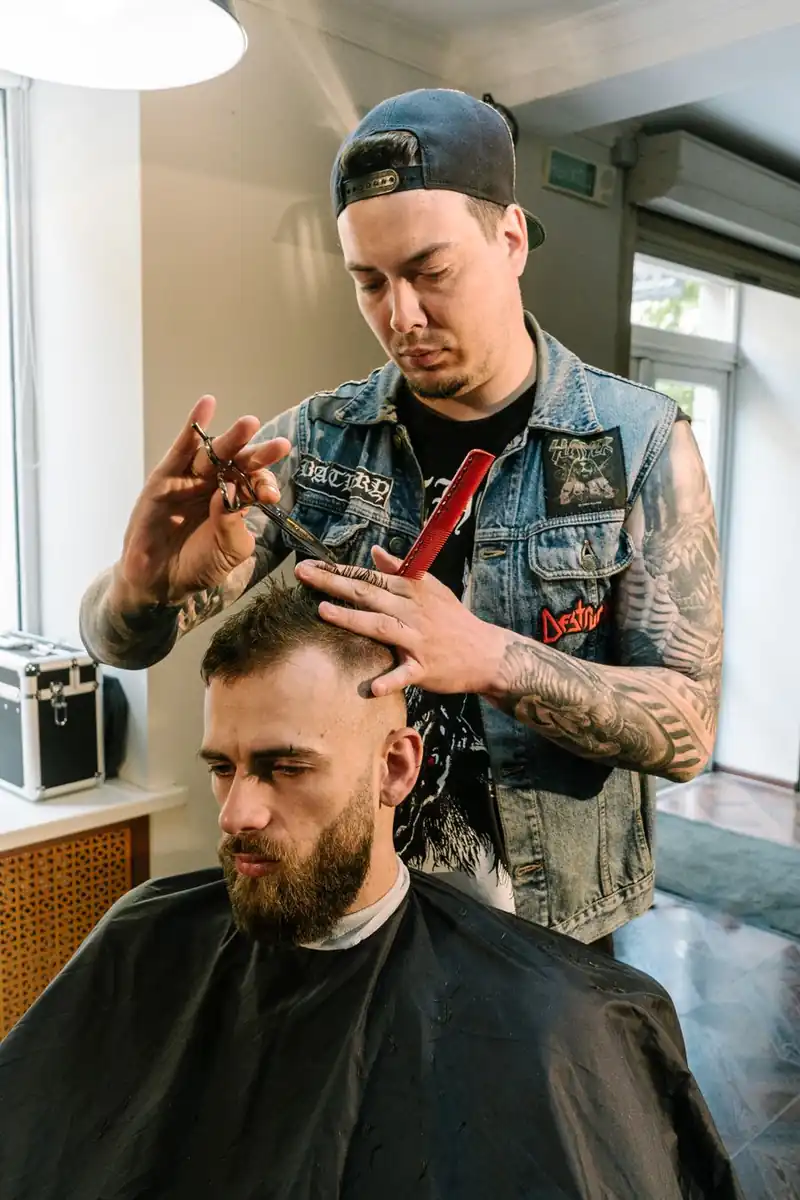
Classic version: “A textured crop, two inches on top, pushed forward, with a short choppy fringe. Mid taper fade on the sides, starting at the temple. Point-cut the top so it separates.”
Blunt fringe version: “A French crop, one and a half inches on top, blunt fringe straight across just above the brows. Low taper on the sides, and keep the fringe line clean.”
Curly version: “A curly crop, two to three inches on top, curls pushed forward. Mid taper fade on the sides, and leave the curls long enough to hold their shape. No thinning shears on the curls.”
What not to ask for: never say “just a crop” and stop there. Never say “short on the sides” without a guard number. And never ask for a skin fade on your first crop, since the sharpest sides leave no room to fix a top you do not like.
Styling It in 2 Minutes: The Morning Routine
The crop takes two minutes, and it takes them the same way every morning. Start with damp hair, not wet and not dry. Work a pea-sized amount of matte clay between your palms. Push the top forward with your fingers, and pinch a few pieces apart at the front. That is the whole routine.
One jar of pomade or clay lasts two to three months at a fingertip per morning. Use less than you think, since too much product is the most common styling mistake. A pea-sized amount holds a short top, and a fingertip holds a messy one. Add more only after the first pass, never before. Skip heavy gel unless you want a wet shine: a dry, textured top looks current, and a crunchy, glossy one looks dated.
Curly crops need a different product. Work a curl cream through damp curls, then leave them alone. Touching curls while they dry breaks them apart and brings the frizz back. Straight and wavy crops need no product at all on lazy days: the cut holds its shape on its own, and the texture still shows.
Affiliate Disclosure: As an Amazon Associate, Mid Taper Fade earns from qualifying purchases. Prices change, so check the product page before you buy.
How Long It Lasts: Maintenance and Cost
It holds its shape for about two weeks. Skin finishes blur first, around day 10, while a softer taper finish stays tidy for close to three weeks. The fringe is what sends most men back: at five to six weeks it drops into the eyeline, and you start pushing it around all day. Most men rebook every 2 to 3 weeks.
The Crop Timeline
Sharp: days 1–14 | Blurs: days 14–21 | Fringe in eyes: weeks 5–6
The sides lose their edge at three to four weeks, same as any clipper cut. But the sides are not what sends men back. It is the fringe, at around five or six weeks, when it drops far enough to sit in your eyeline. A skin fade looks sharp for about ten days, this cut for about two weeks, and a soft taper for about three. Book the next visit before you leave the shop, so the fringe never reaches your eyes.
Source: Mid Taper Fade, timeline after Golden Scissors
The cheapest way to keep this cut sharp is to split the work. Let the barber cut the sides every two to three weeks, and handle the neckline yourself between visits. Clean only below your natural neckline with a detail trimmer, in short strokes, with a hand mirror behind you. A clipper only helps on the lowest guard, and only below the neckline. Never run clippers up into the blend to re-fade the sides yourself. For the full upkeep routine across the taper family, see our mid taper fade maintenance guide.
What a Year Costs
17–26 cuts a year | $425–$1,560 a year
On a 2 to 3 week schedule, it needs 17 to 26 cuts a year. Most barbershops treat it as a standard men’s haircut with a fade, somewhere between $25 and $60 depending on the shop and the city. A skin finish usually adds $5 to $10 for the extra blending and razor work. A soft taper stretches to 4 or 5 weeks, so it costs less over a year than a skin fade.
Source: Mid Taper Fade, prices after Man Playbook
Mistakes That Ruin It: Five to Avoid
Most bad crops fail in the chair, not at home. Five mistakes cause nearly every bad result, and all five are easy to prevent.
Asking for “just a crop” with no details. The barber has to guess the length, the fringe, and the fade. Say the three-part order instead: length in inches, fringe style, fade height.
Going to skin on thin hair. Bare skin under thin hair shows the scalp line through the blend. Stop at a 1 or 2 guard, and keep the top 1.5 to 2 inches.
Cutting the fringe too short. A blunt fringe that is too short looks wrong for about ten days, and there is nothing the barber can do in the meantime. Ask for it longer than you think, since it is easy to take more off and impossible to put back.
Too much product on top. A pea-sized amount holds a short top, and a fingertip holds a messy one. More product flattens the pieces and makes the crop look heavy. Add more only after the first pass, never before.
Letting the fringe grow into your eyes. The fringe drops into your eyeline at five to six weeks, and you start pushing it around all day. Book the next visit before you leave the shop, so the cut never reaches that stage.
Frequently Asked Questions
What is a textured crop?
A textured crop is a short men’s haircut with a choppy top pushed forward into a fringe, over faded or tapered sides. The top runs 1 to 3 inches, and the barber point-cuts the ends so the hair breaks into separate pieces. It is low effort, works on most hair types, and needs one product at most.
Does a textured crop work on curly hair?
Yes. It works on curly hair, and curls are one of its best versions. Keep the top 2 to 3 inches so the curls hold their shape, and use curl cream on damp hair. The tight sides frame the curls, and the contrast is one of the most popular looks in barbering.
Is a textured crop the same as a French crop?
No. A textured crop and a French crop are not the same cut. The textured crop has a choppy, point-cut top that separates into pieces, with a fringe from mid-forehead to the brows. The French crop has a shorter, softer fringe on a neater top, with less texture.
How long does a textured crop last?
It looks sharp for about two weeks. A skin fade version blurs first, around day 10, while a soft taper version stays tidy for close to three weeks. The fringe sends most men back at five to six weeks, when it drops into the eyeline. Most men rebook every 2 to 3 weeks.
How much does a textured crop cost?
It costs $25 to $60 at a standard US barbershop, depending on the shop and the city. A skin finish usually adds $5 to $10 for the extra blending and razor work. On a 2 to 3 week schedule, that is 17 to 26 cuts a year.
Should you get a skin fade with your first crop?
No. Skip the skin fade on your first crop. The sharpest sides leave no room to fix a top you do not like, and the skin finish needs a visit every 1 to 2 weeks. Start with a mid taper, learn the top you like, and switch to skin on the second visit if you want more contrast.
About the Author
Sonia Kanwal is an SEO specialist and WordPress developer who writes about men’s haircuts, fades, and barbering. She runs Mid Taper Fade, where every guide is built from real search questions, verified guard numbers, and barber-tested advice. Her work covers the full fade family, from low tapers to skin fades, with the goal of helping readers walk into the barbershop knowing exactly what to ask for.
Conclusion
A textured crop with a mid taper fade is the most useful short cut in barbering. The choppy top gives it character, the forward fringe covers the hairline, and the mid taper keeps the sides clean without a harsh line. Pick the fringe first, then the version that fits your hair type, then the finish.
Then say the three-part order in the chair: length in inches, fringe style, fade height. Bring a photo of the version you want, on a man with hair like yours. The guard numbers in this guide give you the exact words, so the cut you ask for is the cut you get.
Book the next visit before you leave the shop, since this cut holds its shape for about two weeks. If you want the softer cousin of this cut, read our medium taper fade guide next. It keeps the same height with more hair left on the sides.
By Sonia Kanwal