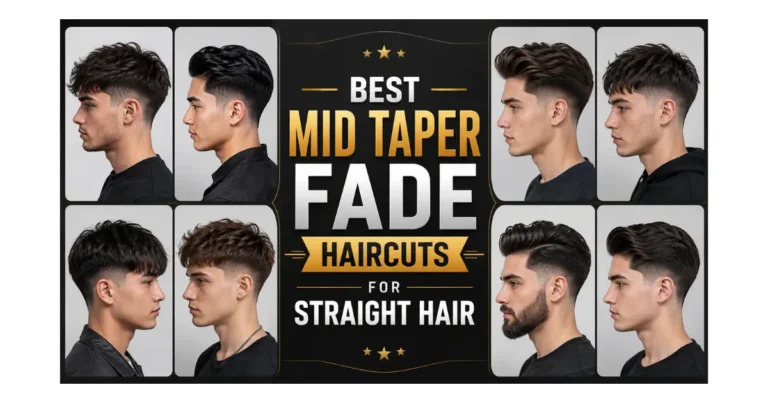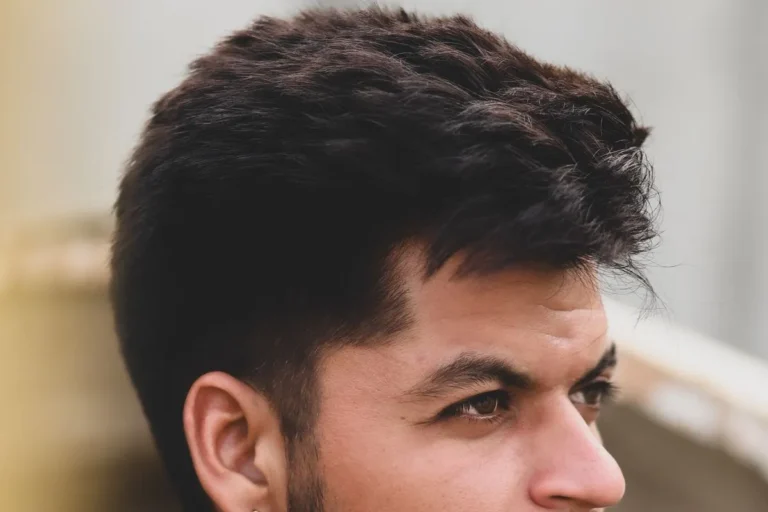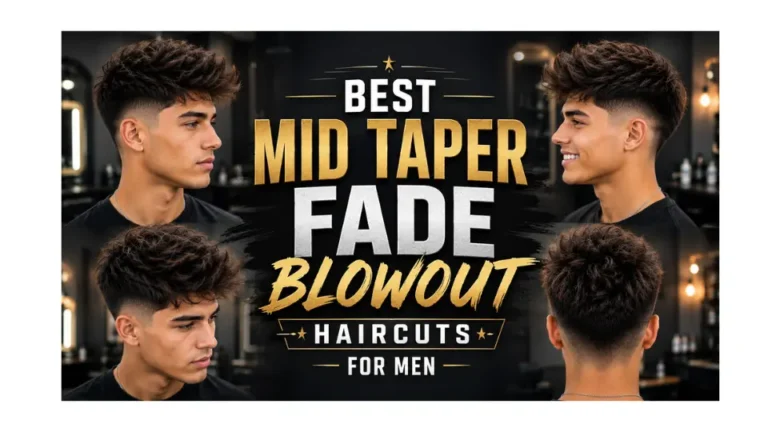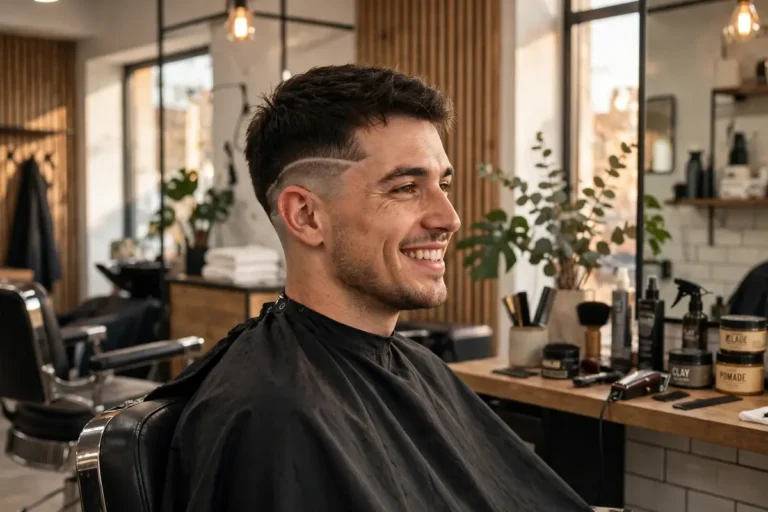
Mid Taper Fade for Thin Hair: 8 Styles, Barber Guide & Photos (2026)

A mid taper fade for thin hair works because it keeps hair at the edges instead of cutting down to skin. The clean sides make the top look fuller by comparison, while the taper hides how much scalp shows through. This guide explains the guard rule, shows eight styles that add fullness, and gives you the exact barber script.
Contents
- 8 Best Mid Taper Fade Styles for Thin Hair
- What Is a Mid Taper Fade for Thin Hair?
- Why a Mid Taper Works on Thin Hair: The Contrast Trick
- Pros and Cons of a Mid Taper for Thin Hair
- How to Choose the Right Style for Your Thinning Pattern
- Best Mid Taper for Thin Hair by Face Shape
- How to Ask Your Barber for a Mid Taper on Thin Hair
- Common Mid Taper Mistakes to Avoid on Thin Hair
- How to Maintain a Mid Taper on Thin Hair
- Thin-Hair Mid Taper vs Other Options: The Coverage Test
- Frequently Asked Questions
- Conclusion
8 Best Mid Taper Fade Styles for Thin Hair
Every style below keeps length where it counts and removes it where it hurts.
Textured Crop
A choppy crop is the best first pick for thin hair, because texture reads as thickness.
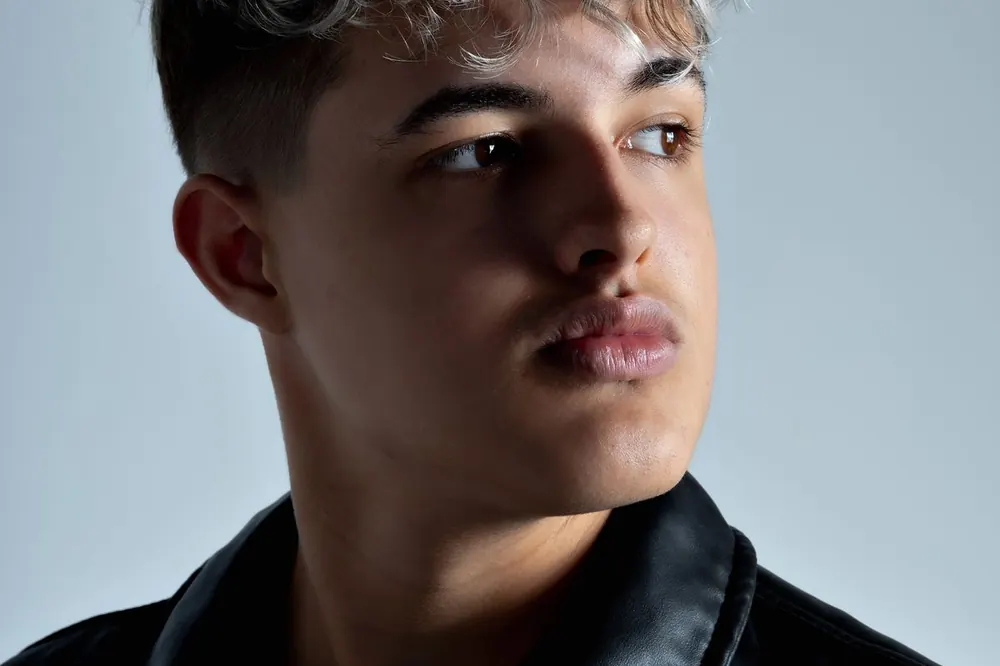
Ask for one and a half to two inches on top, point-cut so the ends separate instead of lying flat. The mid taper keeps the sides clean, while the choppy top adds lift. A matte clay worked through with fingers holds the pieces apart without shine.
Best for: fine hair that lies flat and needs lift.
French Crop
A forward fringe covers the hairline, which is where thinning shows first.

Ask for the fringe brushed forward with a straight, soft edge, and a mid taper on the sides. The fringe hides a high forehead and softens a receding hairline, while the short back keeps the cut tidy. It needs almost no product and takes under a minute to style.
Works well for: a high forehead or early hairline thinning.
✌ Pro tip: ask for the fringe point-cut, not blunt-cut. Blunt ends form a solid line that shows scalp behind it.
Caesar Cut
The Caesar is the shortest forward style here, and short reads as intentional on thin hair.

Ask for a short, even top brushed forward, about half an inch to one inch, with a mid taper on the sides. The even length removes the contrast between thick and thin areas, so the whole head reads as one tidy cut. It suits men who want zero morning styling.
Best for: diffuse thinning across the whole top.
Buzz Cut
A buzz with a taper turns thin hair into a deliberate choice instead of a problem.

Ask for a #2 or #3 on top with a mid taper blended below it. The short top makes density differences disappear, and the taper keeps the edges sharp. It is the lowest-maintenance version of this cut, and it suits men whose thinning has spread too far for a longer top to hide.
Ask your barber for: a #2 on top if your scalp shows easily, a #3 if you want a little more cover.
Side Part
A side part adds structure that thin hair cannot make on its own.

Ask for a neat side part with one and a half inches on top, combed to the side, and a mid taper below it. The part line gives the top a direction, which stops thin hair from falling flat in every direction. A light matte product holds the part without clumping the strands together.
Works well for: fine, straight hair that needs a shape to follow.
Short Quiff
A short quiff adds height, and height is the fastest way to fake volume.

Ask for two inches on top, swept up and slightly back, with a mid taper on the sides. Keep the quiff short: a tall quiff on thin hair collapses by midday and shows scalp. A vent brush and a little matte clay lift the roots while the hair is still damp.
Best for: fine hair with enough length to sweep up.
✌ Pro tip: blow-dry the quiff upward for ten seconds before the product goes in. Product alone cannot lift flat roots.
Crew Cut
The crew cut is the classic short top that never exposes thin hair.
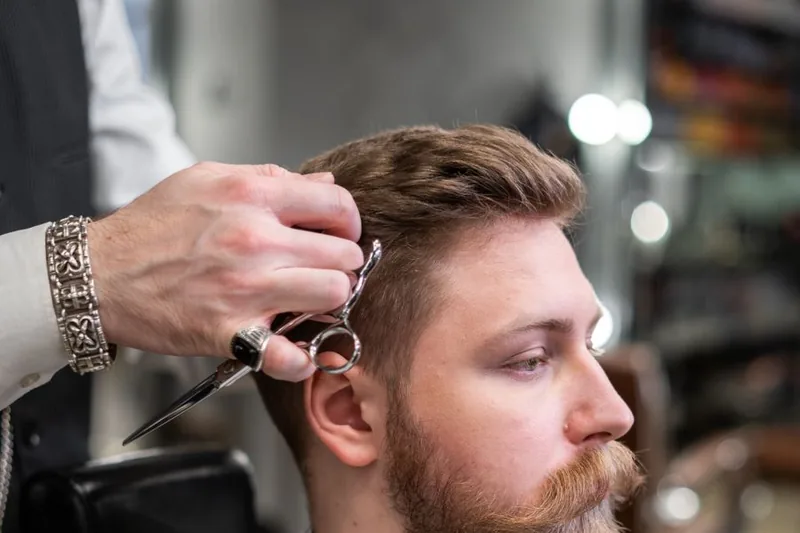
Ask for a short top, slightly longer at the front, with a mid taper on the sides. The short length keeps every strand upright, so light passes through less of the hair. It reads as clean and military-neat, and it needs no product at all on most days.
Works well for: men who want a tidy cut with no styling routine.
Textured Fringe
A piece-y fringe adds movement, and movement hides thin patches better than still hair.

Ask for a choppy fringe with the ends separated, about two inches long, and a mid taper below it. The pieces break the hairline into sections, so no single thin spot draws the eye. Keep the product light: heavy product clumps the pieces together and exposes the scalp between them.
Pairs with: wavy or slightly curly thin hair that moves on its own.
What Is a Mid Taper Fade for Thin Hair?
This cut is a mid-height taper cut to a guarded finish, so the sides look clean without exposing scalp.
Three words in the name answer three different questions. Mid says where the blend starts: at the temple. Taper says how the edges finish: gradual, with hair left at the edges. Thin hair says what the cut must protect: coverage. The barber keeps a #1 guard or longer at the bottom, blends up through a #2, and leaves one and a half to two inches on top for texture.
Thin hair needs its own definition before any style talk. Fine hair means each strand is narrow. Low density means fewer hairs grow per patch of scalp. Thinning means density is actively falling. The three get mixed up in conversation, but they call for different cuts. TaperTrends’ thin and thick hair guide makes the same split, and it is the first thing to settle with your barber.
Fine but dense hair looks flat rather than sparse, so it needs texture and lift. Low-density hair shows scalp under bright light, so it needs coverage and a soft blend. Actively thinning hair changes over months, so it needs a cut that still works as the pattern moves. This guide covers all three, and it says which style fits each one.
3 checkpoints
Bottom guard: #1 (3 mm) or longer, never skin. Blend height: mid, at the temple, so the contrast stays small. Top length: one and a half to two inches, point-cut for texture. If any checkpoint breaks, the cut starts showing scalp instead of hiding it.
Source: MidTaperFade.com
Why a Mid Taper Works on Thin Hair: The Contrast Trick
A mid taper makes thin hair look thicker by shrinking the contrast between the sides and the top.
The trick is an optical illusion. When the sides are thick and dark and the top is thin, the eye goes straight to the thin spot. The thick sides make the top look thinner by comparison. A taper removes the bulk from the sides, so the top stops competing with them. The sides read as light and tight, and the hair on top suddenly looks fuller.
The height matters as much as the blend. A low taper keeps the contrast smallest, since the blend sits near the ear. A mid taper adds a little more shape at the temple, which suits men who want the cut to read as deliberate. A high skin fade does the opposite on thin hair: it pulls the eye up along a wide band of bare skin and highlights the thin top. That is why the mid taper, not the high fade, is the safe pick here.
The finish matters too. A taper leaves visible hair at the bottom edge, so no bare scalp shows through the blend. A fade takes the bottom down to skin, and on thin hair that skin line draws attention to the one thing you wanted to hide. Keep the bottom at a #1 guard and the taper does the work for you.
Pros and Cons of a Mid Taper for Thin Hair
The cut trades a little sharpness for a lot of coverage, and that trade suits thin hair.
| Pros | Cons | |
|---|---|---|
| Coverage | Guarded bottom hides scalp show-through | Less sharp than a skin fade |
| Fullness | Clean sides make the top look thicker | Needs texture on top to work |
| Grow-out | Soft blend grows out gently over 3 to 4 weeks | Loses shape faster if the top is too long |
| Upkeep | Rebook every 3 to 4 weeks, not every 2 | Needs a light product daily for lift |
| Versatility | Works for fine, low-density, and thinning hair | Not the pick for a bold, high-contrast look |
| Office-safe | Yes, with a neat top | A very short buzz reads as severe in formal settings |
The pros win when coverage is the goal. The cons only bite when you want maximum contrast, and maximum contrast is exactly what thin hair should avoid. If you want the sharper end of the same idea, read our low taper fade vs mid taper fade guide before you decide.
How to Choose the Right Style for Your Thinning Pattern
The pattern decides the style, not the other way around.
Fine but Dense Hair
Fine, dense hair looks flat rather than sparse, so it needs lift.
Pick the textured crop or the short quiff. Both add height and separation, which is what flat hair lacks. Avoid heavy pomades: they glue fine strands together and make the hair look thinner. A matte clay or a sea salt spray gives grip without weight.
Diffuse Thinning
Diffuse thinning spreads evenly across the top, so no single spot can be covered.
Pick the Caesar cut or the buzz cut. Even, short length removes the contrast between thick and thin areas across the whole head. Avoid long tops: length pulls thin hair flat and shows more scalp. See our mid taper fade blowout guide for how a blowout top behaves on thinner hair before you commit to length.
Receding Hairline
A receding hairline needs the fringe to do the covering.
Pick the French crop or the textured fringe, both brushed forward. The fringe softens the corners and keeps the eye on the front, not the temples. Avoid slicked-back tops: they pull the hair away from the hairline and frame the recession. Keep the taper at mid height so the temples stay tidy without going to skin.
Crown Thinning
Crown thinning shows from above and behind, so the top needs short, upright hair.
Pick the crew cut or the buzz cut. Short, upright strands stand over the crown instead of lying flat across it, which hides the thin patch from most angles. Avoid a side part that sweeps hair away from the crown: it opens the thin area up. A vent brush lifts the crown hair while it dries, which adds cover for free.
Best Mid Taper for Thin Hair by Face Shape
The taper narrows the sides, so the top length sets the balance for each face.

Oval Face
An oval face suits every version of this cut.
Pick any top you like, since the balanced shape takes both short and long tops well. The textured crop is the safest first choice, because it adds volume without changing the face shape.
Round Face
A round face needs height on top to lengthen how it reads.
Add height with a short quiff or a textured crop, and keep the sides tight. The height lengthens the face, while the taper narrows the back. Avoid a flat fringe: it shortens the face further.
Square Face
A square face suits this cut with a softer top.
Keep the top textured rather than flat, so the strong jawline does not fight a hard fringe line. The taper follows the skull, which suits the angular shape. A side part softens the corners well.
Heart Face
A heart face needs balance between a wide forehead and a narrow chin.
Keep some volume at the sides near the temple, and avoid a very tight, high taper. A textured crop with a medium blend keeps the proportions even, and a forward fringe narrows the forehead slightly.
Long Face
A long face needs width, not more height.
Keep the top short and avoid tall quiffs. A French crop or a side part adds width at the sides, which balances the length. The mid taper already narrows the sides, so a short top is the right counterweight.
How to Ask Your Barber for a Mid Taper on Thin Hair
Name the bottom guard first, then the height, then the top length.
| Zone | Guard | Where it sits |
|---|---|---|
| Bottom edge | #1 (3 mm), never skin | Sideburn and nape |
| Lowest blend | #1.5 (4.5 mm) | Just above the bottom edge |
| Mid blend | #2 (6 mm) | At temple height |
| Upper blend | #3 (10 mm) | Where the fade meets the top |
| Top | Scissors, 1.5 to 2 inches | Point-cut for texture |
| Finish | Taper, not a skin fade | Edges only, sides keep length |
Guards vary slightly by hair density, so confirm the numbers with your barber first. See our taper fade guard numbers guide for the full 0 to 8 chart.

Thin-Hair Mid Taper Script
This script names the guard, the height, and the finish in one breath.
“I want a mid taper for thin hair. Start the blend at my temple, around the top of my ear. Keep the bottom at a #1 guard, not skin, and blend up to a #2. Keep it a taper. Leave one and a half to two inches on top, point-cut for texture, so it looks fuller.”
What NOT to Ask For
Vague words cause most bad thin-hair cuts, so avoid these three phrases.
- Do not say just “skin fade.” Skin at the bottom exposes scalp and frames the thin top.
- Do not say “short on the sides.” That can mean a high fade, a skin fade, or a buzz cut.
- Do not say “make it look thicker” with no guard number. Thicker means a #1 bottom to one barber and a long top to another.
Bring a photo of the exact style you picked, taken in normal light. Bright barbershop lights hide thin patches, so a photo in daylight shows the real result. If the barber repeats the #1 bottom guard back to you, the cut will match the picture.
Common Mid Taper Mistakes to Avoid on Thin Hair
Most bad thin-hair cuts come from chasing contrast instead of coverage.
Asking for a skin fade on thin hair. A skin fade puts a wide band of bare scalp next to a thin top. The contrast makes the top look thinner, not sharper. Keep the bottom at a #1 guard and let the taper do the blending.
Keeping the top too long and flat. Long, flat hair weighs thin strands down and exposes the scalp underneath. Two inches is the useful maximum for most thin hair. Shorter tops stand up on their own and hide more.
Using heavy, shiny product. Heavy gels and high-shine pomades clump thin strands together, which exposes the scalp between the clumps. Use a matte clay or a light sea salt spray instead, and use less than you think you need.
Pulling the top tight for a slicked look. Tight styles that pull on the hair can cause damage over time. According to the American Academy of Dermatology, hairstyles that pull tightly can lead to hair loss over time. A style that feels painful is the clearest warning sign.
Skipping the guard number. “Short” means a #1 guard to one barber and bare skin to another. Say the number out loud, and ask the barber to repeat it back before they start.
How to Maintain a Mid Taper on Thin Hair
Thin hair holds this cut for three to four weeks, longer than a skin fade.
A mid taper on thin hair stays sharp for three to four weeks. The guarded bottom grows out gently, so the blend softens instead of blurring into stubble. By week four, the top has lost its texture and the sides look soft. Rebook at three to four weeks if you want the shape to stay crisp.
13–17 visits a year
Barber visits per year, if you rebook on schedule. A mid taper on thin hair at every 3 to 4 weeks means about 13 to 17 visits a year. The guarded finish, not the length, sets the schedule.
Source: MidTaperFade.com — visits per year calculated from the touch-up interval above.
Between visits, keep the neckline clean and the top light. Wash with a gentle shampoo, and style the top while the hair is slightly damp. These tools handle the small jobs, so the cut holds its shape longer.

For guard work and keeping the blend tidy between barber visits. Use it only for light edge cleanup, not full re-cuts.
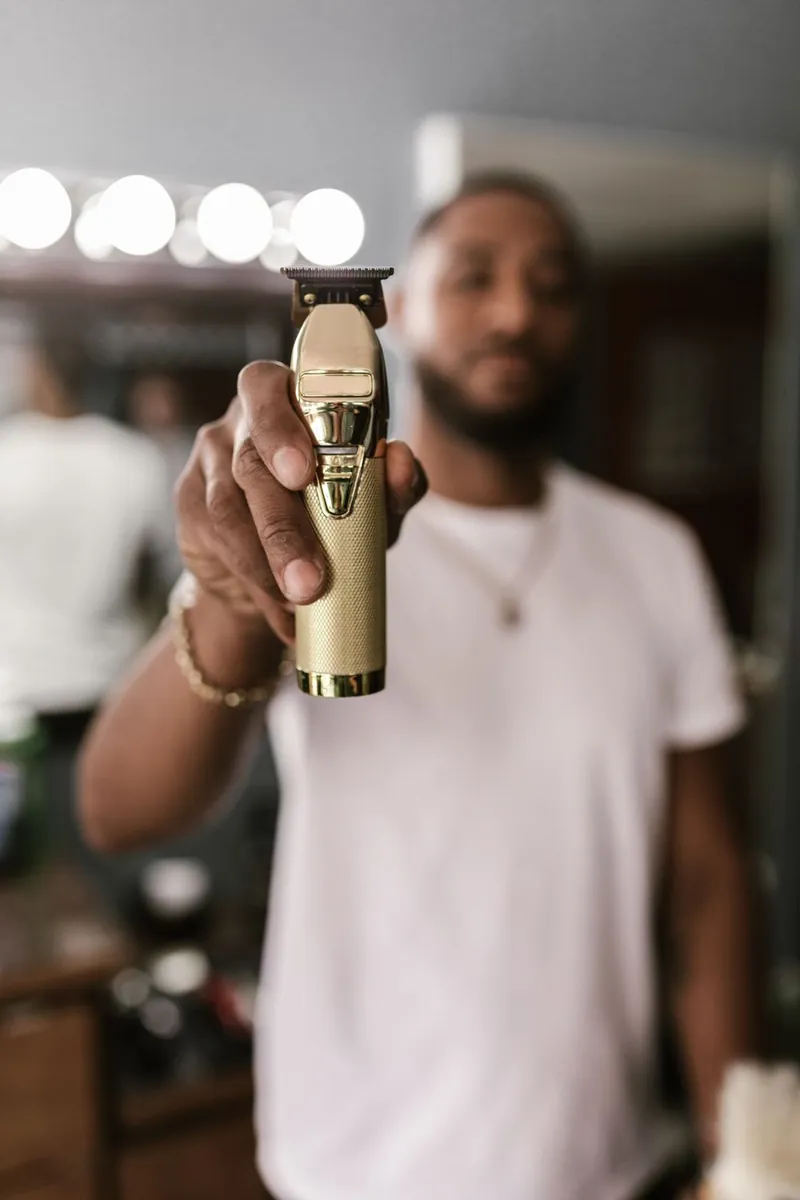
For sharp necklines and edge cleanup around the ears. It handles the small areas a full clipper cannot.
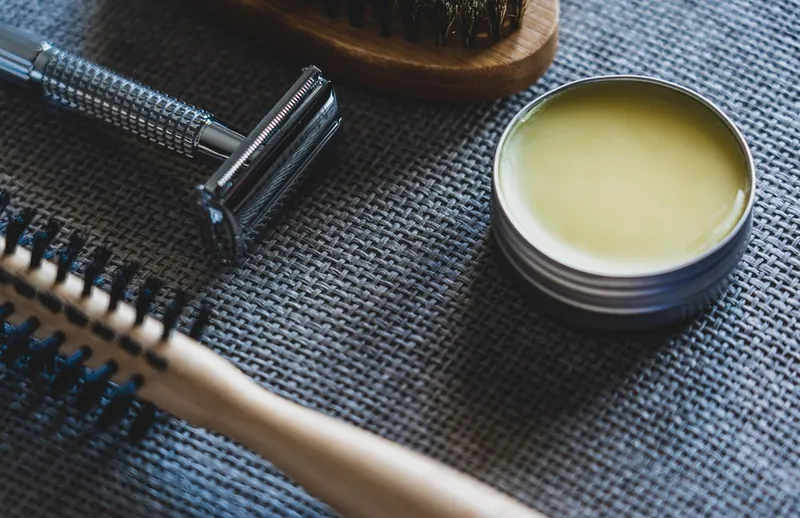
For styling a textured crop or quiff on top. A matte clay holds texture without shine, which suits thin hair.
For lifting thin hair at the roots while blow-drying. The vented design lets air through, so the top dries with volume instead of lying flat.
Disclosure: As an Amazon Associate, MidTaperFade.com earns from qualifying purchases made through links on this page, at no extra cost to you.
Thin-Hair Mid Taper vs Other Options: The Coverage Test
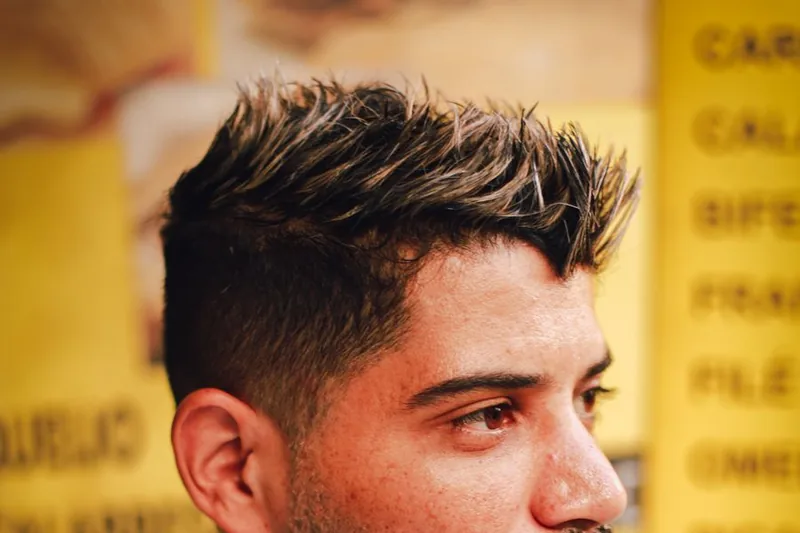
The mid taper wins the coverage test because it keeps hair at the edges.
| Mid Taper | Low Taper | Skin Fade | Long Top, No Taper | |
|---|---|---|---|---|
| Scalp show-through | Low, guarded bottom | Lowest, compact blend | High, bare skin band | High, flat hair exposes scalp |
| Contrast | Medium, reads as deliberate | Low, softest option | Very high, highlights thin top | None, looks unkempt |
| Grow-out | 3 to 4 weeks | 3 to 4 weeks | 1 to 2 weeks | Needs a cut every 2 weeks |
| Upkeep | Rebook every 3 to 4 weeks | Rebook every 3 to 4 weeks | Rebook every 1 to 2 weeks | Daily styling, frequent trims |
| Best for | Thin hair that needs shape | Very thin hair, first-timers | Thick hair, bold looks | Thick hair only |
| Office-safe | Yes | Yes | Depends on the dress code | Yes, if kept neat |
Pick the mid taper when you want shape and coverage together. Pick the low taper when your hair is very thin and you want the softest possible blend. Skip the skin fade on thin hair: it is the one option that makes thinning look worse. For the full low-versus-mid comparison, read our low taper fade vs mid taper fade guide. For straight-hair styling on a thin top, see our mid taper fade straight hair guide.
Frequently Asked Questions
Does a mid taper fade work on thin hair?
Yes. A mid taper works well on thin hair because it keeps hair at the edges instead of cutting down to skin. The clean sides make the top look fuller by comparison, while a guarded bottom hides scalp show-through. Ask for a #1 guard at the bottom and one and a half to two inches of texture on top.
Is a taper or a fade better for thinning hair?
A taper is usually kinder for thinning hair. A taper keeps visible hair at the bottom edge, so no bare scalp shows through the blend. A fade takes the bottom down to skin, and that high contrast can make a thin top look thinner. A low or mid taper is the safer pick when hair is thinning.
Which mid taper style makes thin hair look thickest?
The textured crop makes thin hair look thickest. Point-cut ends separate into pieces, and the pieces read as volume instead of scalp. The French crop is the next best pick when the hairline is the thin spot, since the forward fringe covers it. Both need a matte product, not a shiny one.
Should thin hair get a skin fade?
No, not as the bottom finish. A skin fade puts a wide band of bare skin next to a thin top, and the contrast draws the eye to the thin area. Keep the bottom at a #1 guard or longer. If you like the sharp look, ask for a clean lineup instead of a skin finish.
What guard should a barber use for thin hair?
Ask for a #1 guard (3 mm) at the bottom. Blend up through a #2 (6 mm) at temple height and a #3 (10 mm) where the fade meets the top. The top stays at one and a half to two inches, cut with scissors and point-cut for texture. Confirm the numbers with your barber before the clippers start.
How often should thin hair get a mid taper trimmed?
Every 3 to 4 weeks. A guarded mid taper grows out gently, so it holds its shape longer than a skin fade. The top loses its texture first, usually around week three, and the sides soften by week four. A quick neckline cleanup between visits stretches the cut further.
Can a mid taper fade hide a receding hairline?
Partly. A French crop or textured fringe brushed forward covers the corners and softens a receding hairline, and the mid taper keeps the temples tidy. It cannot regrow hair or hide deep recession. If the hairline has moved back a long way, a short Caesar or buzz cut reads as more deliberate than a fringe trying to cover it.
About the Author
Conclusion
A mid taper fade for thin hair is a small change with a big payoff: one guarded blend makes the top look fuller without exposing scalp.
Take the mid taper if you want shape and coverage together. Take the low taper if your hair is very thin and you want the softest blend. Skip the skin fade on thin hair: it is the one finish that makes thinning look worse. Whichever you pick, name the #1 bottom guard in the chair, and the cut will match the picture.
Still unsure? Start with the textured crop and a mid taper, then adjust the top length next time. Going shorter takes ten minutes, while growing a bad skin fade out takes a month. Read our mid taper fade guide for the full style breakdown, or compare the softer end of the scale in our low taper fade vs mid taper fade guide.
By Sonia Kanwal