Taper Fade Guard Numbers Explained: Every Clipper Size (2026)

Taper fade guard numbers are simply hair lengths. A #1 guard leaves 3 mm, a #2 leaves 6 mm, a #3 leaves 10 mm, and a #4 leaves 13 mm. Your barber says “I’ll start with a 1 and blend up to a 3” — now you will know exactly what that means. Once you can read these numbers, you can ask any barber for your exact cut with total confidence.
This guide covers the full guard chart, which sizes a taper fade actually uses, and the truth about the “16 guard” thousands of people search for every month.
- Clipper Guards Decoded: What the Numbers Actually Mean
- The Complete Guard Chart: Every Size in Millimetres and Inches
- The “16 Guard” Explained: The Size That Doesn’t Exist
- Guard Map for a Taper Fade: Which Size Goes Where
- Low, Mid, High, Skin: Guard Numbers for Every Taper Type
- DIY Touch-Ups: Using Guards at Home Without Wrecking the Blend
- Say It in Numbers: Exact Barber Scripts
- FAQs
🔢 Clipper Guards Decoded: What the Numbers Actually Mean
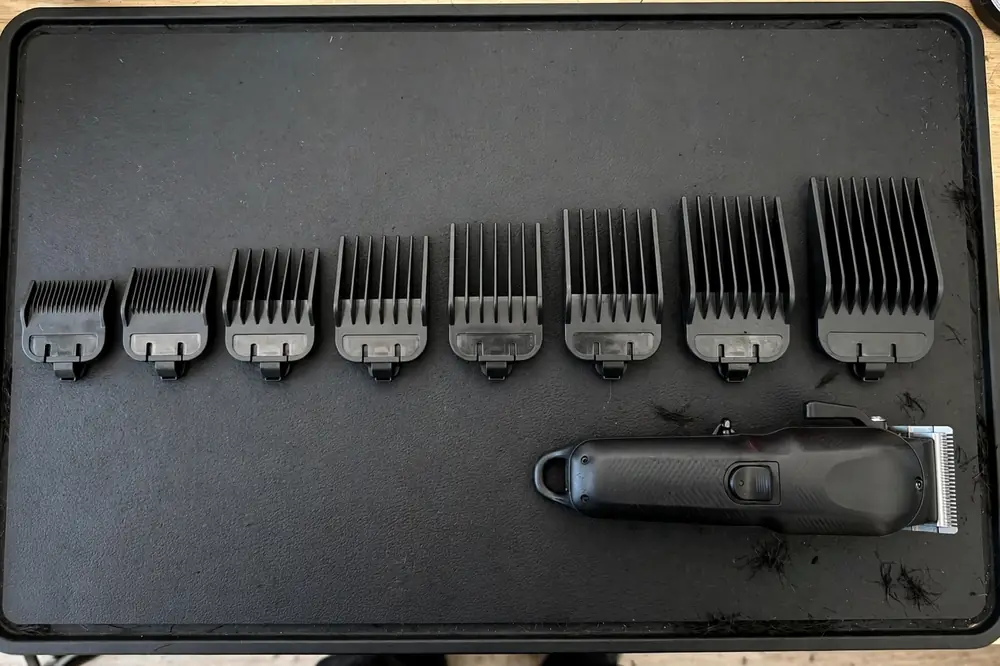
A clipper guard is a plastic comb that snaps over the blade and controls how much hair is left standing. The number on the guard is a length code: the bigger the number, the longer the hair it leaves behind. Every taper fade you’ll ever get is built from these numbers.
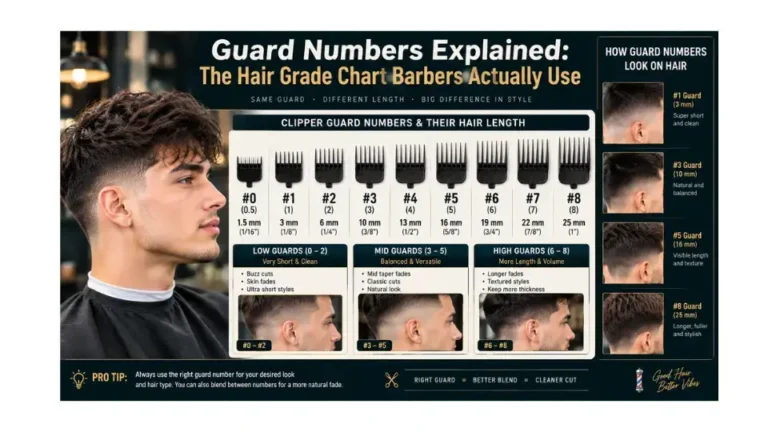
The system is simpler than it looks. Guards run from #0 (nearly skin) to #8 (one full inch of hair). Barbers blend between them to build the fade, stepping up one size at a time so no harsh line shows.
You’ll also hear guard numbers all over barber videos right now — “closed 1,” “open 2,” “1.5 in the blend.” That open/closed part is the taper lever on the side of the clipper, and it matters just as much as the number itself. We break it down right under the chart below.
📏 The Complete Guard Chart: Every Size in Millimetres and Inches
Standard guards run from #0 to #8, from near-skin to a full inch. The figures follow the attachment-comb sizing used by Wahl and most major clipper brands, so a #2 in one shop is a #2 in the next.
| Guard | Length (mm) | Length (inches) | What It Looks Like |
|---|---|---|---|
| No guard (bare blade) | ~0.5 mm | skin-close | Stubble shadow — used for line-ups and skin fades |
| #0.5 | 1.5 mm | 1/16″ | Very short stubble, one step above skin |
| #1 | 3 mm | 1/8″ | Short and tight — the base of most tapers |
| #1.5 | 4.5 mm | 3/16″ | The blender — erases the line between #1 and #2 |
| #2 | 6 mm | 1/4″ | Classic short back-and-sides length |
| #3 | 10 mm | 3/8″ | Noticeable length, still neat and tidy |
| #4 | 13 mm | 1/2″ | Medium-short — where “top” territory begins |
| #5 | 16 mm | 5/8″ | Medium length with real movement |
| #6 | 19 mm | 3/4″ | Longer top that still behaves |
| #7 | 22 mm | 7/8″ | Almost an inch — fringe and quiff territory |
| #8 | 25 mm | 1″ | The longest standard guard — a full inch on top |
The Half Guards: #0.5 and #1.5
Half guards exist for one reason: blending. The jump from a #1 to a #2 is big enough to leave a visible line, so barbers keep a #1.5 in the kit to cut right between them. The #0.5 does the same job between bare blade and #1, down where skin fades are won or lost.
Lever Open vs Closed: The Hidden Half Sizes
The lever on the side of the clipper slides the blade forward or back, adding or removing roughly half a guard size. Lever closed means the guard cuts its true number. Lever open cuts about half a size longer — a #2 open is really a #2.5.
That’s the secret behind smooth fades. Barbers park the lever halfway to create quarter steps, nibbling at a blend line until it disappears. When you hear “1 open” or “2 closed” in a tutorial, that’s exactly what’s being adjusted.
🤔 The “16 Guard” Explained: The Size That Doesn’t Exist
There is no standard #16 clipper guard. Guard numbering tops out at #8 (25 mm) on standard sets. A couple of brands sell extra-long combs up to #12 for scissor-over-comb work, but a #16 simply isn’t part of the system.
So why do thousands of people search “16 guard” every month? Because many guard sets — especially budget and metric-labelled ones — print millimetres on the combs instead of guard numbers. On those sets, the comb stamped “16” is a 16 mm comb. And 16 mm is exactly a #5 guard (5/8″).
So if a video, a friend, or a product listing tells you to use a “16,” they almost certainly mean 16 mm — reach for the #5. Same story for the other mm stamps you might see: 3 mm is a #1, 6 mm is a #2, and 10 mm is a #3. A 13 mm comb is a #4, and 19 mm is a #6.
🗺️ Guard Map for a Taper Fade: Which Size Goes Where
A classic mid taper fade is built from about five lengths, each with its own job. The shortest guards clean up the bottom edge, the middle guards build the blend, and the longest guards shape the top. If you’re new to the cut itself, our complete mid taper fade guide shows how the whole thing comes together.
| Area of the Head | Guard Used | Job It Does |
|---|---|---|
| Neckline & lowest edge | No guard / #0.5 | Cleans the outline, sets the bottom of the taper |
| Bottom of sides & back | #1 | Where the fade starts — short but not skin |
| Blend zone (middle) | #2, then #1.5 | Builds the gradient and erases the line |
| Upper sides | #3 (lever open) | Transitions the sides into the top |
| Top — short & cropped | #4–#5 | Texture you can still run fingers through |
| Top — medium | #6 | Keeps movement for fringes and quiffs |
| Top — long | #7–#8 or scissors | Guards max out at 1 inch; longer means scissor work |
Hair type changes how a number reads. Straight hair shows the guard’s true length. Curls spring up and read about a size shorter, so most barbers go one guard longer on curly tops. The lengths in our mid taper fade curly hair guide show how that plays out. On tight coils and 4C hair the effect is stronger again, as you’ll see in the mid taper fade black male breakdown.
Face shape tweaks the top number. Rounder faces suit more length and height up top (#6 and up). Longer faces balance better with a shorter top (#4–#5) so the cut doesn’t stretch the face further.
✂️ Low, Mid, High, Skin: Guard Numbers for Every Taper Type
All four taper types use the same guards — what changes is where the fade starts and how much head each guard covers. A higher taper runs the short numbers over more of the head and compresses the blend into a smaller space.
Low Taper Guards
A low taper starts with a #0.5 or #1 just above the ear, blends through a #2, and reaches a #3 high on the sides. Most of the head keeps its length, which makes this the most forgiving option as it grows out. Tops usually sit at a #4–#6.
Mid Taper Guards
The mid taper starts with a #1 around the middle of the ear and temple line. The blend runs #2 into #3, with lever work and a #1.5 pass to keep it smooth. It’s the middle ground most photos online actually show — tops land around #4–#6.
High Taper Guards
A high taper pushes the shortest guards further up: #0.5 or #1 starting high on the sides, a compressed #2 blend, and a #3 transition. Because the sides go so short, the top usually needs more length for contrast — #5 up to #8.
Skin Taper Guards
A skin taper takes the bottom all the way down: no guard (or a foil shaver finish) at the edge. Then the usual sequence shifts one step down — #0.5, #1, #1.5, #2 — blending into the top. The numbers don’t change; the floor just drops to zero.
🏠 DIY Touch-Ups: Using Guards at Home Without Wrecking the Blend
You can hold a taper together at home for an extra week or two with one rule: only work on the bottom third. Clean the neckline, tidy around the ears, and soften the lowest part of the blend. Leave the top and the main blend line to your barber.
- Start dry. Wet hair hangs longer and cuts shorter than it looks. Always judge guards on dry hair.
- Start with your longest guard. Work down a size at a time. You can always go shorter; you can’t add hair back.
- Flick, don’t push. Move up the side in short strokes and flick the clipper outward at the top of each stroke. Pushing straight up into longer hair carves a new line.
- Use the lever as your eraser. Half-open the lever to catch the in-between lengths where a line is forming.
- Check both sides in the mirror after every pass. Uneven sides are the #1 DIY giveaway.
Guard mistakes that wreck a blend:
- The guard pops off mid-stroke. A loose guard drops you to bare blade instantly. Press every guard until it clicks, and give it a tug before you start.
- Skipping the half guards. Jumping straight from #1 to #2 leaves a step no amount of lever work fully hides. Use the #1.5 — or open the lever on the #1.
- Going the wrong direction. Clippers cut against the direction hair grows. On the sides that’s upward; going downward just pushes hair around without cutting it evenly.
- Starting too short. The first guard you pick sets the floor for the whole touch-up. Nervous? Start two sizes longer than you think you need.
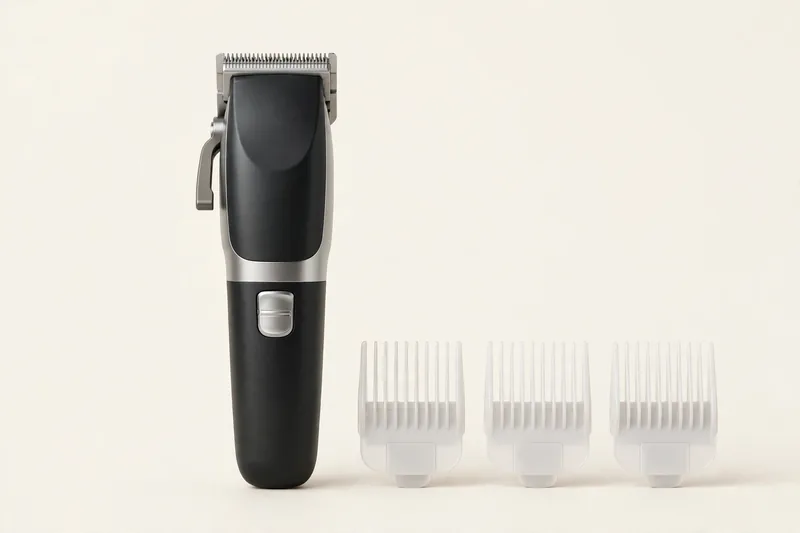
Cordless Hair Clipper with Guards
A full guard set plus an adjustable taper lever — the two things every number in this guide depends on. One kit covers every touch-up between barber visits.
For the neckline and around the ears, put the clipper down. A slim detail trimmer gives you a clean edge without the risk of a guard-less clipper biting into your blend.
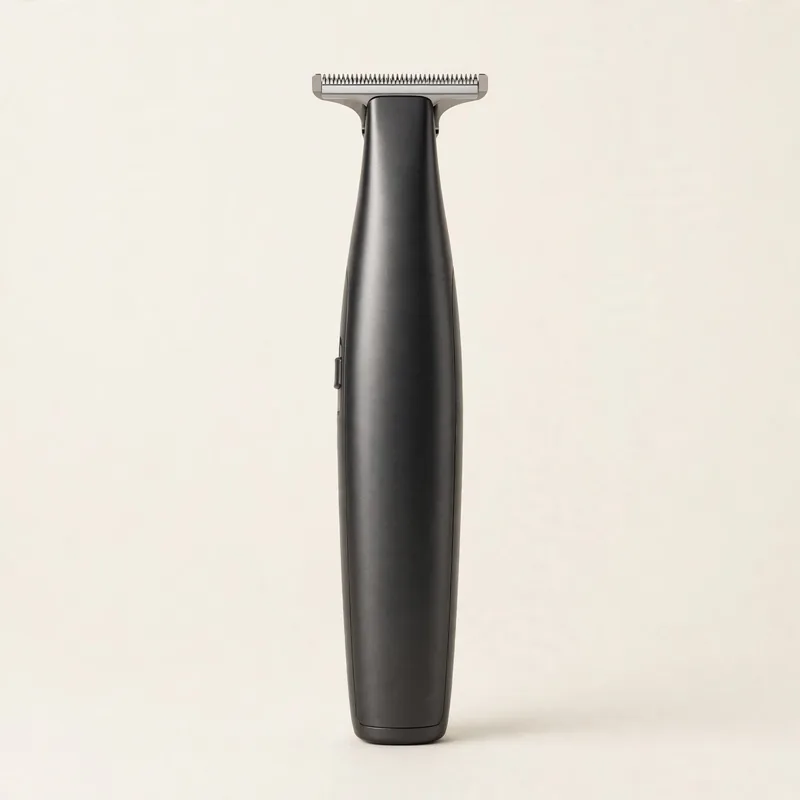
Detail Hair Trimmer
Built for necklines, edges, and around-the-ear cleanup — the finishing work that keeps a taper looking fresh in week two and three.
As an Amazon Associate, I earn from qualifying purchases — at no extra cost to you. It keeps the guides free. 🤍
🗣️ Say It in Numbers: Exact Barber Scripts
A classic mid taper is #1 at the bottom, #2 into #3, and #5 on top. Say it like this:
“Mid taper, please. Start with a #1 at the bottom of the sides, blend up through a #2 into a #3, and keep the top at a #5, lever open. Clean the neckline with the trimmer — but don’t take the taper higher than the middle of my ear.”
Want it lower and softer? Swap in this version:
“Low taper — #1 just above the ear, blend with a #2, and leave the top at a #6. I want it to grow out soft.”
Three habits make the numbers work:
- Say the top number too. Most miscommunication is about the top, not the fade.
- Mention the lever. “Lever open on top” tells the barber you want the longer version of that guard.
- Show a photo anyway. Numbers plus a picture leave zero room for interpretation.
❓ Frequently Asked Questions
Is there a 16 guard for clippers?
What guard numbers are used for a mid taper fade?
What’s the difference between lever open and lever closed?
Which guard numbers are best for an office-appropriate taper?
Do guard numbers work the same on curly or thick hair?
How much does a taper fade cost — and is doing it yourself cheaper?
Watch: Clipper Guards Explained
See each guard size in action before you pick one for your taper. Press play when you are ready; the video does not start on its own.
Watch on YouTube: Clipper Guards Explained The Easy Way MUST WATCH!!