Medium Taper Fade: What It Is and Is It the Same as a Mid Taper? (2026)
Medium Taper Fade: What It Is and Is It the Same as a Mid Taper? (2026)
Yes, a medium taper fade is the same cut as a mid taper fade. Medium is the plain word for the mid height, so both names describe a taper that starts at temple height and blends down through the sideburns and neckline. The confusion starts because a medium taper is not the same as a mid fade, and that one difference decides how short the cut goes. This guide settles the naming, shows the guard numbers, and gives you the exact words to ask your barber.
Contents
- What Is a Medium Taper Fade?: The Short Answer
- Medium Taper vs Mid Taper: Same Cut, Two Names
- Medium Taper vs Mid Fade: The Difference That Matters
- The Guard-Number Ladder: What Your Barber Actually Cuts
- Six Medium Taper Fade Styles That Work
- Which Hair Type Suits a Medium Taper?: The Fit Check
- How to Ask Your Barber for a Medium Taper Fade: The Exact Words
- How Long a Medium Taper Fade Lasts: The Maintenance Reality
- Mistakes That Ruin a Medium Taper: Five to Avoid
- Frequently Asked Questions
- About the Author
- Conclusion
What Is a Medium Taper Fade?: The Short Answer
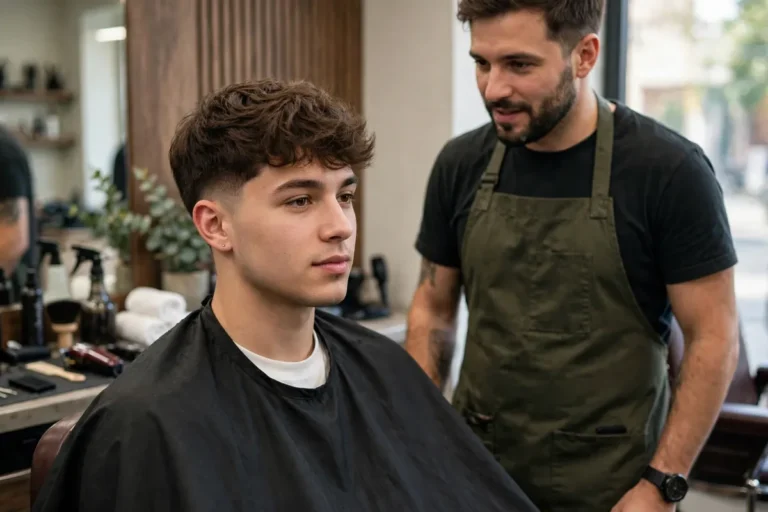
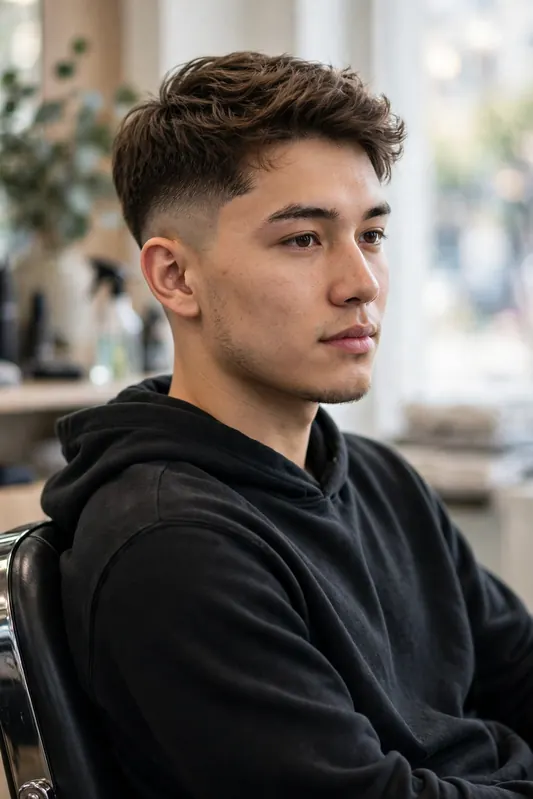
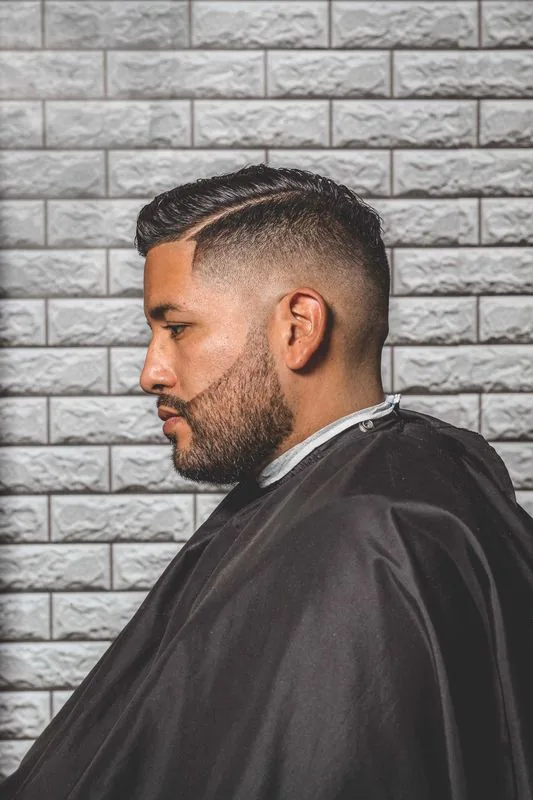
A medium taper fade is a men’s cut where the sides and back shorten gradually from the top length. The blend starts at temple height, about one to two inches above the ears. The shortest point sits at the sideburns and the neckline, where the hair finishes at a short guard instead of bare skin. The top stays long enough to style, and the sides keep more length than a full fade leaves behind.

The cut is the middle option in the taper family. A low taper starts near the ear and removes little hair, while a high taper starts above the temple and removes far more. The medium version sits between them, which is why barbers reach for it when a client has no strong opinion. It reads clean without looking severe, and it works in an office as well as it does on a weekend.
The name itself causes most of the confusion. Clients say medium, barbers say mid, and both mean the same height on the head. London barbershop Golden Scissors puts it plainly. Medium fade, middle fade, and mid fade are all names for the same height, a blend that starts roughly halfway between the ear and the temple. The same naming rule applies to the taper version of the cut. For the full cut behind the name, see the complete mid taper fade guide on the main site.
The Naming Shortcut
Medium = Mid | Taper ≠ Fade
Medium and mid are two words for the same height, so the two names describe the same cut. Taper and fade are two different finishes, so a medium taper and a mid fade are not the same cut. Remember the first half of each pair and the naming stops confusing you.
Source: Mid Taper Fade
Medium Taper vs Mid Taper: Same Cut, Two Names
A medium taper fade and a mid taper fade are the same haircut under two names. Both start the blend at temple height, both fade only the sideburns and the neckline, and both finish at a short guard rather than bare skin. If you ask for one and your barber hears the other, you still get the same cut.
| Name | Blend starts | Shortest point | Who says it |
|---|---|---|---|
| Medium taper fade | Temple height | Short guard, not skin | Clients, searchers |
| Mid taper fade | Temple height | Short guard, not skin | Barbers, style guides |
| Middle taper fade | Temple height | Short guard, not skin | Some shops, older guides |
The two names survive because clients and barbers learn the cut from different places. Clients pick up medium from friends, videos, and search results, while barbers learn mid in training and use it on the shop floor. Neither side is wrong, and no barber will correct you for saying medium. What matters is the height you point to, not the word you use for it.
One warning still applies. Saying medium tells your barber where the blend starts, but it says nothing about the finish at the bottom. Some shops take a medium taper down to skin by default, while others stop at a one guard. Name the shortest length in the same sentence, and the cut comes out the way you pictured it.
Medium Taper vs Mid Fade: The Difference That Matters
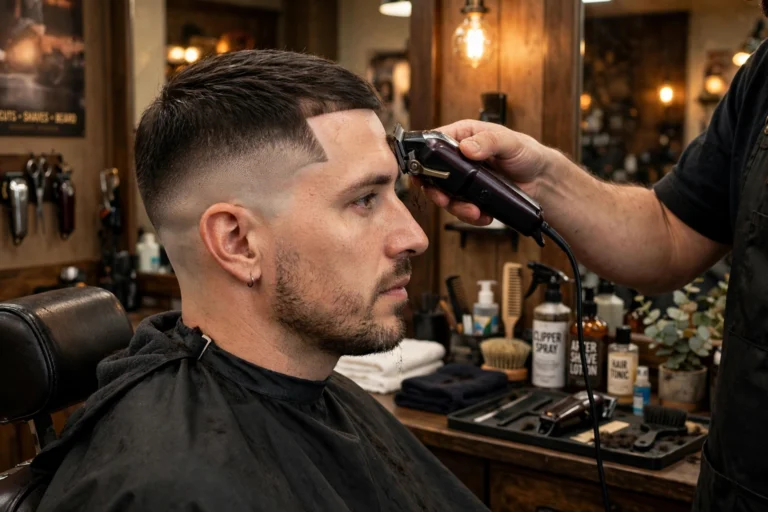
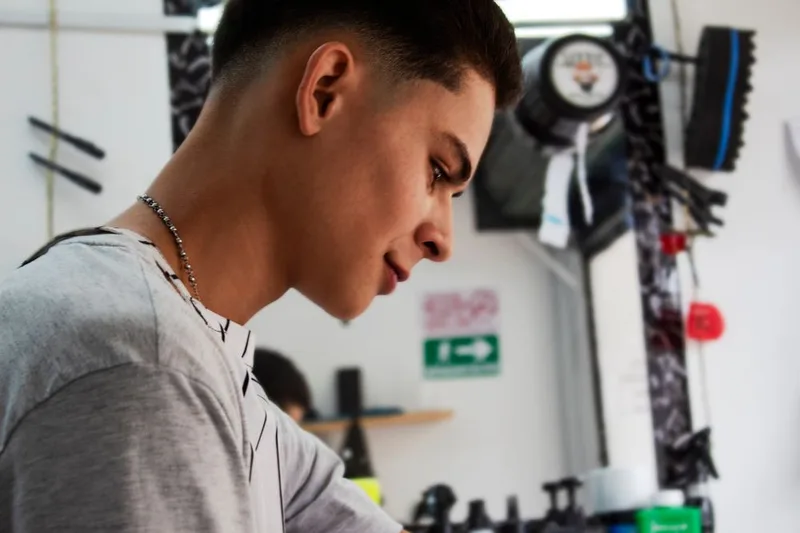
A medium taper and a mid fade are not the same cut, even though both start at the same height. The taper keeps a short guard at its lowest point, so stubble stays visible at the sideburns and the nape. The mid fade drops to bare skin, so the bottom of the cut shows scalp. Same starting line, very different finish.
| Feature | Medium taper fade | Mid fade |
|---|---|---|
| Blend starts | Temple height | Temple height |
| Shortest point | 0.5 or 1 guard (stubble) | Bare skin, foil shaver |
| Coverage | Sideburns and neckline only | Whole side and back |
| Contrast | Softer, more natural | Sharper, higher contrast |
| Grow-out | Still tidy at 3 weeks | Shows growth within days |
| Upkeep | Every 2 to 3 weeks | Every 1 to 2 weeks |
| Best for | First-timers, offices, low upkeep | Sharp looks, thick hair |
The simplest test is the skin check. Run a finger over the shortest part of the cut. A medium taper still shows short hair there, while a mid fade feels like bare skin. Barbers describe the same split in one line: all mid fades are medium tapers in height, but not all medium tapers are fades. The height matches, the finish does not.
Pick the taper when you want the safer first cut. It grows out softer, needs fewer visits, and still looks sharp in a photo. Pick the mid fade when you want maximum contrast and you are happy to visit the shop every week or two. For the full height ladder, our low taper vs mid taper comparison covers the lower end of the same scale.
The Guard-Number Ladder: What Your Barber Actually Cuts
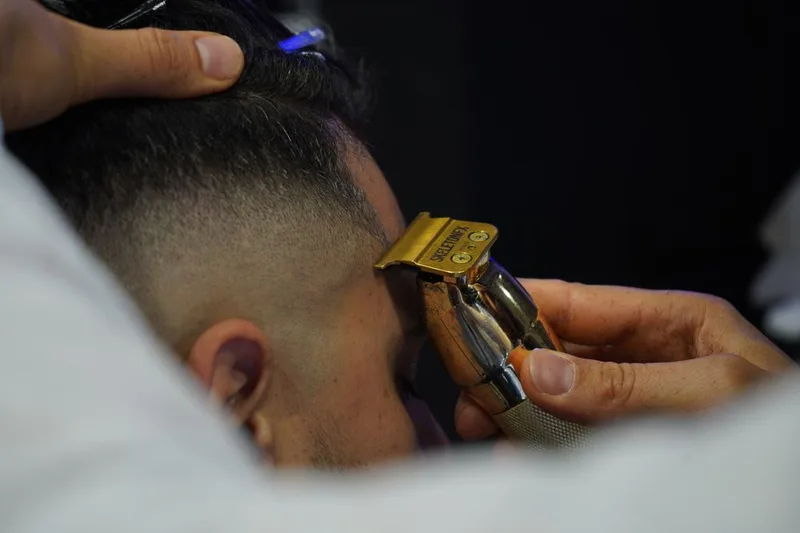
Guard numbers are the real language of a taper, and they remove the guesswork from the chair. A medium taper runs from a 0.5 guard at its shortest point up to a 2 or 3 guard where the blend meets the top. Ask for the guards by number and your barber knows exactly how short to go.
| Zone on the head | Guard | Length | What it looks like |
|---|---|---|---|
| Nape and sideburn base | 0.5 or 1 | 1.5 mm or 3 mm | Short stubble, no bare skin |
| Just above the base | 1 to 1.5 | 3 mm to 4.5 mm | Blend starts to show |
| Halfway up the blend | 1.5 to 2 | 4.5 mm to 6 mm | Clear graduation |
| Corner where top begins | 2 to 3 | 6 mm to 10 mm | Meets the top length |
The ladder matters because it is the one detail competitors skip. Most guides say temple height and stop there, but the guards decide whether the cut reads soft or sharp. A 0.5 base reads crisper than a 1 base, and a 3 guard at the corner keeps more weight than a 2. Tell your barber both numbers and the result stops being a surprise.
Fine hair needs a gentler ladder than thick hair. Start at a 1 guard instead of a 0.5, and hold the corner at a 3, so the blend never exposes the scalp line. Thick hair takes the full ladder without a problem, and a 0.5 base keeps the nape clean for longer. For the complete guard chart, see our hair clipper guard numbers guide.
Six Medium Taper Fade Styles That Work
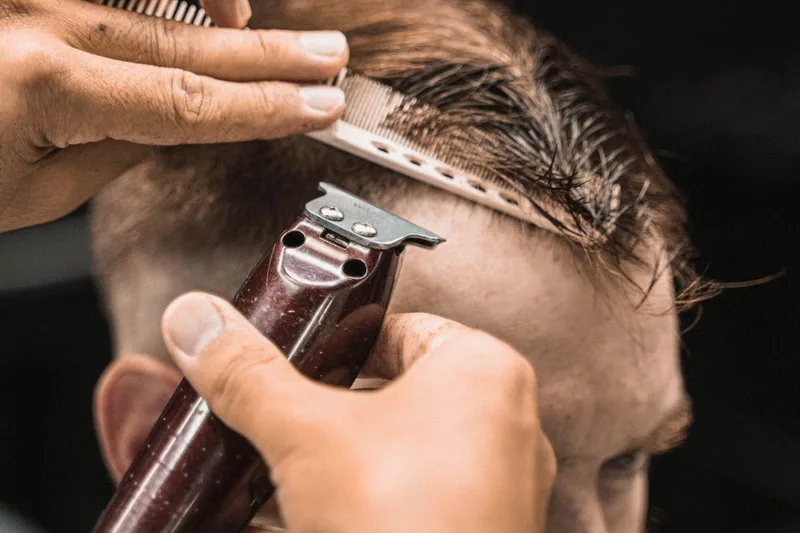
The medium taper is a base, not a finished style. The top decides the look, and six tops cover nearly every head of hair. Pick the one that matches your texture, then keep the taper the same underneath.
Curly Top Medium Taper
Curls on top with a medium taper at the sides is the most forgiving version of this cut. The curls hide the blend line, so the grow-out looks soft for weeks. Keep two to three inches on top so the curls hold their shape. Best for: curly and coily hair, low styling effort. For the full curly version, see our mid taper fade curly hair guide.
Textured Crop Medium Taper
A short textured crop on top with a medium taper underneath is the easiest version to maintain. The top needs only a fingertip of matte product in the morning, and the taper does the rest of the work. Ask for choppy texture on top, not a flat buzz. Best for: straight and wavy hair, busy mornings.
Side Part Medium Taper
A side part on top with a medium taper at the sides is the office-ready version of this cut. The part gives it structure, and the taper keeps the sides clean without going to skin. Comb it neat for work, push it loose for the weekend. Best for: professional settings, first job interviews.
Short Crop Medium Taper
A short crop on top with a medium taper is the lowest-upkeep version of the cut. The top stays under an inch, so it needs no product and no morning routine. The taper still gives it a finished shape instead of a plain buzz. Best for: gym regulars, hot climates, anyone who hates styling.
Wavy Top Medium Taper
Waves on top with a medium taper let the texture do the talking. The waves break up the sides, so the blend reads natural from every angle. Keep the top long enough for the wave to form, usually two inches or more. Best for: wavy hair, casual everyday looks.
Slicked Back Medium Taper
A slicked back top with a medium taper is the sharpest version of this cut. The top sweeps back with pomade, and the taper frames it with clean sides. It takes the most product of the six, but it also photographs the best. Best for: evenings out, thick straight hair.

Two of the six suit Black hair especially well, and search demand backs that up. The curly top and the short crop are the most requested medium taper versions for Black men. Both keep the taper tight at the temples, with the top left long enough to show texture. Our mid taper fade black male guide covers those versions in full, with styles matched to hair type.
Which Hair Type Suits a Medium Taper?: The Fit Check
A medium taper suits nearly every hair type, because the taper itself is neutral. The top is where hair type matters, and each type needs one small adjustment. Get that adjustment right and the cut works the first time.
Curly Hair
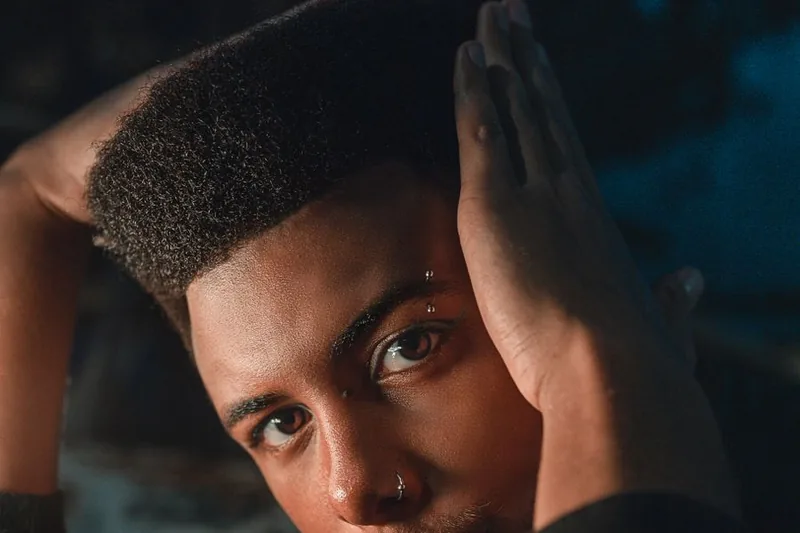
Curly hair is the easiest match for a medium taper. The curls hide the blend, so the cut stays neat for three weeks without a touch-up. Keep the top long enough for the curl pattern to show, and ask your barber not to thin the curls at the corner. A curl cream defines the top without weighing it down.
Straight Hair
Straight hair shows every line in a taper, so the blend has to be clean. Ask for a 1 guard base instead of a 0.5, which softens the bottom edge. A textured crop or side part suits straight hair best, since both break up the flat surface of the top. Matte clay holds the style without shine.
Wavy Hair
Wavy hair sits between curly and straight, and it takes a medium taper well. The wave hides the blend almost as well as curls do, and the top needs little product. Keep two inches or more on top so the wave has room to form. A vent brush lifts the top in the morning without flattening the wave.
Thick and Fine Hair
Thick hair benefits most from a medium taper, because the blend removes bulk at the sides without touching the top. Ask for the full guard ladder, down to a 0.5 base. Fine hair needs the opposite: a 1 guard base and a 3 guard corner, so the taper never exposes the scalp. The cut works for both, but the guards flip.
How to Ask Your Barber for a Medium Taper Fade: The Exact Words
The words you use in the chair decide the cut you walk out with. A vague request gets a vague result, so say the height, the shortest guard, and the top length in one sentence. Bring a photo too, since a picture removes the last bit of doubt.
Say this: “I want a medium taper fade. Start the blend at my temples, take the bottom down to a one guard, and blend it up to a two at the corner. Keep three inches on top with texture.” That one sentence covers height, shortest length, blend, and top. Your barber needs nothing more.
For curly hair, add one line. Say: “Keep the curls long on top and do not thin the corner.” For a skin-tight finish, change one word. Say: “Take the bottom to skin instead of a one guard.” That turns the taper into a mid skin fade, so say it only when you mean it.
Do not say “short on the sides” and stop there. Short is not a height, and your barber has to guess between low, medium, and high. Do not say “just a taper” either, since that leaves the height open. Name the height every time, even when you think it is obvious. Our barbershop conversation guide covers the rest of the chair talk, so the whole visit runs smoothly.

How Long a Medium Taper Fade Lasts: The Maintenance Reality
This cut stays sharp for about two to three weeks. The blend softens first at the nape, where hair grows fastest, and the sides follow a few days later. Book your next cut at two weeks if you want it sharp all the time, or at three weeks if you are happy with a softer finish.

Hair grows about half an inch per month, according to the American Academy of Dermatology. That is about an eighth of an inch each week, which is enough to blur the shortest part of the taper. A cut that starts at a one guard looks grown out faster than one that starts at a two, since there is less length to hide the growth.
What a Year of Medium Tapers Costs
17 cuts a year | $510–$850 a year
A cut every three weeks means about 17 cuts a year. At typical US barbershop prices of $30 to $50 a cut, that comes to $510 to $850 a year. Budget chain shops run $25 to $40, while premium shops run $55 to $75 or more. The taper itself costs the same as any fade; the price is the shop, not the cut.
Source: Mid Taper Fade
You can stretch any cut by a few days at home. Clean only below your natural neckline with a detail trimmer, in short strokes, with a hand mirror behind you. A clipper only helps on the lowest guard, and only below the neckline. Never run clippers up into the blend to re-fade the taper yourself.
Style the top so the cut reads clean between visits. A pea-sized amount of matte clay or pomade keeps the top in place without shine. A vent brush lifts the top in the morning. For curly tops, a curl cream defines the curls without weighing them down.
Disclosure: As an Amazon Associate, this blog earns from qualifying purchases made through the links above, at no extra cost to you.
For the full week-by-week timeline, see our mid taper fade maintenance guide, which covers rebook schedules by hair type and at-home touch-ups in detail.
Mistakes That Ruin a Medium Taper: Five to Avoid
Most medium taper regrets come from the chair conversation, not the clippers. Five mistakes cause nearly all of them, and each one is easy to prevent with a single sentence before the cut starts.

Asking for “medium” with no guard named. Medium sets the height, but it says nothing about the shortest length. One shop stops at a one guard, another goes to skin, and both call it a medium taper. Name the guard every time.
Confusing a medium taper with a mid fade. The two cuts share a starting height but finish very differently. A taper keeps stubble at the bottom, while a fade goes to bare skin. If you wanted a soft finish and got a skin fade, you live with it for three weeks. Say taper, not fade, when you mean taper.
Taking the taper to skin on fine hair. Bare skin next to fine hair on top draws the eye straight to the thin spots. The contrast works against you instead of for you. Keep a one guard or higher at the nape when your hair is fine, and let the blend do the work.
Cutting the top too short for the texture. Curls and waves need length to show their pattern. A top cut under an inch turns curls into frizz and waves into flat hair. Keep two inches or more on top when your hair has any wave or curl in it.
Skipping the back photo check. The mirror shows you the front, not the back. Ask your barber to take a photo of the back before you stand up, while the fix is still a thirty-second trim. If the blend is uneven, that is the moment to catch it, not three days later at home.
Frequently Asked Questions
Is a medium taper fade the same as a mid taper fade?
Yes, a medium taper fade is the same cut as a mid taper fade. Medium and mid are two words for the same height, so both names describe a taper that starts at temple height and finishes at a short guard. Barbers say mid, clients say medium, and the cut is identical either way.
Is a medium taper the same as a mid fade?
No, a medium taper is not the same as a mid fade. Both start at temple height, but the taper finishes at a short guard with stubble still visible, while the mid fade drops to bare skin. The taper also fades only the sideburns and neckline, while the mid fade runs across the whole side and back.
What guard is a medium taper fade?
A medium taper fade runs from a 0.5 or 1 guard at its shortest point up to a 2 or 3 guard where the blend meets the top. The 0.5 guard is about 1.5 mm, the 1 guard is about 3 mm, the 2 guard is about 6 mm, and the 3 guard is about 10 mm. Fine hair should start at a 1 guard, not a 0.5.
Does a medium taper fade suit curly hair?
Yes, a medium taper fade suits curly hair well. The curls hide the blend line, so the cut stays neat for three weeks without a touch-up. Keep two to three inches on top so the curl pattern shows, and use a curl cream to define the top without weighing it down.
How often should I get a medium taper fade?
Get a medium taper fade every two to three weeks to keep it sharp. Book at two weeks when you want the blend crisp all the time, or at three weeks when a softer finish is fine. A mid fade needs visits more often, since bare skin shows growth within days.
What do I ask my barber for a medium taper fade?
Say: “I want a medium taper fade. Start the blend at my temples, take the bottom down to a one guard, and blend it up to a two at the corner. Keep three inches on top with texture.” Bring a photo as well, since a picture removes any doubt about the height and the finish.
About the Author
Sonia Kanwal is an SEO specialist and WordPress developer who runs midtaprfade.com. She writes practical haircut guides from real search questions, so each article answers what readers actually ask. Her work covers fades, tapers, and the barber visits in between.
Conclusion
A medium taper fade is a mid taper fade by another name, and now you know the one distinction that matters. Medium means mid height, and taper means a short guard at the bottom instead of bare skin. Keep those two facts straight and you will never leave the chair with the wrong cut.
Remember the three rules: name the height and the guard in one sentence, match the top to your hair type, and check the back in a photo before you leave. The front of the cut gets the compliments, but the blend at the back is what makes it look finished.
Ready to see the whole cut? Start with the 55-style guide on the main site, then pick the version that fits your hair: the full range of fade styles.
By Sonia Kanwal — SEO specialist and WordPress developer, writing practical barber and haircut guides for midtaprfade.com/blog/ so you never leave the chair surprised.