Fade vs Taper: What’s the Difference & Which Suits You? (2026)
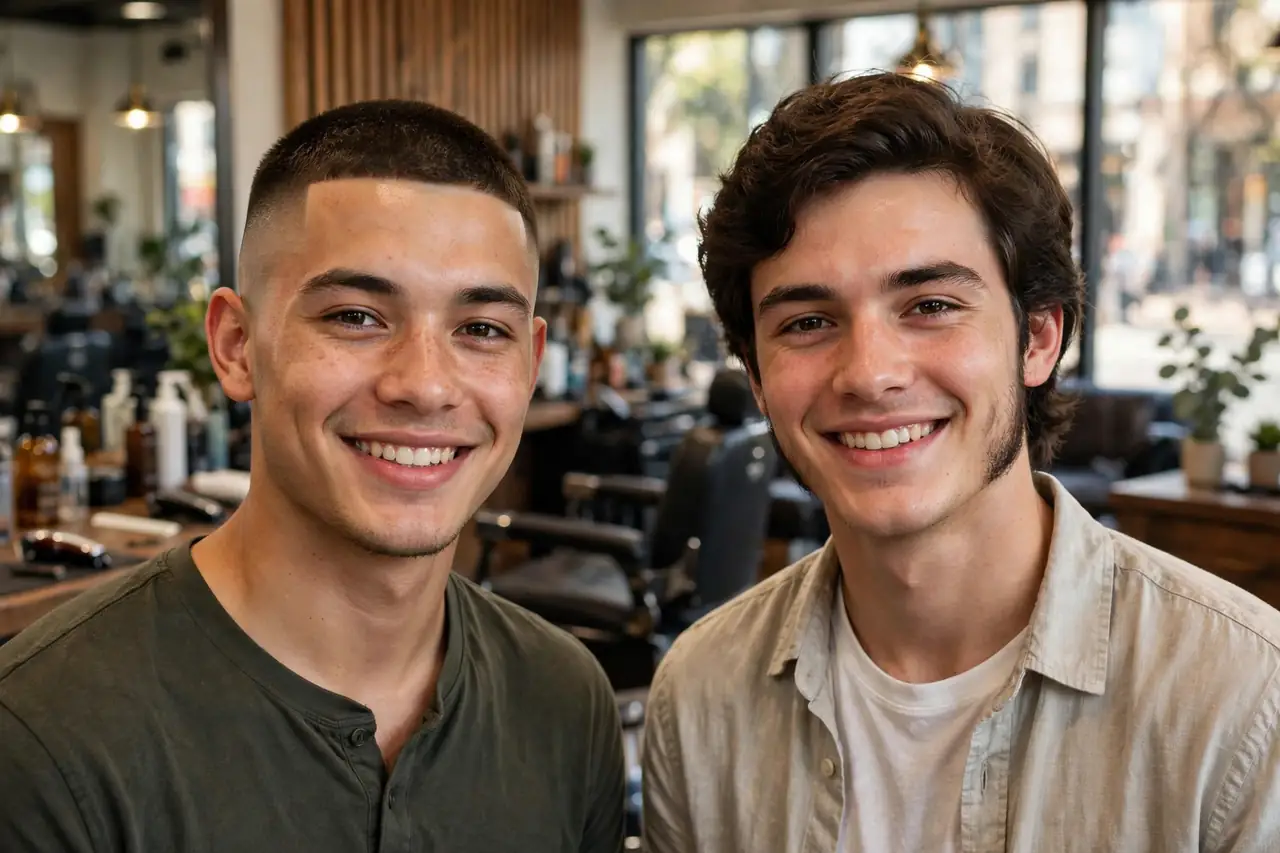
A fade blends the sides of your hair down through shorter and shorter lengths until they disappear into bare skin. A taper keeps most of that side length and only shortens the hair at the very edges — the sideburns and the neckline. Two different cuts, two different looks, and guys mix them up in the barber’s chair every single day.
This guide settles it once and for all: what each cut actually is, how they compare side by side, and which one suits your face, your hair type, and your job.
A fade is a gradient that ends at skin. A taper is a clean-up that only touches the edges and leaves the sides long. Pick the fade for a sharp, high-contrast look you’ll refresh every 2–3 weeks; pick the taper for a softer, classic look that still looks tidy at week four. Caught in between? That’s literally what the taper fade was invented for — details below.
- What Is a Fade: The Blend That Disappears Into Skin
- What Is a Taper: Full Sides, Cleaned-Up Edges Only
- The Taper Fade: Where the Two Cuts Meet
- Fade vs Taper: The Side-by-Side Breakdown
- Which Suits You: Face Shape, Hair Type, and Lifestyle
- High Fade vs Low Fade: Picking Your Fade Height
- Maintenance and Grow-Out: Week Three Tells the Truth
- What to Tell Your Barber: Exact Words for Each Cut
- Common Confusions: How Guys End Up in the Wrong Cut
- FAQs
✂️ What Is a Fade: The Blend That Disappears Into Skin
A fade is a clipper technique where the hair on the sides and back gradually gets shorter as it goes down — from the length on top, through a #3, a #2, a #1, and finally down to bare skin. There is no visible line where one length stops and the next starts. The gradient itself is the haircut.
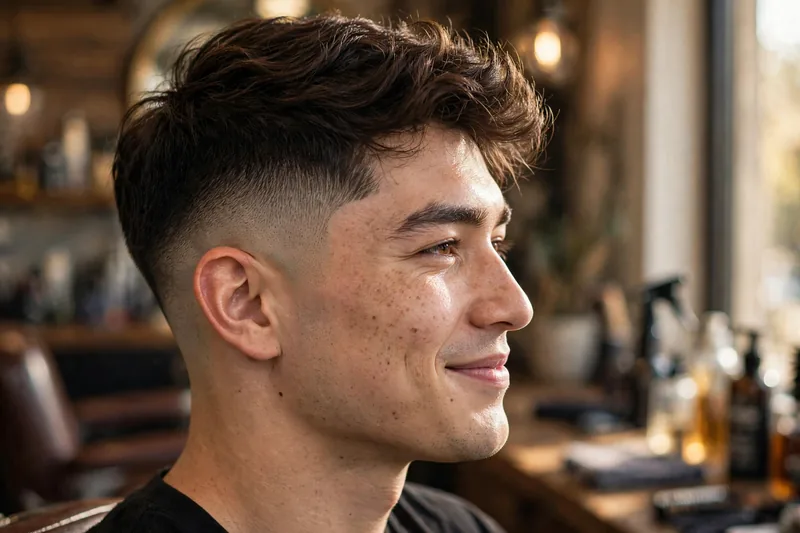
The only real choice inside a fade is where the blend starts:
- Low fade: The gradient sits low, just above the ears. The most subtle fade, and the closest cousin of a taper.
- Mid fade: The blend starts around temple height. The balanced, most-requested option.
- High fade: The blend starts up near the crown line. Maximum skin, maximum contrast.
- Skin (bald) fade: Any of the above taken all the way down to a zero — skin at the bottom, no stubble.
The top is a separate decision — the same fade can sit under a crop, a quiff, curls, or a buzz. Where guys get tripped up is the height: low, mid, and high are three visibly different haircuts, which is why we gave the low-versus-mid debate its own page in our breakdown of low taper fade vs mid taper fade vs mid fade.
💼 What Is a Taper: Full Sides, Cleaned-Up Edges Only
A taper is a cut where the hair gradually shortens only at the perimeter of the haircut — around the sideburns and across the neckline — while the sides themselves keep most of their natural, finger-length hair. No skin shows through the sides. From a few steps away, a taper just looks like a clean, well-kept head of hair.

Barbers usually cut a taper with scissors over a comb, not clippers up the whole side. The word itself describes where length comes off: the hair tapers — gradually narrows — as it reaches the edges of the cut, instead of being taken down in a full gradient.
The classic taper (also sold as a business taper) has been the default professional haircut for decades for one simple reason: it never looks like you’re trying too hard, and it never goes out of style.
🔀 The Taper Fade: Where the Two Cuts Meet
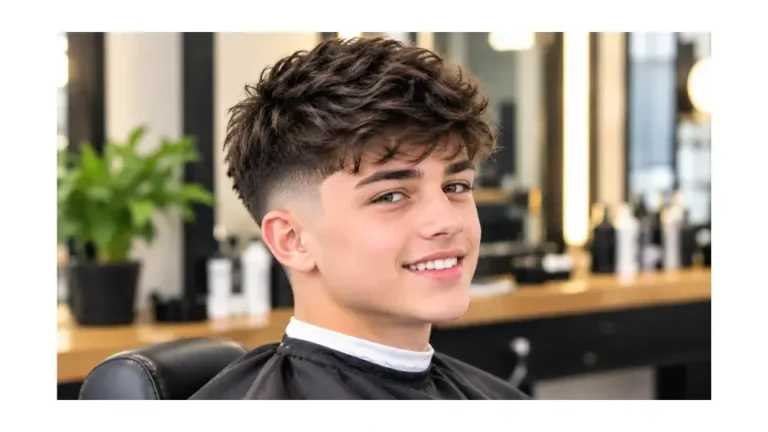
A taper fade takes the fade’s skin-blend and applies it only to the two zones a taper cleans up — a small gradient around each ear and sideburn, and another across the neckline — while the sides above those zones keep their length. It’s a fade’s sharpness, rationed out to the edges only.
This is the hybrid this whole site is built around: a mid taper fade fades the edges at mid height and leaves the rest full, which is why it reads “clean” without reading “severe.” Our complete mid taper fade guide covers the styles, guard numbers, and photos if that’s the direction you’re leaning.
So the family tree is simple. Taper = edges only, no skin gradient. Fade = the whole side becomes a gradient. Taper fade = gradient, but only at the edges. Most of the confusion in barbershops is just these three getting called by each other’s names.
⚖️ Fade vs Taper: The Side-by-Side Breakdown
Here is the whole comparison on one screen. The short version: a fade is defined by how much skin it shows, a taper by how much length it keeps — and that one difference drives everything else, from upkeep to price.
| Fade | Taper | |
|---|---|---|
| Length on the sides | Short — clipped down through the guard numbers | Finger-length — mostly scissor-cut, keeps its fullness |
| Shortest point | Skin (zero) or a #0.5 at the bottom of the blend | Never skin on the sides; edged up at the sideburns and neckline only |
| Skin showing | Yes — visible through most of the lower side | No — full coverage; skin appears only at the trimmed edges |
| Overall look | High contrast, sharp, modern | Softer, classic, understated |
| Where the work happens | The whole side and back of the head | Two small zones: sideburns and the neckline |
| Touch-up interval | Every 2–3 weeks to stay sharp | Every 3–5 weeks; edges can be stretched with a quick cleanup |
| Grow-out at 3 weeks | Blurry gradient, stubble line creeping up | Looks like a normal, slightly longer haircut |
| Typical US price | $30–$50 | $25–$45 |
| Best for | Thick hair, sharp styles, guys who love the fresh-from-the-shop look | Fine hair, conservative offices, low-maintenance routines |
Notice the pattern in that table: nothing about the top of the head appears anywhere. Fade and taper are decisions about the sides and edges — you choose your length up top separately, with either one.
🎯 Which Suits You: Face Shape, Hair Type, and Lifestyle
The right pick depends on three things: the shape of your face, the hair you were given, and how often you’re willing to sit in a barber’s chair. Here is the honest breakdown for each — no fence-sitting.
Face Shape
Your face shape decides how much side length you can afford. Round faces look sharper with a fade, because tight sides remove width and let the top add height. Square faces wear both well — a taper softens a strong jaw, a mid fade keeps it defined. Long faces should avoid high fades: taking the sides down to skin stretches the face even further, so a taper or a low fade is the safer call. Oval faces can take either cut without thinking twice.
Hair Type
Your hair type decides which cut stays honest between visits. Thick hair suits a fade — the gradient removes bulk that would otherwise puff out. Fine or thinning hair suits a taper, because a skin fade can make the scalp show through and the hair look thinner than it is. Straight hair shows every blending mistake, so a fade needs a skilled barber; wavy hair hides small flaws in both cuts. Curly hair works with either, but a taper fade is the popular middle ground — see how it plays out in our guide to the mid taper fade for curly hair.
Lifestyle and the Office
Your routine decides which cut fits your actual life. In a conservative office — law, banking, client-facing roles — the classic taper is the safest haircut in the building; a low fade also passes almost everywhere, while a high skin fade is the one that can read as too bold in formal settings. If your job is casual or creative, pick purely on looks. And be honest about maintenance: a fade is a subscription, not a one-time purchase.
Age and Stage
Age doesn’t ban either cut, but it does shift the balance. Teens and men in their twenties mostly live in fades — sharp, current, and they’re near a barber anyway. Through your thirties and in professional years, the taper and taper fade take over because they look deliberate without looking like effort. On graying hair, a softer taper tends to read more distinguished than a skin-tight fade, which can look harsh against salt-and-pepper color.
📏 High Fade vs Low Fade: Picking Your Fade Height
Inside the fade family, the fight is high versus low — and it’s really a fight about where the blend starts. A high fade starts the gradient up near the temples and the crown line, showing the most skin and giving the strongest contrast. A low fade starts the gradient just above the ears, keeps more length on the lower head, and sits closest to a taper in spirit.
- Pick high if you have thick hair, a round face, or a short top like a buzz or a tight crop — the tall gradient balances all three.
- Pick low if it’s your first fade, your office leans formal, or your top is longer — the low blend is forgiving and grows out the kindest.
- Either way, both usually end at skin or a #0.5 at the very bottom. The difference is where the weight line sits, not how short the shortest part is.
Mid fade is the truce between them — temple-height blend, moderate skin. If you can’t decide in the chair, “mid” is the answer that rarely disappoints anyone.
⏳ Maintenance and Grow-Out: Week Three Tells the Truth
Both cuts look great on day one — the real difference shows up at week three. A fade’s gradient starts softening in week two, and by week three the skin section has grown into visible stubble and the clean blend looks blurry. A taper at week three just looks like a slightly longer version of itself, because there was never a skin-tight gradient to fall apart.
- Fade schedule: a touch-up every 2–3 weeks keeps it sharp — that’s roughly 18–20 barber visits a year.
- Taper schedule: a full cut every 4–5 weeks holds the shape, with a 5-minute edge cleanup (sideburns and neckline) in between — roughly 11–12 visits a year.
- Yearly cost: at typical US prices, the fade lands around $700–$850 a year; the taper around $350–$450. Nearly the same chair price, roughly double the annual bill.
- DIY factor: taper edges are easy to tidy at home with a trimmer. A home fade is a different story — blending the back of your own head is where DIY haircuts go wrong, so fades belong to barbers.
If you hate booking appointments, this section just made your decision for you. If you love the barbershop ritual, the fade’s upkeep is a feature, not a bug.
🗣️ What to Tell Your Barber: Exact Words for Each Cut
Most wrong haircuts are born in the first 30 seconds of the conversation, not on the clippers. Use these scripts word for word — and show a photo of the exact result alongside them, because “fade” and “taper” mean slightly different things in every shop.
For a fade, say:
“Skin fade on the sides and back. Start the blend [low / at the temples / high], take the bottom down to a zero, and blend it up into the top. Leave about [3 inches] up top — just connect it, don’t thin it out.”
For a classic taper, say:
“Classic taper, please — scissors on the sides, keep the length up there. Just taper the sideburns and clean up the neckline. No fade up the sides.”
For a taper fade, say:
“Mid taper fade — fade it around the ears and at the neckline only, about a #2 at the shortest point, and keep the sides fuller above that.”
Switching from a fade to a taper: this one needs patience, not just words. If your fade is skin-tight, grow the sides out for 3–4 weeks first, then tell your barber: “I’m growing the fade out into a taper — keep all the length on the sides today, just clean the edges.” Switching from a taper to a fade is the easy direction: it can happen in a single visit, any day, no grow-out required.
⚠️ Common Confusions: How Guys End Up in the Wrong Cut
Four mix-ups cause almost every fade-versus-taper disappointment. Read them before your next appointment, not after it.
Asking for a “taper” and expecting skin. You saw a skin fade in a photo, said the word “taper,” and walked out with full sides. The photo was a fade. If skin shows in your reference picture, the word you want is “fade.”
Asking for a “taper fade” and expecting a classic taper. The taper fade still puts a real gradient around your ears and neckline. If you want zero skin-blend anywhere, ask for a classic taper and say “scissors on the sides” out loud.
Saying “fade” with no height attached. Low, mid, and high fades are three different haircuts sharing one word. A barber who hears just “fade” will give you his house default — which may not be the one in your head.
Judging the cut only in the chair. Day one always looks sharp. Ask yourself how each cut looks at week three, on your actual barber-visit schedule — that’s the haircut you’ll actually be wearing most of the time.