Burst Fade: 15 Styles, Tips & Photos (2026)
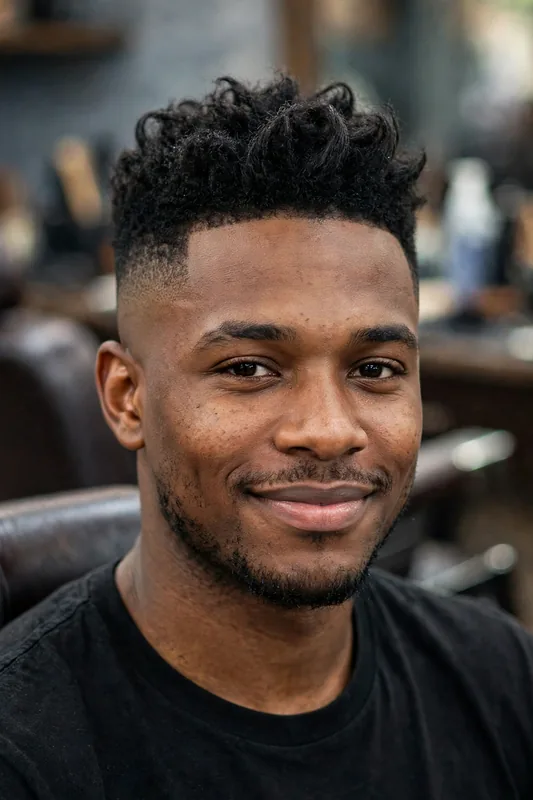
Burst Fade: 15 Styles, Tips & Photos (2026)
Most fade galleries show you pictures and stop there. You still walk into the barbershop unsure what to ask for, which guard does what, and whether the cut suits your face. This burst fade guide closes that gap: 15 styles with photos, exact guard numbers, word-for-word barber scripts, face-shape picks, and a maintenance plan — everything on one page.
What Is a Burst Fade?: The Rounded Fade Explained
A burst fade is a fade haircut where the shortest hair radiates outward in a rounded, semicircular curve around the ear, instead of running straight around the head. The fade “bursts” from a focal point behind the ear, leaving the back and nape longer. It pairs naturally with mohawks, mullets, faux hawks, and curly tops.
The technique starts with a curved guideline near the temple, arcing down behind the ear. Your barber blends guards — usually #3 or #2 at the outer edge, down through #1 to #0.5 or skin at the tightest point — along that curve. Because the fade stops at the side of the neck instead of wrapping the back, the nape keeps its length and the silhouette stays rounded.
Barbering guides describe it as a compact semicircle around the ear that leaves more length toward the back, which is exactly what separates it from a standard fade (barber.style). If you like structured fades but want something with more character, browse our 20-style fade roundup to compare the family.
Why the Burst Fade Is So Popular in 2026
The burst fade is booming in 2026 because it solves a real problem: it keeps the ear area crisp while preserving length and shape at the back. That makes it the go-to frame for mohawks, mullets, and curly tops — three of the year’s biggest men’s trends. Social feeds did the rest.
Barbers love it because the curve shows real skill. A clean burst with no visible lines is a portfolio piece, so shops post them constantly — and every post sends more clients asking for the same cut. It is one of the few fades that photographs as well from the side as from the front.
It is also unusually forgiving across textures. Coily hair gets dramatic contrast, wavy hair gets shape, and straight hair gets edge it would never have with a plain taper. One cut, three different personalities, zero boring grow-out phase.
Burst Fade Pros and Cons: An Honest Look
The burst fade’s biggest strength is its sculpted shape — it frames the ear area with a clean curve while keeping the back full. Its biggest drawback is upkeep: the curve loses its edge fast, so expect a shop visit or touch-up every two to three weeks. Here is the full honest picture before you commit.
✅ Pros
- Sculpted silhouette. The rounded curve follows your skull’s natural shape and looks deliberate from every angle.
- Texture-friendly. Curls, coils, and waves get maximum contrast against the faded curve — the cut does half the styling for you.
- Highly customizable. Low, mid, or high placement plus skin or guarded finishes give you a genuinely different cut each time.
- Photographs well. The curve reads clearly in photos, which matters if your cut is part of your personal brand.
❌ Cons
- Frequent upkeep. The curve softens visibly after two to three weeks. Skip cleanups and it turns into a blurry taper.
- Barber-dependent. A bad burst looks worse than a bad regular fade — the curve exposes uneven blending fast. Choose your barber carefully.
- Not office-proof at high contrast. A high skin burst with designs can clash with conservative dress codes. The low version is the safe pick.
- Grows out unevenly. The tight area near the ear grows out at a different visual rate than the longer back, so the shape distorts between cuts.
- Hard to DIY. You cannot see the back curve in a mirror well enough to cut it yourself. Touch-ups yes, full cuts no.
15 Best Burst Fade Styles: The Photo Gallery
These 15 burst fade styles cover every variation that matters in 2026 — low, mid, and high placements paired with the tops men actually wear. Each card shows the cut, who it suits, and how to ask for it. Save your favorite photo before your appointment; if you want a bolder textured pairing, see our dreads-and-fade combination guide too.
1. Classic Burst Fade

The original. A rounded burst arcs around the ear while the top stays neat, short, and lightly textured. It is the reference point every other version on this list is measured against, and it still works everywhere.
2. Low Burst Fade

The quiet version. The fade hugs the ear low and tight, keeping most of the side’s length intact. You get the burst shape without the announcement.
3. Mid Burst Fade

The sweet spot. The arc sits at mid-ear height — visible enough to read as a burst, restrained enough for daily life. Most barbers consider this the default when a client just says “burst fade.”
4. High Burst Fade
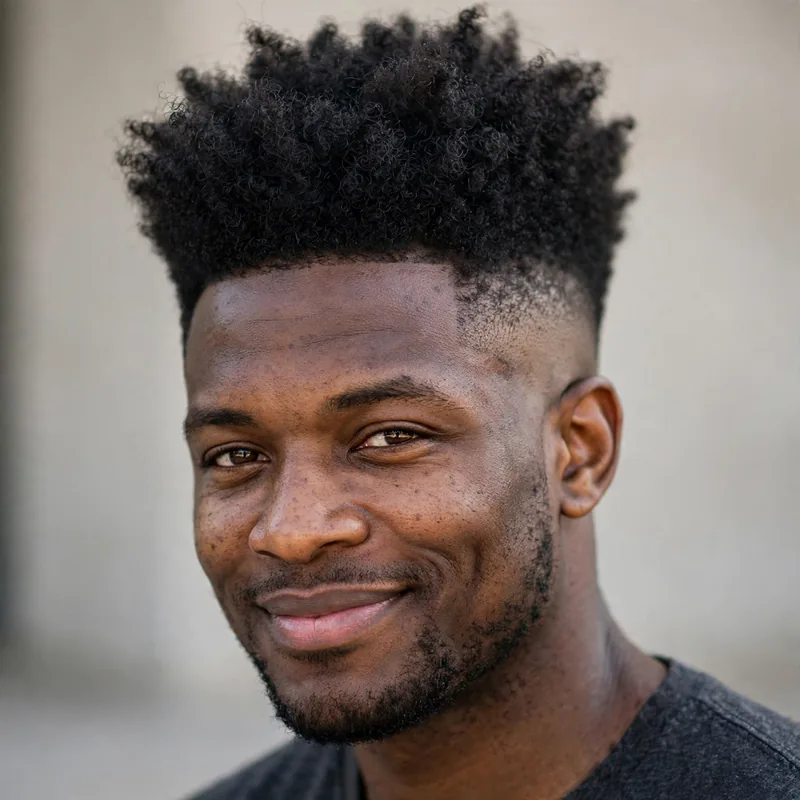
Maximum drama. The burst climbs well above the ear and melts to skin, leaving a bold frame around a longer top. This is the version that turns heads — and needs the most upkeep.
5. Burst Fade with Curly Top
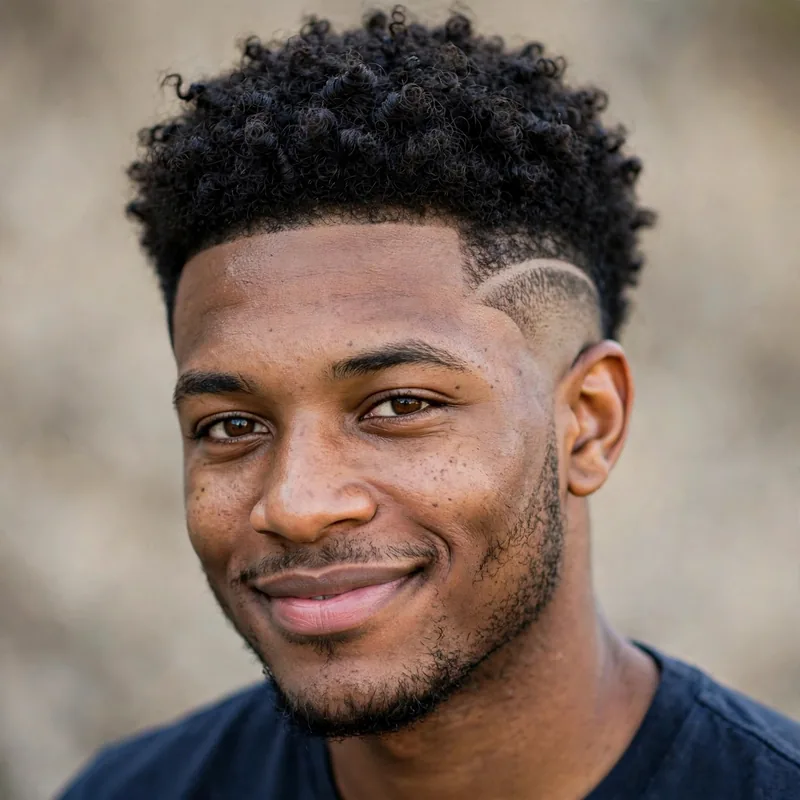
The natural pairing. Tight faded curve below, full defined curls above — the contrast does the styling work for you. Curls sit exactly where the fade frames them, so the shape looks intentional even on lazy days.
Disclosure: this article contains affiliate links. If you buy through them, we may earn a commission at no extra cost to you.
Keeps curls on a burst fade defined and frizz-free without crunch. A pea-sized amount on damp hair is all the curly top needs.
Check Price on Amazon6. Burst Fade Mohawk

The legendary combo. Burst-faded sides carve out a defined strip running front to back. It is the cut the burst fade was practically invented for.
7. Burst Fade Faux Hawk

The mohawk’s wearable cousin. The top pushes upward into a soft center ridge while the burst keeps the sides sharp. All of the attitude, half of the commitment — and you can flatten it for formal days.
8. Textured Burst Fade

Choppy on top, surgical on the sides. The textured crop adds movement that straight hair usually lacks, while the burst curve keeps the whole thing sharp.
The textured and messy burst styles on this list live or die by separation. A matte clay gives that choppy top piece-y definition with zero shine.
Check Price on Amazon9. Burst Fade with Waves
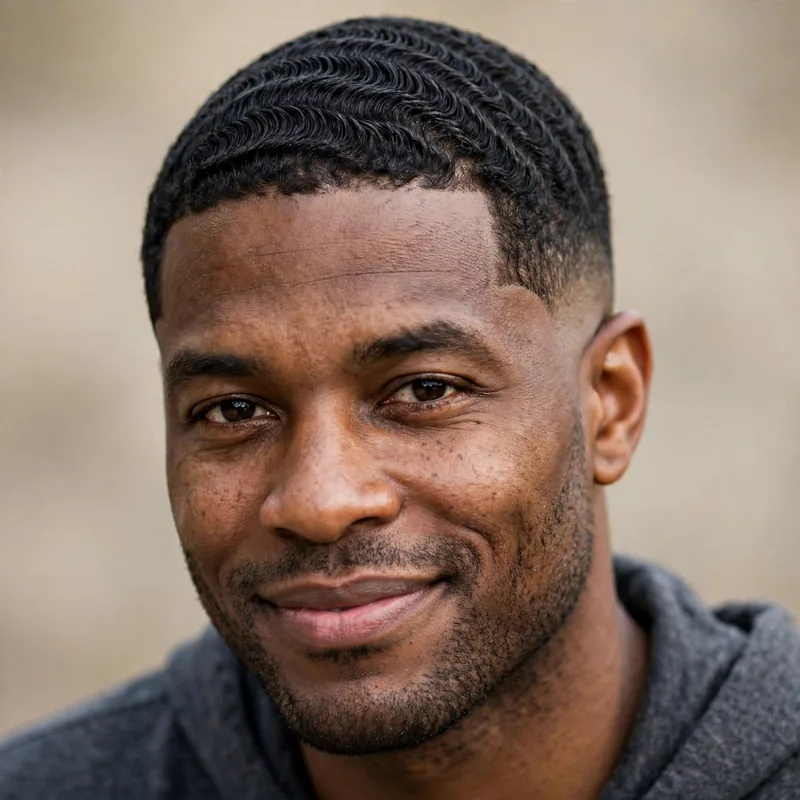
Deep 360 waves rolling over a crisp burst curve. The fade frames the wave pattern instead of fighting it, so the top reads even deeper. This is a routine haircut — the waves demand their brushing discipline.
10. Subtle Burst Taper

Barely there, on purpose. A soft low burst taper cleans the ear area while the top stays natural and long. Most people will just think your hair looks tidy.
11. Burst Fade Mullet

Business in the curve, party at the nape. The burst fade is what keeps a modern mullet from looking accidental — it draws a deliberate line between the short sides and the flowing back. The back length is the whole point, so protect it.
12. Burst Fade with Hair Design
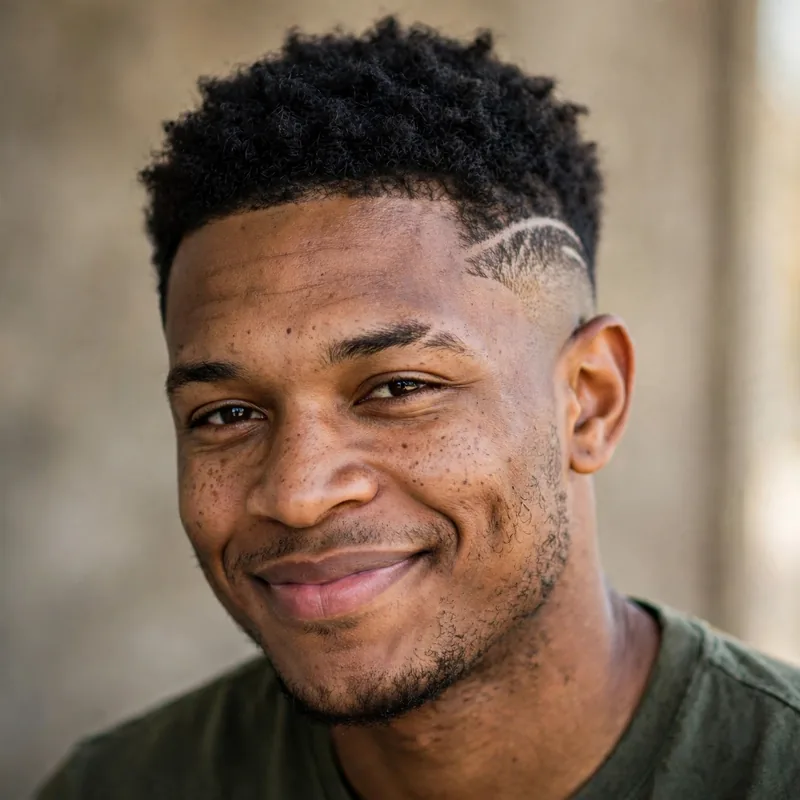
A shaved line or curve etched into the faded area. The burst’s clean gradient is the ideal canvas — the design pops because the fade around it is so smooth.
13. Burst Fade with Long Top

Length on top, discipline on the sides. The burst fade anchors long hair so it looks styled instead of simply grown out. Slick it back, let it flow, or tie the very top — the sides stay sharp regardless.
14. Burst Fade with Lineup
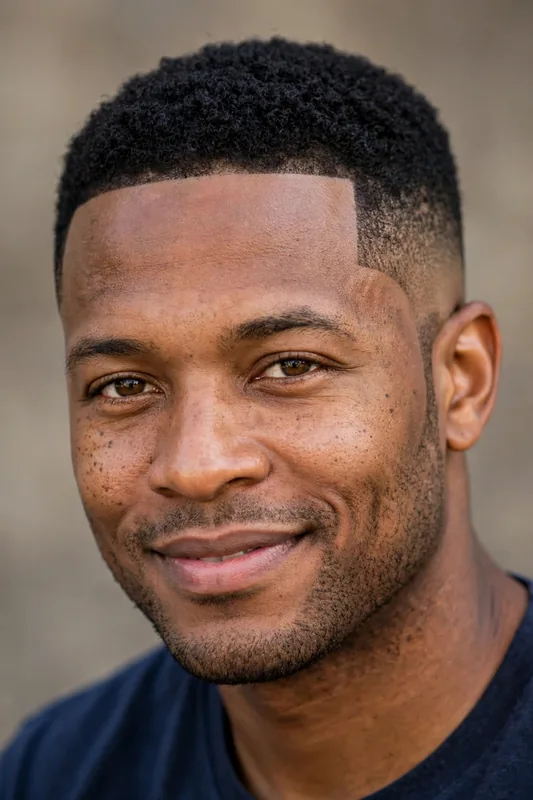
Razor edges, everywhere. The burst curve gets paired with a sharp lineup along the hairline and temples for the crispest version of this cut. Camera-ready from every angle.
The lineup on style 14 only stays razor-sharp with regular edge work. A detail trimmer handles the hairline, temples, and around-the-ear cleanup between barber visits.
Check Price on Amazon15. Messy Burst Fade

Controlled chaos. A tousled, textured top sits over a precise burst curve — the contrast between messy and meticulous is what makes it work. Wavy hair was made for this one, and the styling takes about ninety seconds.
Second mention because it earns it: the messy burst fade is a ninety-second style only if the product cooperates. Clay on dry hair, quick tousle, done.
Check Price on AmazonHow to Choose the Right Burst Fade for Your Hair Type: The Texture Guide
Match the burst fade to your hair texture, not the other way around. Curly hair gets the most dramatic payoff, straight hair needs texture added on top, and fine hair should stay on the low-to-mid side. Pick your profile below.
Curly
Curly hair and the burst fade are the dream team. The fade carves shape into the sides while the curls keep their volume up top — styles 5 and 12 above show why. Ask for a mid or high burst so the curl pattern gets a proper frame, and keep the top long enough for the curls to clump. If you ever take the texture further, our dreads-and-fade combination guide covers the locked version of this idea.
Curly burst fades frizz out without moisture. Work a small amount through damp curls after every wash to keep the top defined against the faded sides.
Check Price on AmazonStraight
Straight hair can absolutely wear a burst fade, but the top needs help. Without texture, the contrast between the faded curve and a flat top looks unfinished. Ask for point-cutting or a choppy crop, and style with matte clay for separation. Styles 8 and 15 are your templates — and this fade breakdown shows more straight-hair-friendly tops.
Wavy
Wavy hair might be the easiest texture for a burst fade. The natural bend gives the top effortless movement, and the burst curve keeps the sides from puffing out. A mid burst with 2–3 inches on top is the sweet spot; style with a light cream and let the wave do the talking. The messy burst (style 15) was designed for you.
Thick
Thick hair gives the most striking burst fades because the contrast between the faded curve and the dense top is so strong. The risk is bulk at the transition line — ask your barber to debulk the parietal ridge so the blend stays smooth. High bursts look exceptional on thick hair but demand the strictest upkeep schedule.
Thin
Thin hair needs a careful hand. Stick to a low or mid burst — a high skin burst exposes too much scalp and makes the top look thinner by comparison. Keep the top at a moderate length (not buzzed, not long) and ask for a #1 rather than skin at the tightest point to keep density. The subtle burst taper (style 10) is the safest entry point.
Best Burst Fade by Face Shape: What Suits You
The burst fade flatters most face shapes because the curve adds width exactly where the ear sits, balancing both narrow and wide faces. The only real variable is placement: low for long faces, high for round ones. Find your shape below.
Oval
Oval faces can wear any burst fade placement — low, mid, or high all work. You have the most freedom on this list, so choose based on lifestyle and maintenance tolerance instead of face geometry. The classic burst (style 1) is the no-regret starting point.
Round
Go mid or high. A higher burst arc plus some height on top draws the eye upward, which visually lengthens a round face. Avoid a low, wide burst paired with a flat top — that combination emphasizes width exactly where you don’t want it.
Square
The burst’s rounded curve softens a strong square jawline beautifully. A mid burst with a textured or wavy top adds curves that balance angular features. Skip the sharpest lineups if your jaw is already very defined — too many hard edges compete with each other.
Heart
Heart-shaped faces (wider forehead, narrower chin) benefit from a burst fade that keeps some volume at the sides rather than fading them to nothing. A low or mid burst with a fuller top balances the forehead without over-narrowing the lower face.
Long
Keep the burst low and the top controlled. A high burst with a tall top stretches a long face further, so do the opposite: low placement, moderate top height, and a bit of width at the sides. The subtle burst taper (style 10) is ideal.
Diamond
Diamond faces (narrow forehead and chin, wide cheekbones) pair well with a mid burst and volume on top. The added top height balances the cheekbones, and the curved fade keeps the sides from adding extra width. A faux hawk top (style 7) is a strong pick.
How to Ask Your Barber for a Burst Fade: Scripts That Work
Ask for a burst fade with three details: the placement (low, mid, or high), the shortest guard (#0.5, #1, or skin), and the top length. Say the placement first — it sets the whole cut. The scripts below cover the five most-requested versions, and our guard-number guide goes deeper on clipper sizes.
Guard cheat sheet: #0.5 = 1.5mm | #1 = 3mm | #2 = 6mm | #3 = 10mm. Most burst fades blend from a #2 or #3 at the outer edge down to the shortest guard near the ear.
What NOT to say: “just fade the sides” — without the word burst and a placement, most barbers default to a regular taper. And always show a side-profile photo of the exact curve you want; words describe, photos decide.
Common Burst Fade Mistakes to Avoid: 6 Fixes
Most burst fade regrets come from the same six mistakes — wrong placement, vague instructions, and skipped maintenance. Each one is easy to prevent if you know it before you sit in the chair. Read this list before your appointment, not after.
1. Saying “burst fade” with no placement. Low, mid, and high are completely different haircuts. A barber who guesses wrong gives you a cut you didn’t order. Always name the placement first, then the guard.
2. Going skin when you meant soft. Skin at the tightest point looks incredible on day one and grows out harshly by week three. If you stretch appointments past three weeks, ask for a #0.5 or #1 instead — the grow-out is far kinder.
3. Forgetting the back. The burst fade deliberately leaves the nape longer. If you don’t state what happens back there — faded, natural, or grown out — you get the barber’s default, which may not match the photo you showed.
4. Choosing the wrong barber. The curved guideline exposes sloppy blending faster than any straight fade. Check a barber’s portfolio for actual burst fades — not just tapers — before booking. This cut punishes generalists.
5. Skipping the 2–3 week cleanup. The burst curve is the first thing to blur as hair grows. Waiting six weeks doesn’t give you a grown-out burst fade; it gives you an uneven taper. Budget for the maintenance rhythm before you commit.
6. Styling the top against the cut. A precision burst with a shapeless, product-free top looks like two different haircuts. The sides are doing detailed work — give the top 90 seconds of product so it holds up its end.
How to Maintain a Burst Fade: The 2-Week Rule
A burst fade stays sharp for about two to three weeks before the curve softens and the ear area loses definition. Book a cleanup every 14–21 days, or tidy the edges at home between visits. The routine below takes under ten minutes a day.
Daily (5 minutes): style the top as usual — the sides need nothing day to day. Weekly: check the ear area in a hand mirror; when the curve starts disappearing, it’s touch-up time. Every 2–3 weeks: barber cleanup of the burst line, or a careful at-home edge pass with a trimmer. Never: let it go past five weeks and expect the shape to survive.
For at-home edge work, a clipper with guards handles the bulk cleanup while a detail trimmer keeps the hairline and around-the-ear edges crisp between appointments. If you blow-dry a longer top, a vented brush speeds the job and adds the volume that makes the burst contrast pop.
For the at-home cleanup pass between barber visits: re-establish the faded area around the ear with a #1 or #2 guard, always following the existing curve — never redrawing it.
Check Price on AmazonKeeps the hairline, temples, and the edge of the burst curve sharp in the weeks between full cleanups. Light passes only — you’re maintaining the line, not cutting a new one.
Check Price on AmazonBlow-drying the top with a vented brush builds the volume that makes a burst fade’s contrast stand out — especially on straight or wavy hair. Two minutes on medium heat, brush lifting at the roots.
Check Price on AmazonBurst Fade vs Drop Fade: The Real Difference
The burst fade curves around the ear in a semicircle and stops at the side of the neck, leaving the back longer. The drop fade arcs downward behind the ear and continues across the back. Same family, different path — pick based on how much back length you want.
The Shape
Burst fade: a rounded, sunburst-like curve radiating from behind the ear. Compact and sculpted.
Drop fade: the fade line dips down behind the ear and keeps traveling, following the head’s curve to the back.
The Back
Burst fade: the nape stays long and full — the fade never wraps around. Ideal if you want back length.
Drop fade: the fade continues across the nape, so the back is blended short like the sides.
Best For
Burst fade: mohawks, mullets, faux hawks, and curly tops — anything where the back or top keeps its length.
Drop fade: even, all-around short cuts where you want the fade to flow continuously around the head.
Upkeep
Burst fade: the tight curve near the ear blurs fast — cleanups every 2–3 weeks are non-negotiable.
Drop fade: slightly more forgiving as it grows, since there’s no single focal curve to lose.
The verdict: want length at the back and a sculpted statement around the ear? Get the burst. Want an even fade that wraps the whole head? Get the drop. If you’re still torn between fade families, compare against the mid taper fade — the subtler cousin of both.
Frequently Asked Questions About the Burst Fade
What is a burst fade?
A burst fade is a fade haircut where the shortest hair radiates outward in a rounded, semicircular curve around the ear instead of running straight around the head. The fade bursts from a focal point behind the ear, leaving the back and nape longer. It pairs naturally with mohawks, mullets, faux hawks, and curly tops.
How long does a burst fade last?
A burst fade stays sharp for about two to three weeks. After that, the curved gradient around the ear softens and the ear area loses its definition. Most barbers recommend a cleanup every 14 to 21 days, or a quick at-home edge touch-up between visits.
What guard numbers are used for a burst fade?
Most burst fades blend from a #3 (10mm) or #2 (6mm) at the outer edge down through a #1 (3mm) to a #0.5 (1.5mm) or bare skin at the tightest point near the ear. The exact shortest guard sets the contrast: skin for drama, #0.5 or #1 for a softer grow-out.
Does a burst fade work on straight hair?
Yes, but straight hair needs texture added on top so the cut doesn’t look flat. Ask for point-cutting or a choppy crop, and style with a matte clay or paste for separation. The burst curve itself works on any texture; it’s the top that needs the extra help.
What is the difference between a burst fade and a taper fade?
A burst fade curves around the ear in a rounded semicircle and stops at the side of the neck, keeping the back longer. A taper fade follows a straighter, subtler line down the sides and back with less contrast. The burst is bolder and more sculpted; the taper is quieter and more conservative.
Can I cut a burst fade at home?
You can maintain one at home but shouldn’t attempt the full cut yourself. The curved guideline behind the ear is hard to see and blend in a mirror. Use a trimmer for edge touch-ups between barber visits, and leave the actual burst shape to a professional.
How much does a burst fade cost?
In the US, a burst fade typically costs $25 to $60 depending on the city, the shop, and whether extras like a lineup, hot-towel finish, or hair design are included. Designs and detailed line work usually add $10 to $20 on top of the base cut price.
Is a burst fade appropriate for a job interview?
A low or subtle burst fade reads as neat and professional and works fine for interviews. Keep the contrast soft, the top tidy, and skip the hair design. Save the high skin burst, mohawk, or shaved designs for after you have the job.
Will a burst fade suit a round face?
Yes. A mid or high burst fade suits a round face because the higher arc and added top height draw the eye upward, which visually lengthens the face. Avoid a low, wide burst with a flat top, since that combination can emphasize roundness.
About the Author
Conclusion: Lock In Your Cut
You now know what a burst fade is, which of the 15 styles fits your hair and face, exactly what to tell your barber, and how to keep it sharp. That puts you ahead of 90% of the guys who walk in and just say “fade the sides.”
Pick your style from the gallery, screenshot the photo, and bring the matching barber script to your appointment. Then set the 2–3 week cleanup rhythm from day one — a burst fade rewards the guys who maintain it.
Want to compare the wider fade family before you decide? Browse the 20-style fade gallery next.
Found your style? Bookmark this page (Ctrl+D / ⌘+D) so the barber scripts are with you at the shop.
Got the cut? Tell us in the comments which of the 15 you picked — and how it turned out.