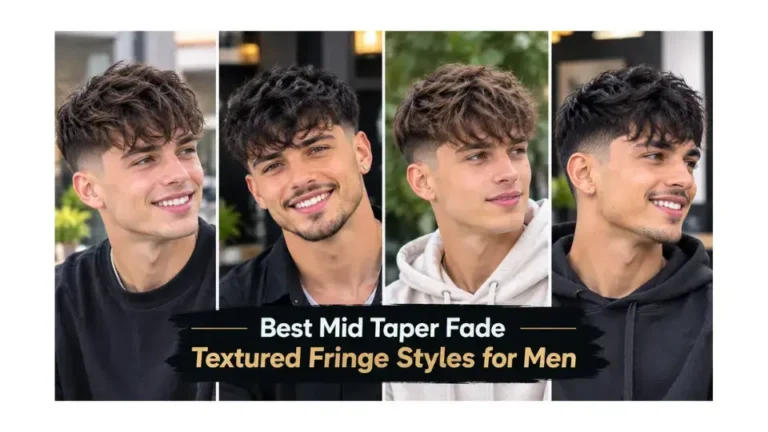
Mid Drop Taper Fade: 6 Styles, Barber Guide & Photos (2026)
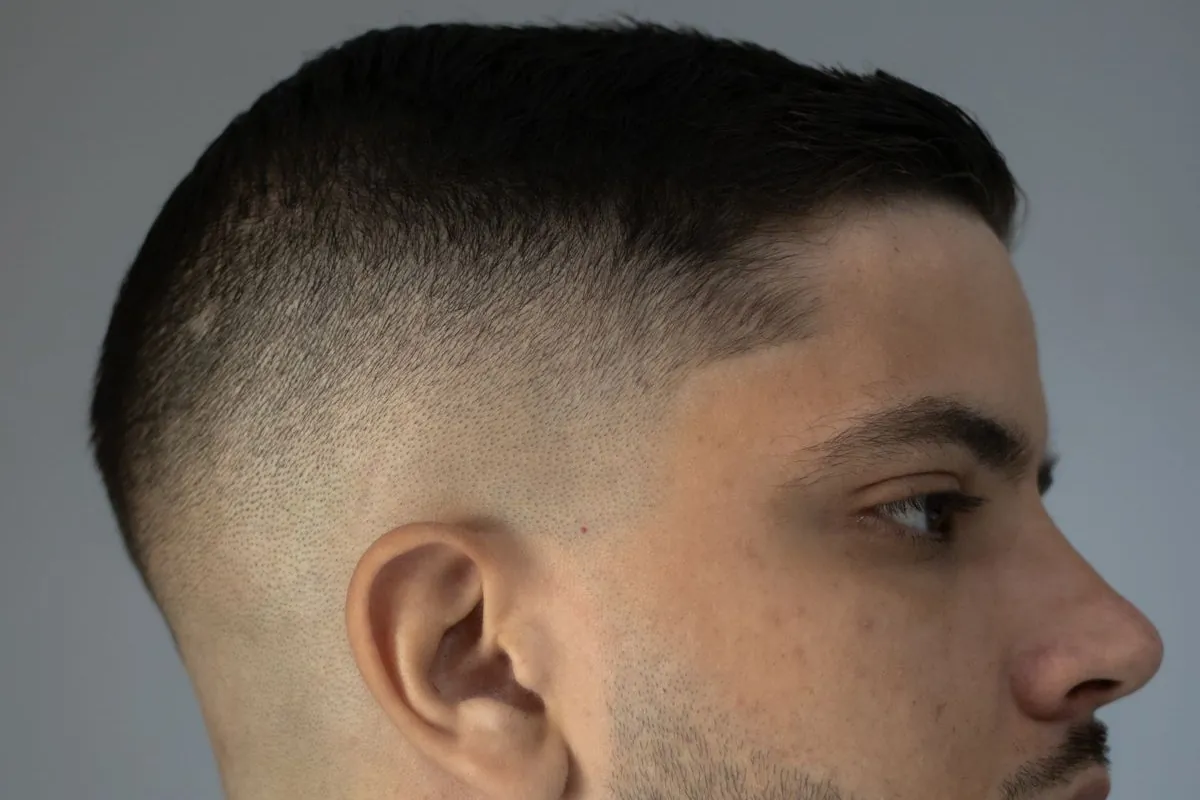
A mid drop taper fade starts its blend at the temple, then curves down behind the ear instead of running straight around the head. That downward arc is the whole cut. The sides stay clean like a taper, but the fade line drops lower at the nape, so the back reads rounded and sharp at the same time. This guide explains the arc, shows six styles, and gives you the exact guard numbers and barber script.
- What Is a Mid Drop Taper?
- Mid Drop Taper Fade vs Regular Mid Taper Fade
- 6 Best Mid Drop Taper Styles
- How to Choose the Right Mid Drop Taper for Your Hair Type
- Best Mid Drop Taper by Face Shape
- How to Ask Your Barber for a Mid Drop Taper
- Common Mid Drop Taper Mistakes to Avoid
- How to Maintain a Mid Drop Taper
- Frequently Asked Questions
- Conclusion
What Is a Mid Drop Taper?
A mid drop taper is a mid-height taper whose fade line arcs down behind the ear instead of staying level.
Three words in the name answer three different questions. Mid says where the blend starts: at the temple. Drop says what shape the line takes: it curves down behind the ear. Taper says how the edges finish: gradual, with hair left at the edges instead of a full skin fade. One cut can be mid, drop, and taper at the same time, because each word answers its own question. That split is how TaperTrends’ fade guide explains fade names, and it is the clearest way to read this cut.
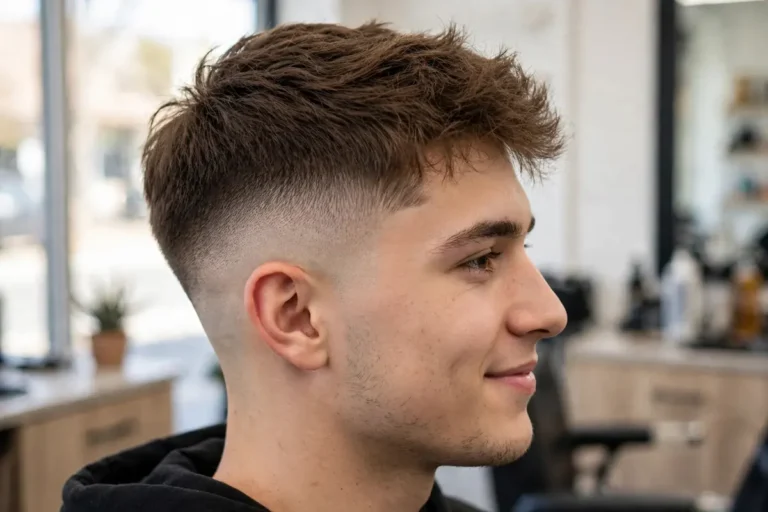
From the front, a mid drop taper looks like a normal mid taper. The difference shows from the side and the back. At the temple, the blend sits at the same height as a regular mid taper. Behind the ear, the line dips lower and follows the curve of the skull. At the nape, it sits lowest of all. That arc keeps the back rounded, which matters for men whose head shape looks flat or boxy under a straight fade line.
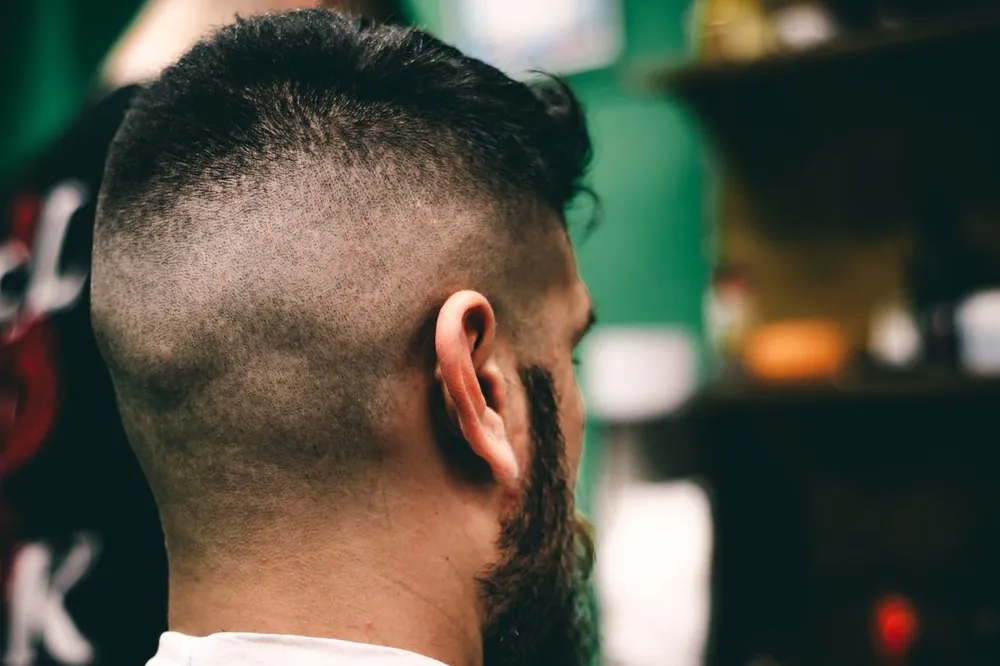
Check the arc in the mirror with three points. First, the sideburn: the blend should start level with the top of the ear. Second, behind the ear: the line should dip visibly lower than the front. Third, the nape: the shortest point should sit at the lowest part of the curve. If all three points drop in a smooth arc, you have a real drop taper. If the line runs level all the way around, you have a regular mid taper, not a drop.
3 checkpoints
Temple: the blend starts here, level with the top of the ear. Behind the ear: the line dips lower and follows the skull. Nape: the shortest point sits at the lowest part of the arc.
Source: MidTaperFade.com
The drop taper also answers a common mix-up. A drop fade and a drop taper are not the same cut. A full drop fade runs the fade across the whole side and back. A drop taper keeps the taper’s edge-only finish, so the sides above the arc keep more length. The drop taper has less contrast than a full drop fade, and it grows out more gently. See our different types of fades guide for how drop, burst, and temple shapes compare.
Mid Drop Taper Fade vs Regular Mid Taper Fade: The Line Changes Everything
The line is the difference: a drop taper curves behind the ear, while a regular mid taper runs level around the head.
| Mid Drop Taper Fade | Regular Mid Taper Fade | |
|---|---|---|
| Fade line | Curves down behind the ear | Runs level around the head |
| Area worked | Sideburn, ear perimeter, nape, with the arc | Sideburn and nape only |
| Contrast | Medium to high at the back | Low to medium |
| Back shape | Rounded, follows the skull | Flat, follows a straight line |
| Upkeep | Rebook every 2 to 3 weeks | Rebook every 2 to 3 weeks |
| Grow-out | Curve softens by week 3 | Blend softens evenly |
| Best for | Men who want shape at the back | Men who want the safest, simplest cut |
| Office-safe | Yes, with a neat top | Yes |
Pick the drop taper when the back of your head matters to you. The arc adds shape that a straight line cannot, and it suits men who wear their hair up or short on top. Pick the regular mid taper when you want the lowest-risk cut. It is simpler to cut, simpler to grow out, and any barber can do it well. For the softer end of the same scale, read our low taper fade vs mid taper fade guide.
One warning applies to both cuts. The name alone does not settle the result. Barbers use taper, fade, and drop differently from shop to shop, so describe the line you want. Say “curve it down behind the ear” for a drop, or “keep the line level” for a regular taper. A photo of the back view helps more than any single word.
6 Best Mid Drop Taper Styles
The top decides the mood, and the drop arc suits tops with texture and movement.
Classic Mid Drop Taper
The classic version keeps the top short and even, so the arc does all the talking.
Ask for about an inch on top, combed forward or to the side. The blend starts at the temple and drops behind the ear, with no design lines and no hard part. It reads as clean and grown-up, and it suits first-timers who want to try the drop shape without a bold top.
Best for: men trying a drop taper for the first time.
Textured Crop
A choppy crop on top balances the sharp arc below it.
Ask for one to two inches on top, point-cut for texture, with the drop arc kept tight behind the ear. The messy top stops the cut from looking too severe, while the arc keeps the back sharp. A matte clay adds hold without shine.
Works well for: thick or straight hair that needs movement on top.
✌ Pro tip: ask the barber to point-cut the top, not blunt-cut it. Blunt ends make the crop look heavy next to a tight arc.
Curly Top
Curls on top are the best pairing for a drop taper, because the volume up top matches the curve below.
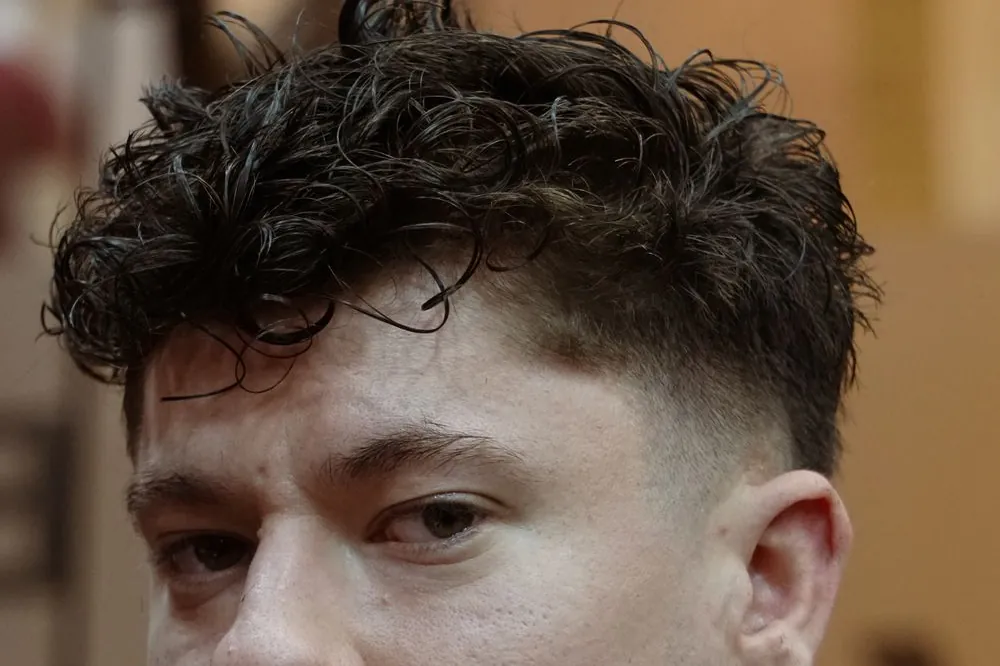
Keep the curls long enough to show their shape, about two inches, and let the arc drop behind the ear. The curls soften the sharpness of the fade, so the cut reads as natural rather than severe. Use a curl cream, not a heavy pomade, so the curls stay light.
Pairs with: natural curls, waves, and coils that hold their own shape.
Buzz Cut
A buzz top with a drop arc is the lowest-maintenance version of this cut.
Ask for a #2 or #3 on top with the drop arc blended below it. The short top makes the arc the only detail, so the blend has to be clean. It suits men who want a sharp cut with almost no styling time in the morning.
Best for: men who want a fresh cut with zero daily styling.
Side Part
A side part turns the drop taper into an office-ready cut.
Ask for a neat side part with two inches on top, combed to the side, and the drop arc kept subtle behind the ear. The part adds structure, while the arc adds shape at the back. It works in a workplace and still looks deliberate from behind.
Ask your barber for: a soft part line, not a hard razor part, if you want it to grow out quietly.
Edgar Cut
A straight fringe with a drop arc is the boldest pairing here.
Ask for a straight fringe across the forehead with the drop arc tight behind the ear. The fringe gives the front a hard edge, and the arc gives the back a curved one. It needs a cleanup every two weeks, since the fringe line and the arc both show growth fast.
Works well for: straight, thick hair that holds a clean fringe line.
✌ Pro tip: check the fringe and the arc together in the mirror before you leave the chair. One can look perfect while the other sits uneven.
How to Choose the Right Mid Drop Taper for Your Hair Type
The arc works on every hair type, but the top length changes with the hair you have.
Curly Hair
Curly hair is the easiest match for a drop taper.
Keep two inches on top so the curls show, and let the arc drop behind the ear. The curls hide any small blend lines, so the cut forgives a less-than-perfect fade. See our mid taper fade curly hair guide for the full curly breakdown.
Straight Hair
Straight hair shows every line, so the arc has to be blended well.
Keep the top short to medium and ask for a smooth blend through the arc. Any step in the blend will show on straight hair, so pick a barber who fades often. See our mid taper fade straight hair guide for straight-hair styling.
Wavy Hair
Wavy hair adds natural movement that suits the curved line.
Ask for texture on top and let the waves fall forward or to the side. The wave pattern breaks up the sharpness of the arc, so the cut looks softer than the same arc on straight hair.
Thick Hair
Thick hair gives the arc the most contrast.
Ask the barber to thin the top slightly so the weight does not fight the blend. A textured crop or a short quiff works best, since both use the thickness instead of fighting it.
Thin Hair
Thin hair needs a gentler arc and more length on the sides.
Ask for a soft drop, not a skin-close one, and keep the top at two inches for coverage. Strong contrast draws the eye to sparse areas, so the gentler version suits thin hair better.
Best Mid Drop Taper by Face Shape
The drop arc adds length to the face, so it flatters most shapes with the right top.
Oval Face
An oval face suits every version of the drop taper.
Pick any top you like, since the balanced shape takes both short and long tops well. The classic version is the safest first choice.
Round Face
A round face benefits most from the drop arc.
Add height on top with a textured crop or a short quiff, and keep the sides tight. The height lengthens how the face reads, while the arc narrows the back.
Square Face
A square face suits the drop taper with a softer top.
Keep the top textured rather than flat, so the strong jawline does not fight a hard fringe. The arc follows the skull, which suits the angular shape.
Heart Face
A heart face needs balance between a wide forehead and a narrow chin.
Keep some volume at the sides near the temple, and avoid a very high, tight arc. A textured crop with a medium drop keeps the proportions even.
Long Face
A long face needs width, not more height.
Keep the top short and avoid tall quiffs. A side part or a forward crop adds width at the sides, which balances the length.
How to Ask Your Barber for a Mid Drop Taper
Name the height, the curve, and the shortest guard, and your barber will get it right first time.
| Zone | Guard | Where it sits |
|---|---|---|
| Skin line at the nape | Foil shaver or #0 (0 mm) | Lowest point of the arc |
| Lowest blend | #0.5 (1.5 mm) | Just above the skin line |
| Mid blend | #1 (3 mm) | Through the curve behind the ear |
| Upper blend | #2 (6 mm) | At temple height |
| Transition to the top | #3 (10 mm) | Where the fade meets the top |
| Finish | Taper, not a full skin fade | Edges only, sides keep length |
Guards vary slightly by hair density, so confirm the numbers with your barber first. See our taper fade guard numbers guide for the full 0 to 8 chart.

Mid Drop Taper Fade Script
This script names the height, the curve, and the finish in one breath.
“I want a mid drop taper fade. Start the blend at my temple, around the top of my ear. Curve the fade down behind my ear, so the line drops lower at the back. Use a #0.5 at the bottom and blend up to a #2. Keep it a taper, not to skin. Leave two inches on top for texture.”
What NOT to Ask For
Vague words cause most bad drop tapers, so avoid these three phrases.
- Do not say just “a drop fade.” That usually means a full fade across the whole side, not a taper with a drop.
- Do not say “short on the sides.” That can mean a high fade, a skin fade, or a buzz cut.
- Do not say “make it sharp” with no guard number. Sharp means skin to one barber and a #2 to another.
Bring a photo of the exact style you picked, including a back view. Point at the curve behind the ear in the photo, then read the script. If the barber repeats the height and the curve back to you, the cut will match the picture.
Common Mid Drop Taper Mistakes to Avoid
Most bad drop tapers come from the wrong words in the chair, not from the clippers.
Asking for “a drop fade” when you want a drop taper. A full drop fade removes far more hair from the sides than a taper does. Say “drop taper” and add “keep the sides full” so the barber does not take the fade too far up.
Forgetting the back view in the photo. The drop lives at the back, so a front-only photo leaves the key detail out. Bring a back-view photo, or the barber has to guess the curve.
Pulling the top too tight for contrast. Tight styles that pull on the hair can cause damage over time. According to the American Academy of Dermatology, hairstyles that pull tightly can lead to hair loss over time. A style that feels painful is the clearest warning sign.
Skipping the guard number. “Skin” means bare skin to one barber and a #1 guard to another. Say the number out loud, and ask the barber to repeat it back before they start.
Booking the same interval as a regular taper. The curve softens faster than a straight blend, so the drop reads as grown out sooner. Book every two to three weeks, and check the arc in the mirror at week two.
How to Maintain a Mid Drop Taper
The curve is the first thing to soften, so the rebook date matters more than the products.
A mid drop taper stays sharp for two to three weeks. By the end of the first week, the skin at the bottom has shadowed over. By week three, the curved line has softened and the back reads as a short rounded cut rather than a fade. Rebook at two to three weeks if you want the arc to stay crisp.
17–26 visits a year
Barber visits per year, if you rebook on schedule. A mid drop taper at every 2 to 3 weeks means about 17 to 26 visits a year. The curve, not the length, sets the schedule.
Source: MidTaperFade.com — visits per year calculated from the touch-up interval above.
Between visits, keep the neckline clean and the top styled. Wash with a gentle shampoo, and style the top while the hair is slightly damp. These tools handle the small jobs, so the cut holds its shape longer.
For guard work and keeping the blend tidy between barber visits. Use it only for light edge cleanup, not full re-cuts.
For sharp necklines, edge cleanup, and blending the arc into the nape. It handles the small areas a full clipper cannot.
For styling a textured crop or quiff on top. A matte clay holds texture without shine, which suits the drop arc.
For the curly top pairing. It defines curls without weighing them down, so the volume on top balances the arc below.
Disclosure: As an Amazon Associate, MidTaperFade.com earns from qualifying purchases made through links on this page, at no extra cost to you.
Frequently Asked Questions
What is a mid drop taper fade?
A mid drop taper is a mid-height taper whose fade line curves down behind the ear. The blend starts at the temple, dips lower behind the ear, and sits lowest at the nape. The sides keep taper-style edges, so it has less contrast than a full drop fade and grows out more gently.
Is there such a thing as a drop taper?
Yes. Some barbers use drop taper for a taper whose nape section curves down slightly behind the ear. It has less contrast than a drop fade because the sides above stay long. Describe the curve you want rather than relying on the name alone, since shops use the term differently.
What is the difference between a drop fade and a taper fade?
The line is the difference. A drop fade runs a curved fade line around the head, dipping down behind the ear. A taper fade only cleans the edges at the sideburns and the nape, and the sides stay close to one length. A drop fade shows a clear curve from the side; a taper looks like a neat cut with a soft edge.
Is a mid fade a drop fade?
No. A mid fade starts in the middle of the head and usually follows a straight line around it. A drop fade curves downward behind the ears instead of staying level. A single cut can be both mid and drop at once, since mid sets the height and drop sets the shape of the line.
How long does a mid drop taper fade last?
A mid drop taper stays sharp for two to three weeks. Stubble shows at the skin line within the first week, and the curve softens by week three. Rebook at two to three weeks if you want the arc to stay crisp, and check it in the mirror at week two.
Can you get a mid drop taper with curly hair?
Yes, and it is one of the best pairings for this cut. Keep about two inches of curl on top so the volume balances the sharp arc below. The curls soften the fade and hide small blend lines, so the cut forgives a less-than-perfect blend. Use a curl cream to keep the curls defined.
About the Author
Conclusion
The mid drop taper fade is a small change with a big payoff: one curved line gives the back of your head a shape a straight taper cannot.
Take the drop taper if you want shape at the back and a cut that looks deliberate from every angle. Take the regular mid taper if you want the simplest, lowest-risk version of the same idea. Both keep length on top, so the top style you love works with either one.
Still unsure? Start with the regular mid taper and ask for a gentle drop next time. Going curvier takes ten minutes, while growing a sharp arc out takes a month. Read our mid taper fade guide for the full style breakdown, or compare the softer end of the scale in our low taper fade vs mid taper fade guide.
By Sonia Kanwal