Temple Fade vs Taper Fade: The Ultimate Difference Guide (2026)
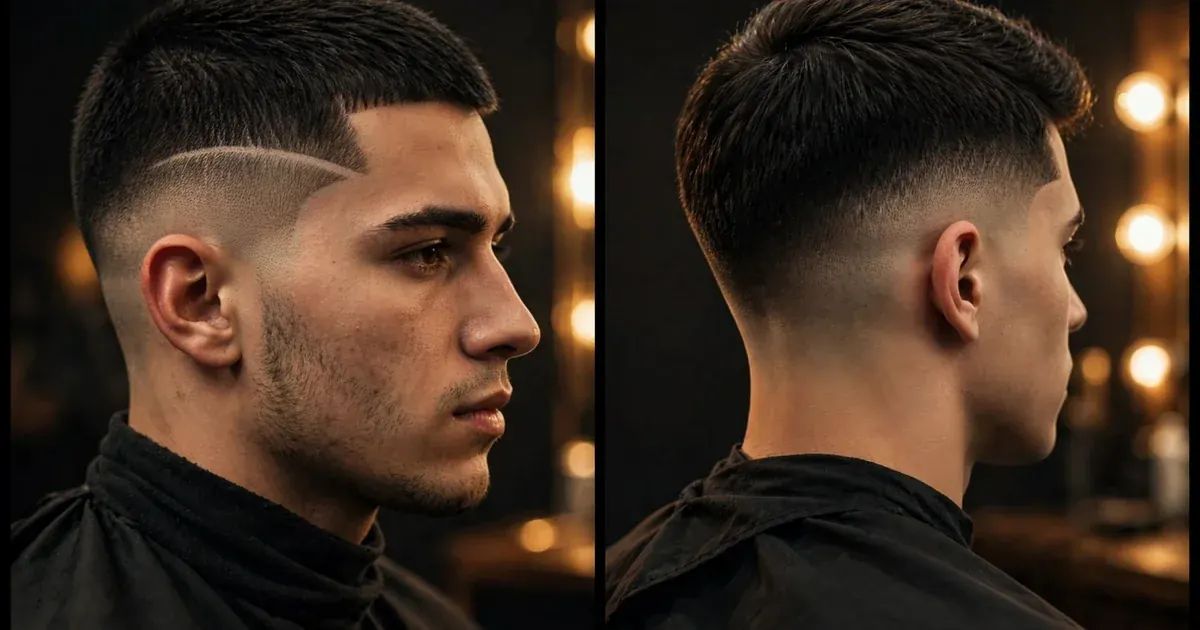
Ask for a “temp fade” and you might walk out with something you didn’t picture. A temple fade is a sharp fade kept tight around the temples and sideburns, while a taper fade is a gradual blend down the sides and back. They sound almost identical and barbers use the terms loosely — but they sit in different spots and need different upkeep. Below: the key differences, guard numbers, and word-for-word barber scripts so you get the cut you pictured.
On this page:
- Temple Fade Explained: Sharp Lines in One Small Zone
- Taper Fade Explained: The Smooth Gradient That Goes Everywhere
- Temple Fade vs Taper Fade: Key Differences
- Mid Temp Fade vs Mid Taper Fade: Where the Confusion Lives
- Which One Should You Get? Match It to Your Face, Hair, and Lifestyle
- Guard Numbers: What to Ask For
- How to Ask Your Barber (Exact Scripts)
- Styles That Work With Each Cut: Smart Pairings
- Maintenance Compared: The Touch-Up Reality Check
- Frequently Asked Questions
Temple Fade Explained: Sharp Lines in One Small Zone
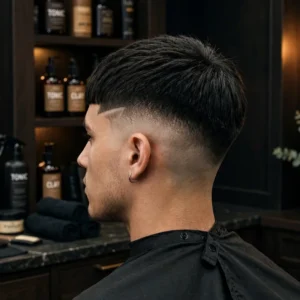
The temple fade concentrates all the action around the temples — the area between your sideburns and the corners of your forehead. The hair there is faded down close to the skin, usually with a crisp, visible line where the fade starts. Everything else stays largely the same length, which is why the temple fade works as an add-on to almost any haircut: Edgar cuts, curly tops, afros, blowouts, even longer styles.
The cut is also known as the “Brooklyn fade” and first gained popularity in the late 90s and early 2000s as a variation of the bald fade (Wikipedia).
Because the fade is confined to a small zone, the temple fade reads as sharp and intentional rather than blended. It’s the cut behind the crisp hairline-and-temples look you see on Edgar cuts and modern lineup styles. Maintenance is the tradeoff: that sharp temple line starts looking fuzzy after about 7–10 days, so it needs touch-ups every 1–2 weeks to stay crisp.
Taper Fade Explained: The Smooth Gradient That Goes Everywhere
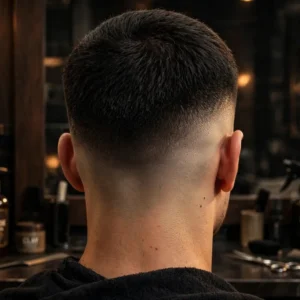
The taper fade is the gradual one. Instead of concentrating on the temples, the barber blends the hair progressively shorter down the sides and around the back, typically from longer on top down to the skin (or near-skin) at the neckline and around the ears. The transition is smooth — no harsh lines, just a clean gradient.
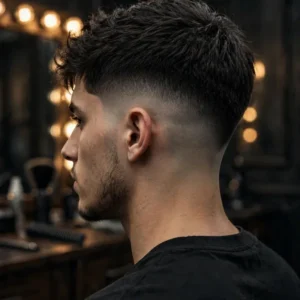
A mid taper fade starts that gradient around the middle of the sides, roughly above the ears. That’s the balanced version: noticeable but not aggressive, which is why it works in offices and on most face shapes. The taper fade grows out gracefully too — because there’s no hard line to blur, it still looks neat at 3–4 weeks, making it the lower-maintenance choice.
Temple Fade vs Taper Fade: Key Differences
Here is the side-by-side breakdown: placement, look, upkeep, and grow-out — the four things that actually separate these two cuts.
| Temple Fade | Taper Fade | |
|---|---|---|
| Where it happens | Temples and sideburns only | Sides and back of the head |
| The look | Sharp, defined, crisp lines | Smooth, gradual blend |
| Lines vs blend | Visible line where the fade starts | No harsh lines — smooth, even gradient |
| Best for | Edgar cuts, curly tops, lineups, afros | Blowouts, side parts, textured crops, professional styles |
| Touch-up frequency | Every 1–2 weeks | Every 3–4 weeks |
| Grow-out | Gets fuzzy fast around the temples | Grows out cleanly |
| Boldness | High — it’s a statement detail | Medium — clean but understated |
Mid Temp Fade vs Mid Taper Fade: Where the Confusion Lives
This is where most of the confusion lives. A mid temp fade takes the temple fade concept and drops the fade line to the middle of the temple area — still confined to the temples, just starting a touch lower for a slightly softer take on the sharp look. A mid taper fade starts its gradient around the middle of the sides and runs it down and back.
Put simply: the mid temp fade is a placed detail (temples only, crisp), while the mid taper fade is a blended structure (sides and back, smooth). If you want people to notice the cut, go temp. If you want people to notice you look sharp without clocking why, go taper.
Which One Should You Get? Match It to Your Face, Hair, and Lifestyle
Short answer: pick the temple fade for crisp definition and frequent touch-ups; pick the taper fade for versatility and low maintenance. The details below match each cut to face shape, hair type, and lifestyle.
Get the Temple Fade If
you wear an Edgar, curly top, or afro and want that crisp frame around the face; you like defined hairlines and lineup work; you don’t mind barber visits every week or two. It flatters oval, square, and heart-shaped faces especially well, because the sharp temple lines add structure.
Get the Taper Fade If
you want one cut that works for the office and the weekend; you prefer low maintenance; your style is a blowout, side part, French crop, or textured top. The gradual blend suits round faces particularly well, since the shorter sides slim the cheeks while the length on top adds height.
Can’t Decide?
Ask your barber for a taper fade with a cleaned-up temple line — a soft taper through the sides plus a light temple cleanup gives you structure without the full commitment of a skin-tight temple fade.
Guard Numbers: What to Ask For
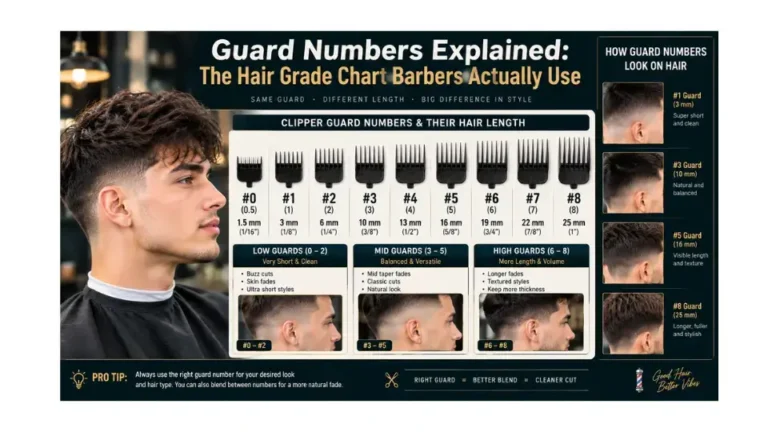
Guard numbers are where miscommunication happens, so be specific:
#1–#2 → Skin
Fade from a #1 or #2 at the top of the temple down to #0 (skin) at the bottom edge — with a clean, defined line.
#2 → #1 → Skin
Classic blend: #2 at the top, through #1.5 and #1, down to skin at the neckline and around the ears. Smooth — no hard lines.
#1 → Skin
Same as the temple fade — but the fade line starts at the middle of the temple, not high.

Bring a photo. Even with perfect guard numbers, “temple fade” means slightly different things to different barbers, and a 10-second photo check beats a 10-minute fix.
How to Ask Your Barber (Exact Scripts)
Use these word-for-word and you’ll skip 90% of misunderstandings:
- For a temple fade: “I want a temple fade — keep it tight around the temples, #1 down to skin, with a clean defined line. Leave everything else the way it is.”
- For a taper fade: “Give me a taper fade — mid taper, blended from a #2 down to skin at the neckline and around the ears. Smooth blend, no hard lines.”
- For the combo: “Mid taper on the sides and back, and clean up the temples with a light temp fade line.”
And say what you don’t want, too: “no hard line across the back” (for tapers) or “don’t take the fade above my temples” (for temple fades). Barbers would rather hear the boundary than guess it.
Styles That Work With Each Cut: Smart Pairings
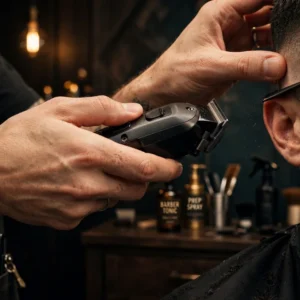
Both cuts play well with others — but they flatter different styles. Here is how to pair each one without clashing.
Temple Fade Pairings
Edgar cut (the classic combo), curly top with tight temples, afro with a shaped temple line, blowout with crisp edges, buzz cut with a temple taper for definition.
Taper Fade Pairings
textured crop, side part, French crop, slick back, curtains and middle-part styles, quiff. The taper is the versatile base — nearly any top length works because the sides take care of themselves.
Maintenance Compared: The Touch-Up Reality Check
The temple fade is the high-maintenance one: book a touch-up every 1–2 weeks, or learn to clean the temple line yourself with a trimmer between visits (go slow — one slip and the line moves up). The taper fade is forgiving: every 3–4 weeks at the barber, and in between, a little styling product on top is all it needs. If you’re the type who stretches haircuts to six weeks, the taper will still look respectable; the temple fade will not.
Frequently Asked Questions
Conclusion
The temple fade and the taper fade aren’t rivals — they’re different tools. The temple fade is a precision detail: sharp, bold, confined to the temples, and hungry for touch-ups. The taper fade is the all-rounder: a smooth gradient down the sides and back that stays handsome for weeks with minimal effort. Know which one you’re asking for, use the guard numbers and scripts above, and bring a photo — and you’ll never walk out with the wrong fade again.
Still deciding on the broader fade family? Start with our complete mid taper fade guide to see how the mid taper compares to low and high fades, then come back and pick your detail.
Written by Sonia Kanwal
Sonia Kanwal is the founder of MidTaprFade, covering mid taper fade styles, guard numbers, and barber-tested styling guides.